
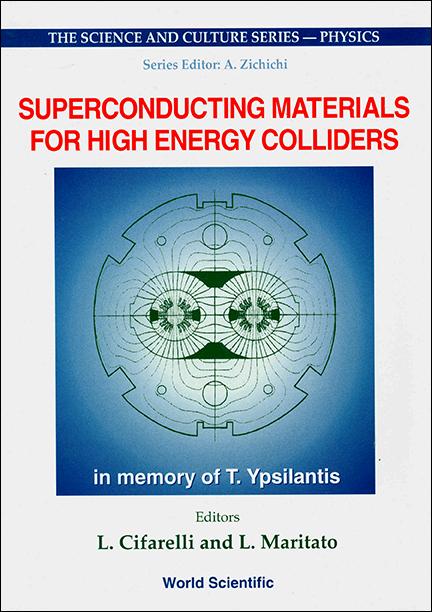
The ELOISATRON (ELN) Project aims at a future proton supercollider with 100-500 TeV energy per beam and 1034-1036 cm-2s-1 luminosity. While the Large Hadron Collider (LHC) is being implemented at CERN, it is very timely to study the feasibility of the next generation of hadron colliders at the extreme limits of energy and luminosity. In this respect, the achievement of extremely high magnetic fields and the production of accelerating rf cavities with very low losses are a crucial point in the actual construction design of such a collider. The search for superconducting materials with suitable properties to be used in this field has gained a new impulse after the discovery of the so-called high temperature superconducting compounds (HTSCs) with superconducting critical temperatures higher than 100 K. Besides the critical temperatures, the transport performances of this class of compounds are still very far from allowing applications in extremely high energy colliders. On the other hand, in the last few years, the technological and scientific improvements obtained for both the HTSCs and the conventional superconducting materials are very promising.This book reviews the recent status of R&D on the rising generation of superconducting materials for accelerator magnets and cavities, and discusses novel aspects and ideas in this domain.
Pay easily by card, Klarna, Apple Pay or Google Pay. Not happy? You always have a 14-day money-back guarantee. Read more in our terms. If you have any questions, email us at hello@memmo.org.
Memmo makes studying easier – wherever you are in the world. We bring your course books and smart study tools together in one place: summaries, quizzes, podcasts and flashcards. Plus Ted, your study buddy who answers anything you wonder. Over 50,000 students already study here – built to help you learn faster and stress less.
You might also like
Buy the book0