
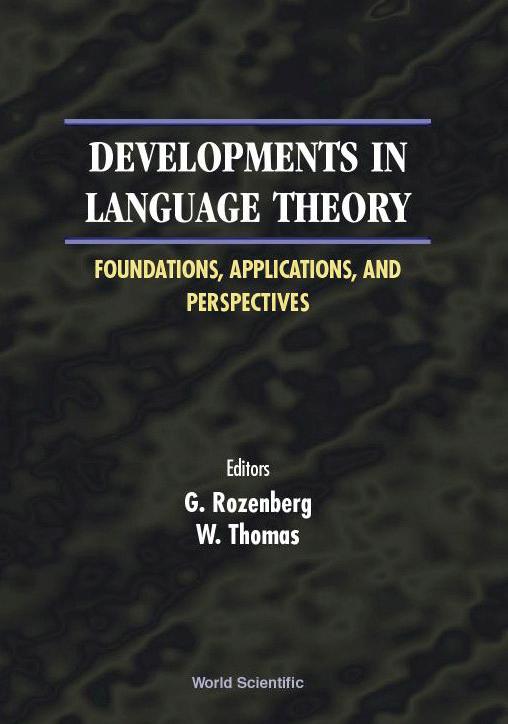
The theory of formal languages is one of the oldest branches of theoretical computer science. Its original aim (in the fifties and sixties) was to clarify the laws and algorithms that underlie the definition and compilation of programming languages. Since then, formal language theory has changed very much. Today it includes mathematical topics like combinatorics of words, word equations, and coding theory, but it also covers connections to linguistics (for example, the study of contextual grammars), new computational paradigms (like DNA computing), and a wide range of applications, among them hypertext processing, database theory, and formal program verification. Many of these themes of modern formal language theory are represented in this volume.
Pay easily by card, Klarna, Apple Pay or Google Pay. Not happy? You always have a 14-day money-back guarantee. Read more in our terms. If you have any questions, email us at hello@memmo.org.
Memmo makes studying easier – wherever you are in the world. We bring your course books and smart study tools together in one place: summaries, quizzes, podcasts and flashcards. Plus Ted, your study buddy who answers anything you wonder. Over 75,000 students already study here – built to help you learn faster and stress less.
You might also like
Buy the book0