
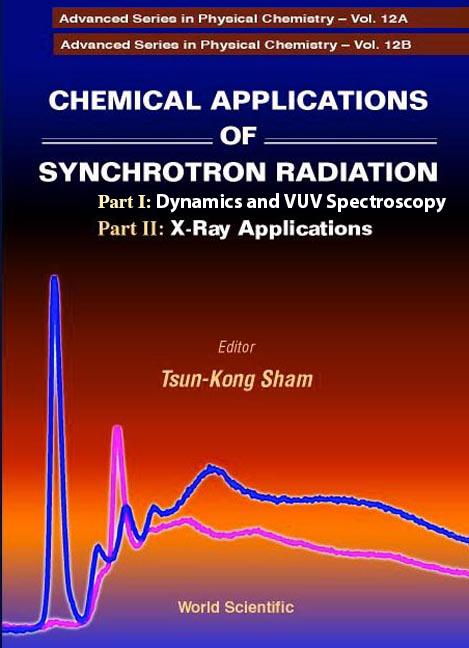
The synchrotron light source is becoming widely available, after its evolution from its infancy in the sixties to the present third generation source with insertion devices. It is timely to examine the impact that synchrotron light has made and will continue to make on chemical research. With this objective in mind, the editor of this invaluable book invited contributions from practitioners who are in the forefront of the research. The book summarizes most of the significant developments in the last decade in chemical and related research using synchrotron light. The utilization of the light as a probe as well as an energy source is emphasized.This book is organized into two parts, in order of increasing photon energy. Part I deals with the applications of low energy photons and covers areas such as gas phase photodissociation reactions and dynamics, soft X-ray fluorescence, IR and photoemission analysis of surfaces, spectroscopy of organic and polymeric materials, catalysts, electronic and magnetic materials, and spectromicroscopy. Part II encompasses applications using soft to hard X-rays, including spectroscopy of surface and thin films, XAFS, diffraction and scattering, and several technological applications, namely the microprobe, photoetching and tribology.
Pay easily by card, Klarna, Apple Pay or Google Pay. Not happy? You always have a 14-day money-back guarantee. Read more in our terms. If you have any questions, email us at hello@memmo.org.
Memmo makes studying easier – wherever you are in the world. We bring your course books and smart study tools together in one place: summaries, quizzes, podcasts and flashcards. Plus Ted, your study buddy who answers anything you wonder. Over 75,000 students already study here – built to help you learn faster and stress less.
You might also like
Buy the book0