
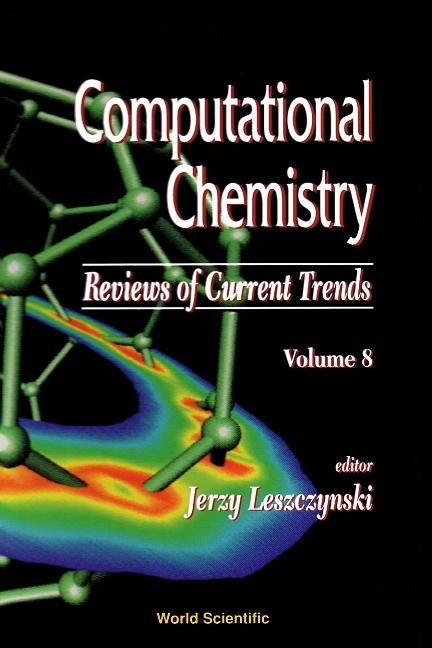
The gap between experimental objects and models for calculations in chemistry is being bridged. The size of experimental nano-objects is decreasing, while reliable calculations are feasible for larger and larger molecular systems. The results of these calculations for isolated molecules are becoming more relevant for experiments. However, there are still significant challenges for computational methods. This series of books presents reviews of current advances in computational methodologies and applications.Chapter 1 of this volume provides an overview of the theoretical and numerical aspects in the development of the polarizable continuum model (PCM). Chapter 2 demonstrates a multiplicative scheme used to estimate the properties of two- and three-dimensional clusters from the properties of their one-dimensional components. Chapter 3 discusses the application of ab initio methods for a reliable evaluation of the characteristics of hydrogen-bonded and van der Waals complexes.Ab initio quantum-chemical methods are popular among researchers investigating various aspects of DNA. The properties of DNA base polyads linked by base-base hydrogen bonds are reviewed in Chapter 4, while Chapter 5 reviews the primary radiation-induced defects in nucleic acid building blocks, and how DNA can be influenced by chemical and environmental effects. Finally, Chapter 6 discusses available experimental data of DNA bases, base pairs, and their complexes with water.
Pay easily by card, Klarna, Apple Pay or Google Pay. Not happy? You always have a 14-day money-back guarantee. Read more in our terms. If you have any questions, email us at hello@memmo.org.
Memmo makes studying easier – wherever you are in the world. We bring your course books and smart study tools together in one place: summaries, quizzes, podcasts and flashcards. Plus Ted, your study buddy who answers anything you wonder. Over 75,000 students already study here – built to help you learn faster and stress less.
You might also like
Buy the book0