
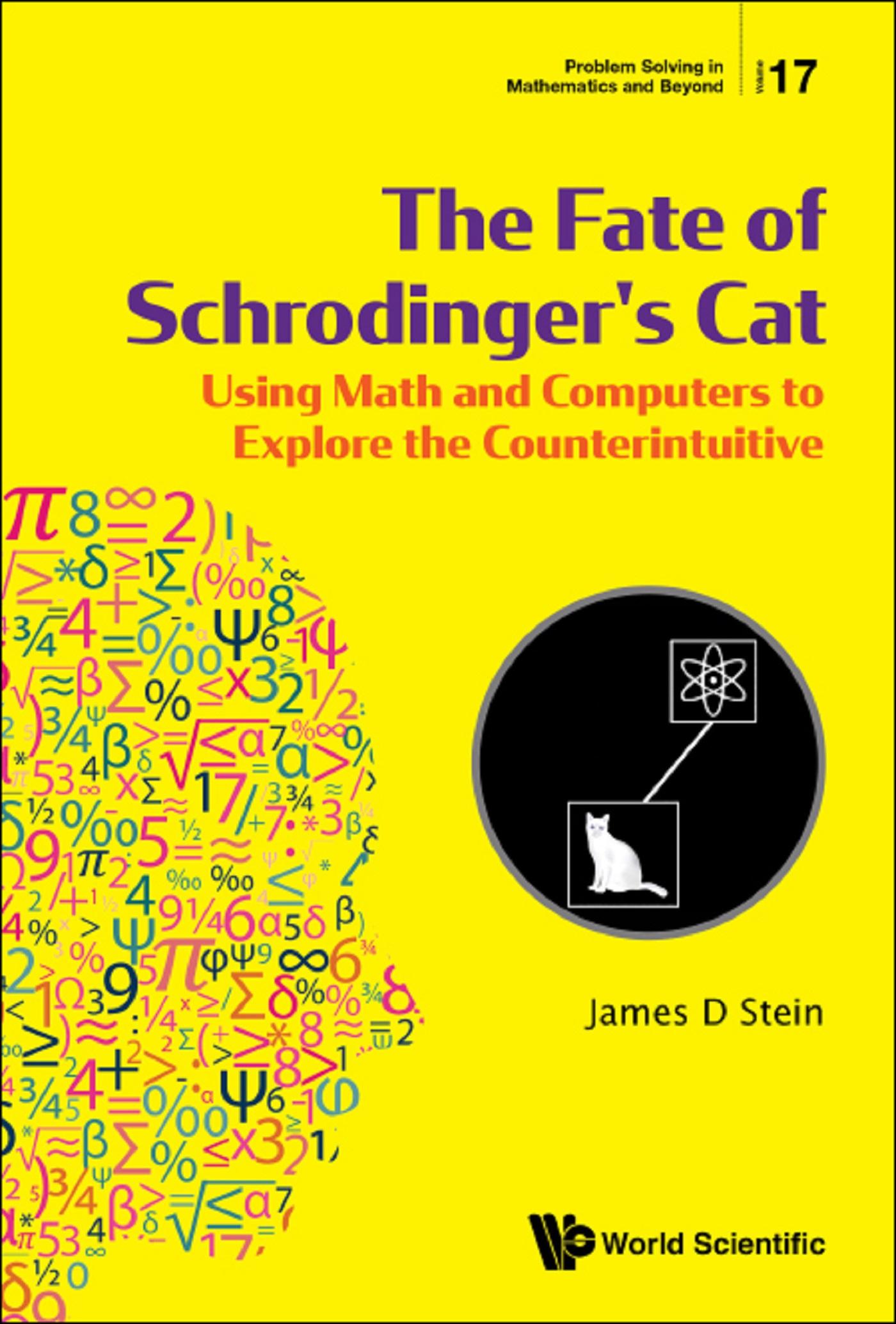
Can we correctly predict the flip of a fair coin more than half the time — or the decay of a single radioactive atom? Our intuition, based on a lifetime of experience, tells us that we cannot, as these are classic examples of what are known to be 50-50 guesses.But mathematics is filled with counterintuitive results — and this book discusses some surprising and entertaining examples. It is possible to devise experiments in which a flipped coin lands heads completely at random half the time, but we can also correctly predict when it will land heads more than half the time. The Fate of Schrodinger's Cat shows how high-school algebra and basic probability theory, with the invaluable assistance of computer simulations, can be used to investigate both the intuitive and the counterintuitive.This book explores fascinating and controversial questions involving prediction, decision-making, and statistical analysis in a number of diverse areas, ranging from whether there is such a thing as a 'hot hand' in shooting a basketball, to how we can successfully predict, more than half the time, the decay of the radioactive atom that determines the fate of Schrodinger's Cat.
Pay easily by card, Klarna, Apple Pay or Google Pay. Not happy? You always have a 14-day money-back guarantee. Read more in our terms. If you have any questions, email us at hello@memmo.org.
Memmo makes studying easier – wherever you are in the world. We bring your course books and smart study tools together in one place: summaries, quizzes, podcasts and flashcards. Plus Ted, your study buddy who answers anything you wonder. Over 75,000 students already study here – built to help you learn faster and stress less.
You might also like
Buy the book0