
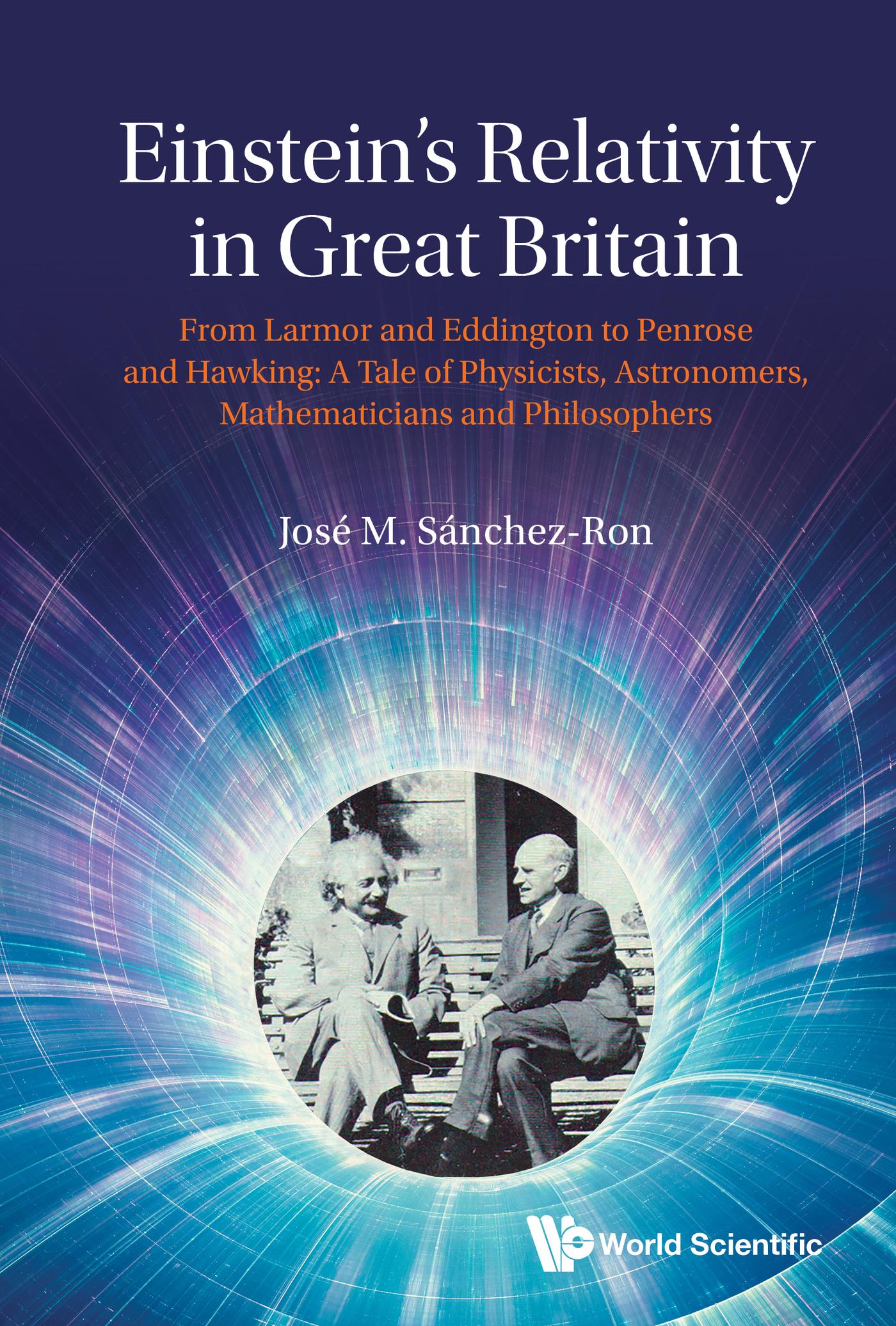
Soon after their publication (1905, 1915), Einstein's special and general theories of relativity received attention by a wide variety of British scholars (astronomers, physicists, mathematicians and philosophers). That reaction varied from deep acceptance (as was the case of Arthur Eddington) to straightforward opposition. This book analyzes those reactions, which involved a large number of important scientists as well as philosophers, like Bertrand Russell or Alfred N. Whitehead. The study will cover from the 1910s till the 1960s, when the work of a group of relativists centered in London and Oxford (Penrose), Cambridge (Sciama and Hawking) as well as the Bondi's group at King's College London, who finally introduced a new, global approach to general relativity.
Contents:
- Preface
- The Reception of Special Relativity in Great Britain
- The Reception of General Relativity Among British Physicists and Mathematicians (1915–1930)
- Larmor, Lodge and General Relativity: The 'Old Guard' Reaction to Einstein's Relativity
- The Early Reaction of Relativity Among British Philosophers, or the Ductility of Philosophy
- A New Generation: George McVittie, 'The Uncompromising Empiricist'
- The Renaissance of Relativity in Great Britain: From Coordinates to Global Space-Time and Black Holes
- References
Readership: Historians of science, physicists, mathematicians, philosophers. General public. Science and philosophy university students.
Pay easily by card, Klarna, Apple Pay or Google Pay. Not happy? You always have a 14-day money-back guarantee. Read more in our terms. If you have any questions, email us at hello@memmo.org.
Memmo makes studying easier – wherever you are in the world. We bring your course books and smart study tools together in one place: summaries, quizzes, podcasts and flashcards. Plus Ted, your study buddy who answers anything you wonder. Over 50,000 students already study here – built to help you learn faster and stress less.