
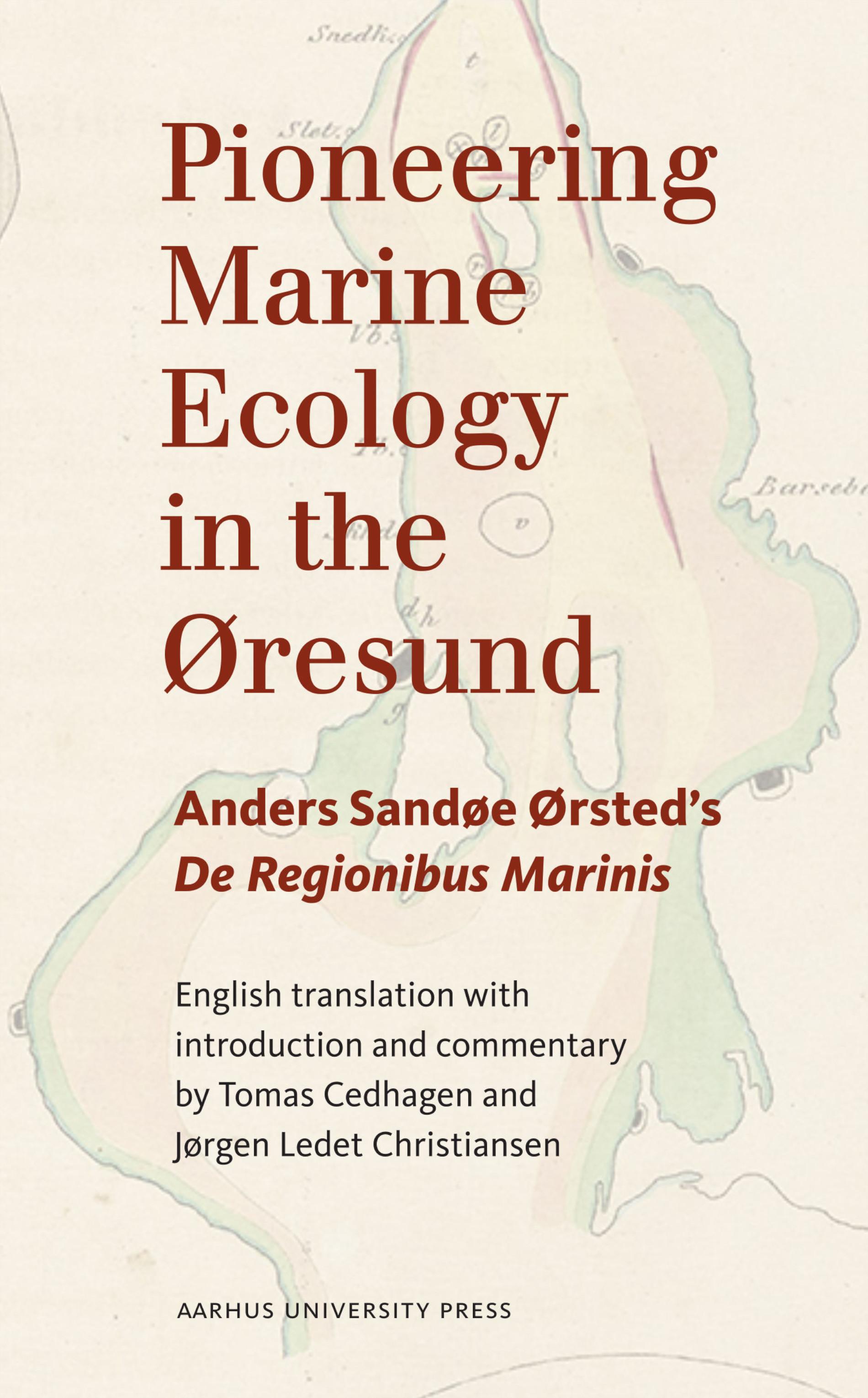
With keen observation skills and deep ecological insight, biologist Anders Sandøe Ørsted documented life throughout the Øresund – a small strait between Denmark and Sweden – at a time when the marine environment was still unaffected by industrialisation, chemical pollution and eutrophication. His treatise De Regionibus Marinis (1844) is the world’s first on marine ecology and one of the most groundbreaking works in the field – and a real milestone in the history of science.
Ørsted describes how the distribution of plant and animal life is governed by the penetration of light at different depths, the nature of the seabed and the physical properties of the water. By linking biological observations to hydrography and geology, he lays the foundation for a completely new way of understanding the sea as a coherent ecological system.
This new edition contains a complete translation into English and a facsimile of the original, making Ørsted’s pioneering work accessible and relevant to today’s readers. Being a unique historical document from the end of the Little Ice Age (1300–ca. 1900), before large-scale human influence changed the ecology of the oceans, the book is an invaluable resource for ecologists, marine biologists, environmental historians and anyone seeking a deeper understanding of the natural state of the sea.
Pay easily by card, Klarna, Apple Pay or Google Pay. Not happy? You always have a 14-day money-back guarantee. Read more in our terms. If you have any questions, email us at hello@memmo.org.
Memmo makes studying easier – wherever you are in the world. We bring your course books and smart study tools together in one place: summaries, quizzes, podcasts and flashcards. Plus Ted, your study buddy who answers anything you wonder. Over 50,000 students already study here – built to help you learn faster and stress less.
You might also like
Buy the book0