
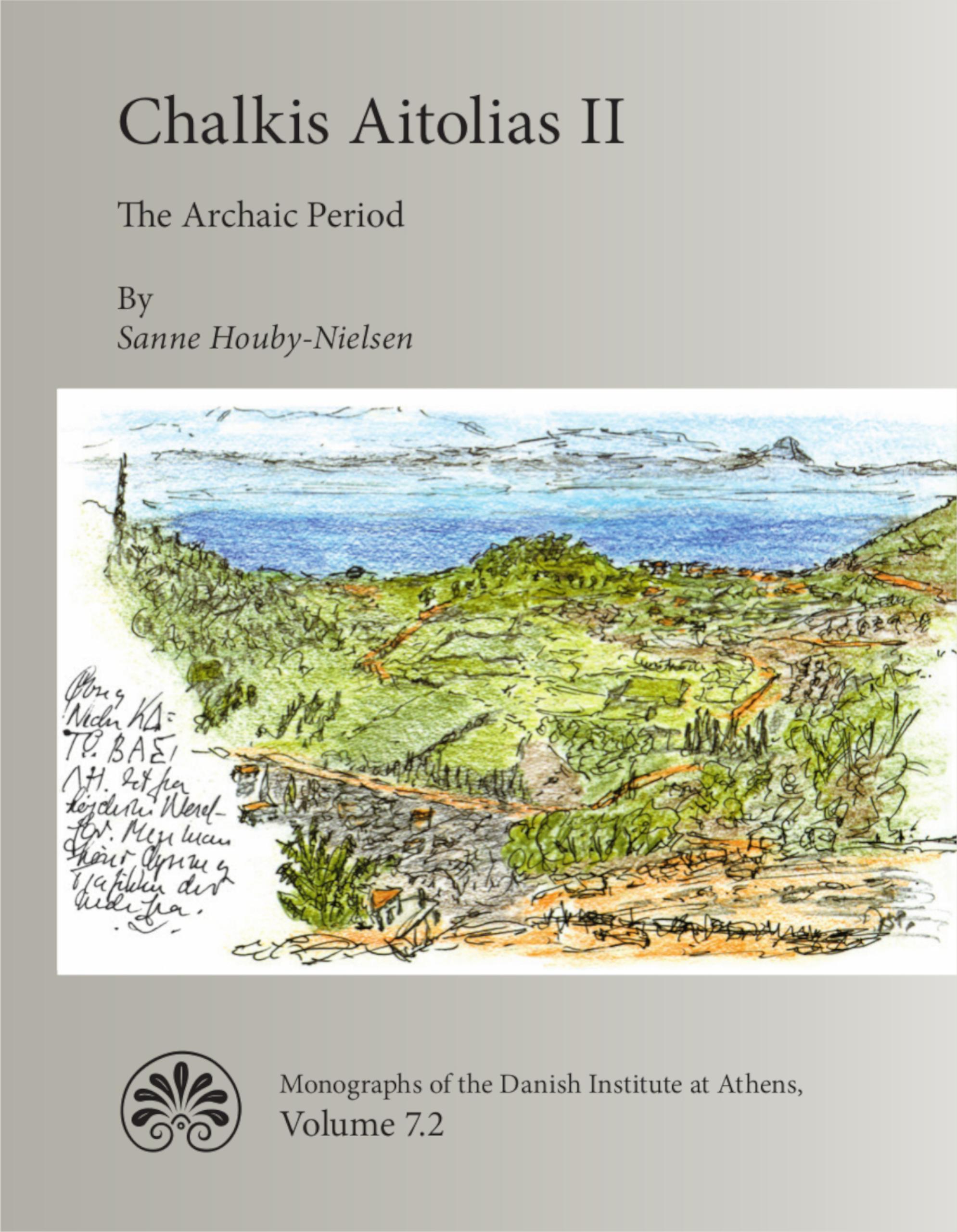
Homeric Chalkis is situated on the coast of Aetolia at the very ‘gateway’ of the Gulf of Patras. The foundation occurred during an important period in early Greek history when trade and movement of peoples along the Gulf intensified with a resulting strong pull to the coast. Well-preserved stratigraphies date the foundation to the early seventh century BC and testify to a flourishing settlement in the sixth century lasting till the early fifth century BC when the site was temporarily given up. Walls and roads follow a rectilinear layout. A broad spectre of pottery shapes and wares attest to innovative local and regional workshops already from the onset of the settlement. Alongside the pottery, tools for complex textile manufacture were found in all houses, among which were many small, pyramidal loom weights and spools. These findings indicated a high degree of experimental weaving techniques and demonstrated how the courtyard house, as a new house model, was particularly well suited to accommodate this manufacture, probably mantels. The results therefore offer important new evidence on relations between gender behaviour and Greek houses.
The catalogue is richly illustrated with profile drawings, plans, black-and- white and colour photos and accompanied by discussions of the material.
Pay easily by card, Klarna, Apple Pay or Google Pay. Not happy? You always have a 14-day money-back guarantee. Read more in our terms. If you have any questions, email us at hello@memmo.org.
Memmo makes studying easier – wherever you are in the world. We bring your course books and smart study tools together in one place: summaries, quizzes, podcasts and flashcards. Plus Ted, your study buddy who answers anything you wonder. Over 75,000 students already study here – built to help you learn faster and stress less.
You might also like
Buy the book0