
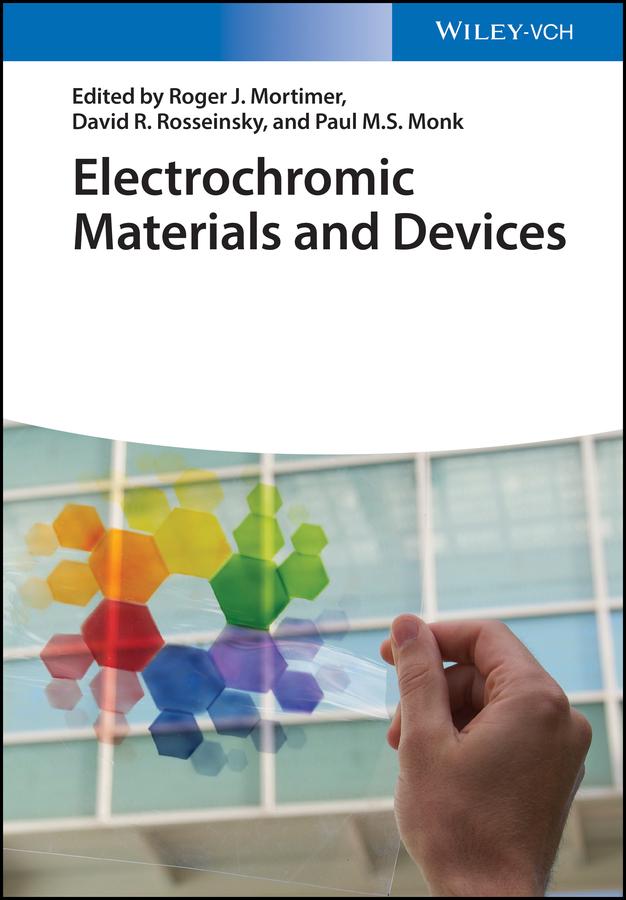
Electrochromic materials can change their properties under the influence of an electrical voltage or current. Different classes of materials show this behavior such as transition metal oxides, conjugated polymers, metal-coordinated complexes and organic molecules. As the color change is persistent, the electric field needs only to be applied to initiate the switching, allowing for applications such as low-energy consumption displays, light-adapting mirrors in the automobile industry and smart windows for which the amount of transmitted light and heat can be controlled.
The first part of this book describes the different classes and processing techniques of electrochromic materials. The second part highlights nanostructured electrochromic materials and device fabrication, and the third part focuses on the applications such as smart windows, adaptive camouflage, biomimicry, wearable displays and fashion. The last part rounds off the book by device case studies and environmental impact issues.
Pay easily by card, Klarna, Apple Pay or Google Pay. Not happy? You always have a 14-day money-back guarantee. Read more in our terms. If you have any questions, email us at hello@memmo.org.
Memmo makes studying easier – wherever you are in the world. We bring your course books and smart study tools together in one place: summaries, quizzes, podcasts and flashcards. Plus Ted, your study buddy who answers anything you wonder. Over 75,000 students already study here – built to help you learn faster and stress less.