
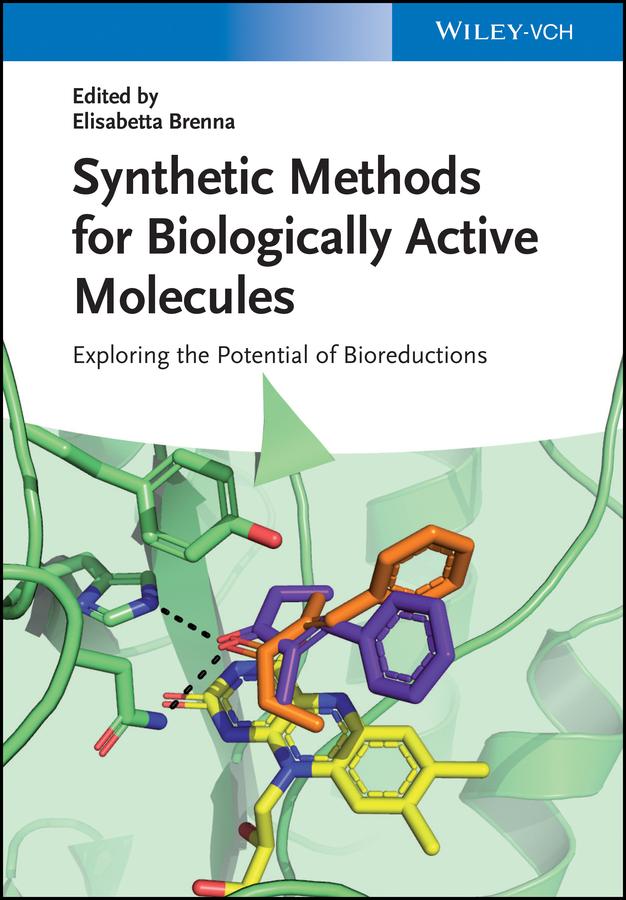
This useful reference focuses on the currently available toolbox of bio-catalysed reductions of C=O, C=C and formal C=N bonds to show which transformations can be reliably used in manufacturing processes and which still require improvements.
Following an introductory chapter, chapters 2-4 present the synthetic strategies that are currently available for the reduction of C=C and C=O bonds and for reductive amination, by means of whole-cell catalysts and isolated enzymes. Chapters 5-7 go on to describe the improvements achieved thus far, illustrating the current versatility of enzymes in organic synthesis. Chapters 8-12 present the improvements brought about by the optimization of reaction conditions, and the use of particular synthetic sequences. The final chapter describes practical applications of bio-reductions for the synthesis of active pharmaceutical ingredients.
With its excellent and comprehensive overview, this book will be of great interest to those working in academia and industry.
From the contents:
* Development of Sustainable Biocatalyzed Reduction Processes for Organic Chemists
* Reductases: From Natural Diversity to Biocatalysis and Emerging Enzymatic Activities.
* Synthetic Strategies Based on C=C Bioreductions
* Synthetic Strategies Based on C=O Bioreductions
* Development of Novel Enzymes for the Improved Reduction of C=C Double Bonds
* Development of Novel Enzymes for the Improved Reduction of C=O Double Bonds
* Synthetic Applications of Aminotransferases
* Strategies for Cofactor Regeneration in Biocatalyzed Reductions
* Effects of Solvent System and Substrate Loading in Bioreduction
* Perspectives in the Use of In-Situ Product Removal (ISPR) Techniques in Bioreductions
* Multi-Enzymatic Cascade Reactions Based on Reduction Processes
* Relevant Practical Applications of Bioreduction Processes in the Synthesis of Active Pharmaceutical Ingredients
Following an introductory chapter, chapters 2-4 present the synthetic strategies that are currently available for the reduction of C=C and C=O bonds and for reductive amination, by means of whole-cell catalysts and isolated enzymes. Chapters 5-7 go on to describe the improvements achieved thus far, illustrating the current versatility of enzymes in organic synthesis. Chapters 8-12 present the improvements brought about by the optimization of reaction conditions, and the use of particular synthetic sequences. The final chapter describes practical applications of bio-reductions for the synthesis of active pharmaceutical ingredients.
With its excellent and comprehensive overview, this book will be of great interest to those working in academia and industry.
From the contents:
* Development of Sustainable Biocatalyzed Reduction Processes for Organic Chemists
* Reductases: From Natural Diversity to Biocatalysis and Emerging Enzymatic Activities.
* Synthetic Strategies Based on C=C Bioreductions
* Synthetic Strategies Based on C=O Bioreductions
* Development of Novel Enzymes for the Improved Reduction of C=C Double Bonds
* Development of Novel Enzymes for the Improved Reduction of C=O Double Bonds
* Synthetic Applications of Aminotransferases
* Strategies for Cofactor Regeneration in Biocatalyzed Reductions
* Effects of Solvent System and Substrate Loading in Bioreduction
* Perspectives in the Use of In-Situ Product Removal (ISPR) Techniques in Bioreductions
* Multi-Enzymatic Cascade Reactions Based on Reduction Processes
* Relevant Practical Applications of Bioreduction Processes in the Synthesis of Active Pharmaceutical Ingredients
Pay easily by card, Klarna, Apple Pay or Google Pay. Not happy? You always have a 14-day money-back guarantee. Read more in our terms. If you have any questions, email us at hello@memmo.org.
Memmo makes studying easier – wherever you are in the world. We bring your course books and smart study tools together in one place: summaries, quizzes, podcasts and flashcards. Plus Ted, your study buddy who answers anything you wonder. Over 75,000 students already study here – built to help you learn faster and stress less.