
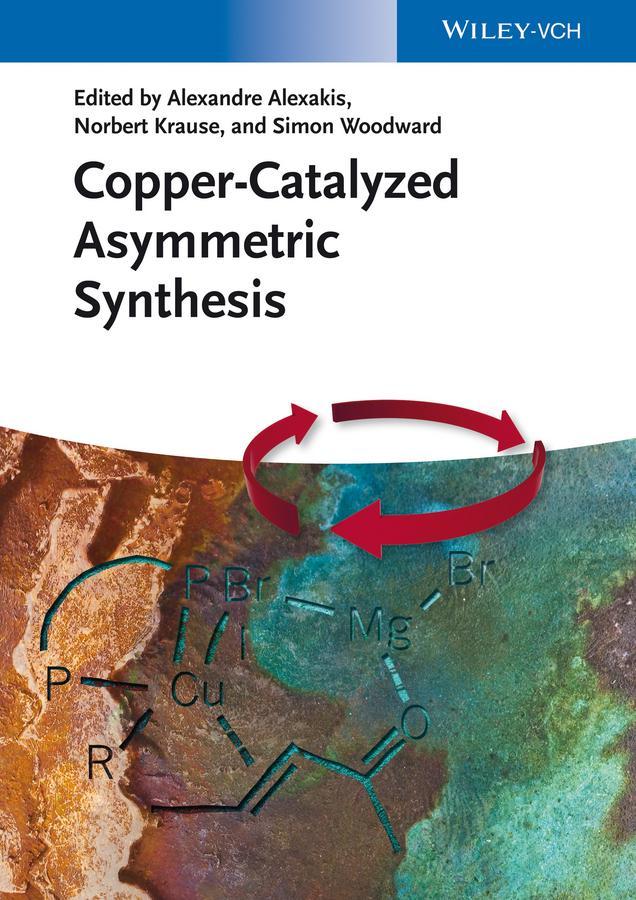
This book reflects the increasing interest among the chemical synthetic community in the area of asymmetric copper-catalyzed reactions, and introduces readers to the latest, most significant developments in the field.
The contents are organized according to reaction type and cover mechanistic and spectroscopic aspects as well as applications in the synthesis of natural products. A whole chapter is devoted to understanding how primary organometallics interact with copper to provide selective catalysts for allylic substitution and conjugate addition, both of which are treated in separate chapters. Another is devoted to the variety of substrates and experimental protocols, while an entire chapter covers the use on non-carbon nucleophiles. Other chapters deal with less-known reactions, such as carbometallation or the additions to imines and related systems, while the more established reactions cyclopropanation and aziridination as well as the use of copper (II) Lewis acids are warranted their own special chapters. Two further chapters concern the processes involved, as determined by mechanistic studies. Finally, a whole chapter is devoted to the synthetic applications.
This is essential reading for researchers at academic institutions and professionals at pharmaceutical or agrochemical companies.
The contents are organized according to reaction type and cover mechanistic and spectroscopic aspects as well as applications in the synthesis of natural products. A whole chapter is devoted to understanding how primary organometallics interact with copper to provide selective catalysts for allylic substitution and conjugate addition, both of which are treated in separate chapters. Another is devoted to the variety of substrates and experimental protocols, while an entire chapter covers the use on non-carbon nucleophiles. Other chapters deal with less-known reactions, such as carbometallation or the additions to imines and related systems, while the more established reactions cyclopropanation and aziridination as well as the use of copper (II) Lewis acids are warranted their own special chapters. Two further chapters concern the processes involved, as determined by mechanistic studies. Finally, a whole chapter is devoted to the synthetic applications.
This is essential reading for researchers at academic institutions and professionals at pharmaceutical or agrochemical companies.
Pay easily by card, Klarna, Apple Pay or Google Pay. Not happy? You always have a 14-day money-back guarantee. Read more in our terms. If you have any questions, email us at hello@memmo.org.
Memmo makes studying easier – wherever you are in the world. We bring your course books and smart study tools together in one place: summaries, quizzes, podcasts and flashcards. Plus Ted, your study buddy who answers anything you wonder. Over 75,000 students already study here – built to help you learn faster and stress less.