
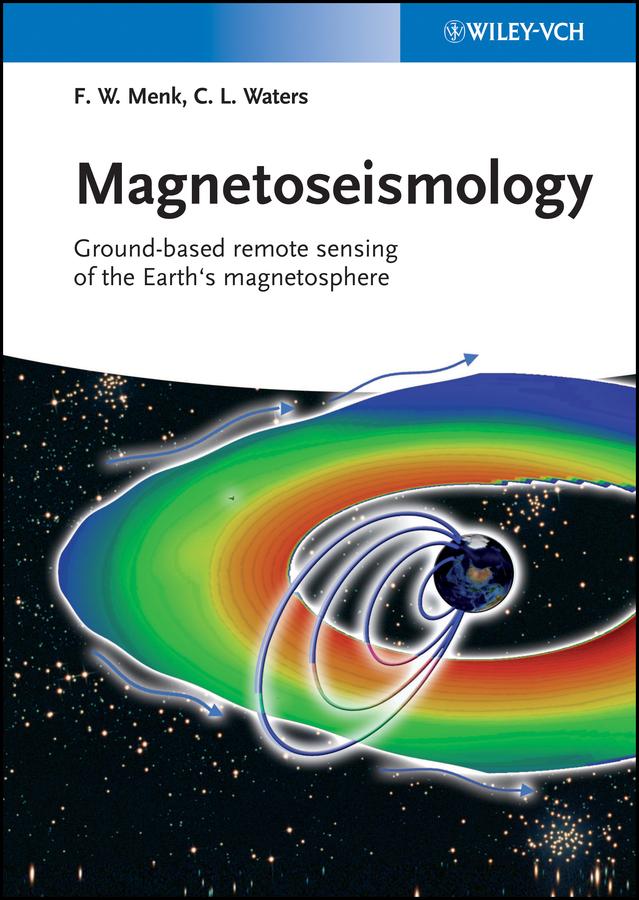
Written by a researcher at the forefront of the field, this first comprehensive account of magnetoseismology conveys the physics behind these movements and waves, and explains how to detect and investigate them.
Along the way, it describes the principles as applied to remote sensing of near-Earth space and related remote sensing techniques, while also comparing and intercalibrating magnetoseismology with other techniques. The example applications include advanced data analysis techniques that may find wider used in areas ranging from geophysics to medical imaging, and remote sensing using radar systems that are of relevance to defense surveillance systems. As a result, the book not only reviews the status quo, but also anticipates new developments.
With many figures and illustrations, some in full color, plus additional computational codes for analysis and evaluation.
Aimed at graduate readers, the text assumes knowledge of electromagnetism and physical processes at degree level, but introductory chapters will provide an overview of the relevant plasma physics and magnetospheric physics. The book will thus be of interest to entry-level and established researchers in physics of the Earth's magnetosphere and ionosphere, as well as to students, academics and scientifically literate laypersons with an interest in understanding space weather processes and how these relate to the dynamic behavior of near-Earth space.
Along the way, it describes the principles as applied to remote sensing of near-Earth space and related remote sensing techniques, while also comparing and intercalibrating magnetoseismology with other techniques. The example applications include advanced data analysis techniques that may find wider used in areas ranging from geophysics to medical imaging, and remote sensing using radar systems that are of relevance to defense surveillance systems. As a result, the book not only reviews the status quo, but also anticipates new developments.
With many figures and illustrations, some in full color, plus additional computational codes for analysis and evaluation.
Aimed at graduate readers, the text assumes knowledge of electromagnetism and physical processes at degree level, but introductory chapters will provide an overview of the relevant plasma physics and magnetospheric physics. The book will thus be of interest to entry-level and established researchers in physics of the Earth's magnetosphere and ionosphere, as well as to students, academics and scientifically literate laypersons with an interest in understanding space weather processes and how these relate to the dynamic behavior of near-Earth space.
Pay easily by card, Klarna, Apple Pay or Google Pay. Not happy? You always have a 14-day money-back guarantee. Read more in our terms. If you have any questions, email us at hello@memmo.org.
Memmo makes studying easier – wherever you are in the world. We bring your course books and smart study tools together in one place: summaries, quizzes, podcasts and flashcards. Plus Ted, your study buddy who answers anything you wonder. Over 50,000 students already study here – built to help you learn faster and stress less.