
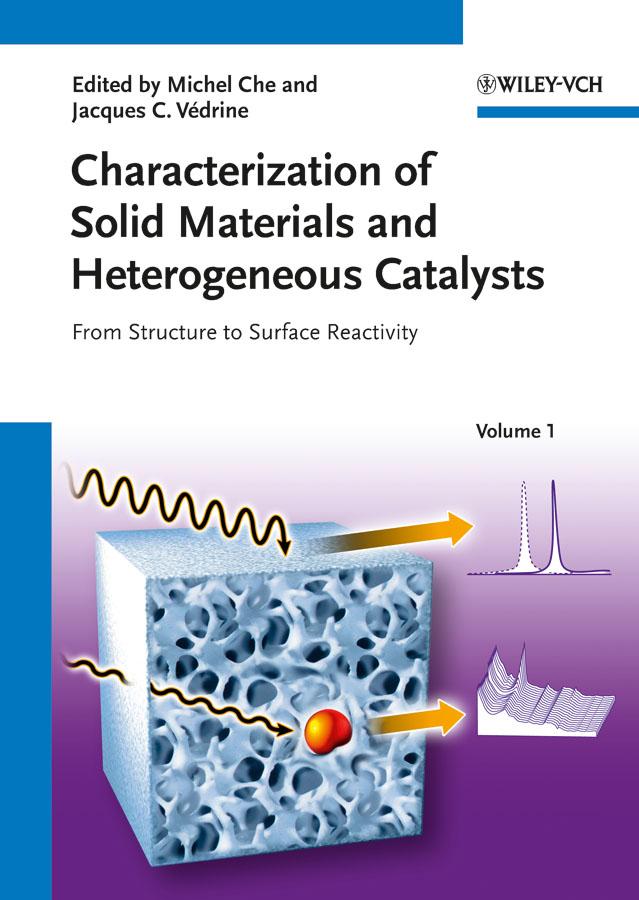
This two-volume book provides an overview of physical techniques used to characterize the structure of solid materials, on the one hand,
and to investigate the reactivity of their surface, on the other. Therefore this book is a must-have for anyone working in fields related to surface
reactivity. Among the latter, and because of its most important industrial impact, catalysis has been used as the directing thread of the book.
After the preface and a general introduction to physical techniques by M. Che and J.C. Vedrine, two overviews on physical techniques are
presented by G. Ertl and Sir J.M. Thomas for investigating model catalysts and porous catalysts, respectively.
The book is organized into four parts: Molecular/Local Spectroscopies, Macroscopic Techniques, Characterization of the Fluid Phase (Gas and/
or Liquid), and Advanced Characterization. Each chapter focuses upon the following important themes: overview of the technique, most important parameters to interpret the experimental data, practical details, applications of the technique, particularly during chemical processes,
with its advantages and disadvantages, conclusions.
and to investigate the reactivity of their surface, on the other. Therefore this book is a must-have for anyone working in fields related to surface
reactivity. Among the latter, and because of its most important industrial impact, catalysis has been used as the directing thread of the book.
After the preface and a general introduction to physical techniques by M. Che and J.C. Vedrine, two overviews on physical techniques are
presented by G. Ertl and Sir J.M. Thomas for investigating model catalysts and porous catalysts, respectively.
The book is organized into four parts: Molecular/Local Spectroscopies, Macroscopic Techniques, Characterization of the Fluid Phase (Gas and/
or Liquid), and Advanced Characterization. Each chapter focuses upon the following important themes: overview of the technique, most important parameters to interpret the experimental data, practical details, applications of the technique, particularly during chemical processes,
with its advantages and disadvantages, conclusions.
Pay easily by card, Klarna, Apple Pay or Google Pay. Not happy? You always have a 14-day money-back guarantee. Read more in our terms. If you have any questions, email us at hello@memmo.org.
Memmo makes studying easier – wherever you are in the world. We bring your course books and smart study tools together in one place: summaries, quizzes, podcasts and flashcards. Plus Ted, your study buddy who answers anything you wonder. Over 75,000 students already study here – built to help you learn faster and stress less.