
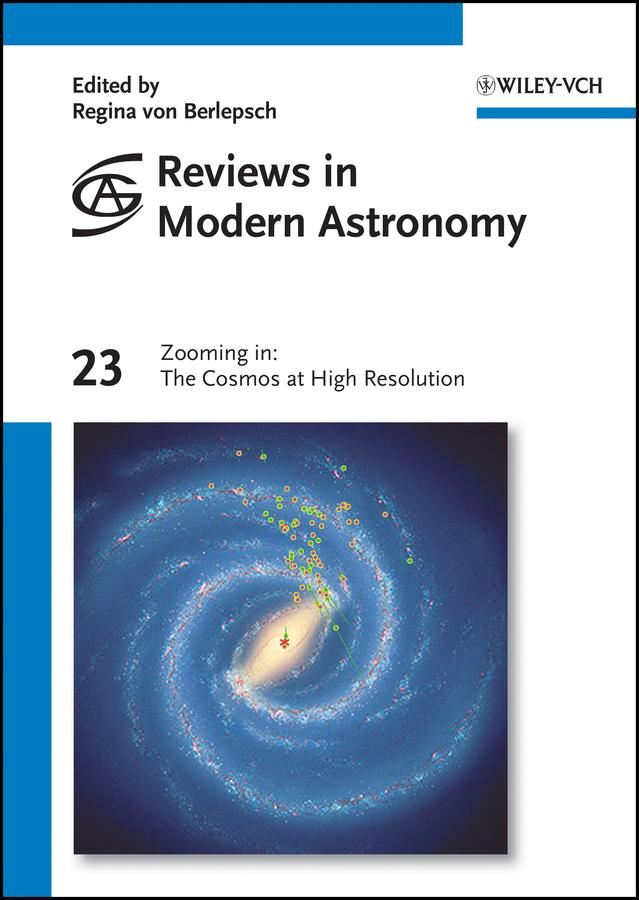
High resolution is a key element in research in astronomy and cosmology.
Advances in instrumentation and new methods are enabling us to constantly make new exciting discoveries, and progress in theoretical modelling allows us to gain a deeper understanding of cosmic physics.
One example of this progress in instrumentation and observing strategy have made possible the discovery of a rich population of low-mass planets orbiting solar-type stars (Michel Mayor et al., Karl Schwarzschild Lecture 2010).
This 23rd volume in the series Reviews of Modern Astronomy contains 14 invited reviews and highlight contributions presented during the 2010 annual meeting of the Astronomical Society on the topic "Zooming in: The cosmos at high resolution", held in Bonn, Germany, in September 2010.
Advances in instrumentation and new methods are enabling us to constantly make new exciting discoveries, and progress in theoretical modelling allows us to gain a deeper understanding of cosmic physics.
One example of this progress in instrumentation and observing strategy have made possible the discovery of a rich population of low-mass planets orbiting solar-type stars (Michel Mayor et al., Karl Schwarzschild Lecture 2010).
This 23rd volume in the series Reviews of Modern Astronomy contains 14 invited reviews and highlight contributions presented during the 2010 annual meeting of the Astronomical Society on the topic "Zooming in: The cosmos at high resolution", held in Bonn, Germany, in September 2010.
Pay easily by card, Klarna, Apple Pay or Google Pay. Not happy? You always have a 14-day money-back guarantee. Read more in our terms. If you have any questions, email us at hello@memmo.org.
Memmo makes studying easier – wherever you are in the world. We bring your course books and smart study tools together in one place: summaries, quizzes, podcasts and flashcards. Plus Ted, your study buddy who answers anything you wonder. Over 50,000 students already study here – built to help you learn faster and stress less.