
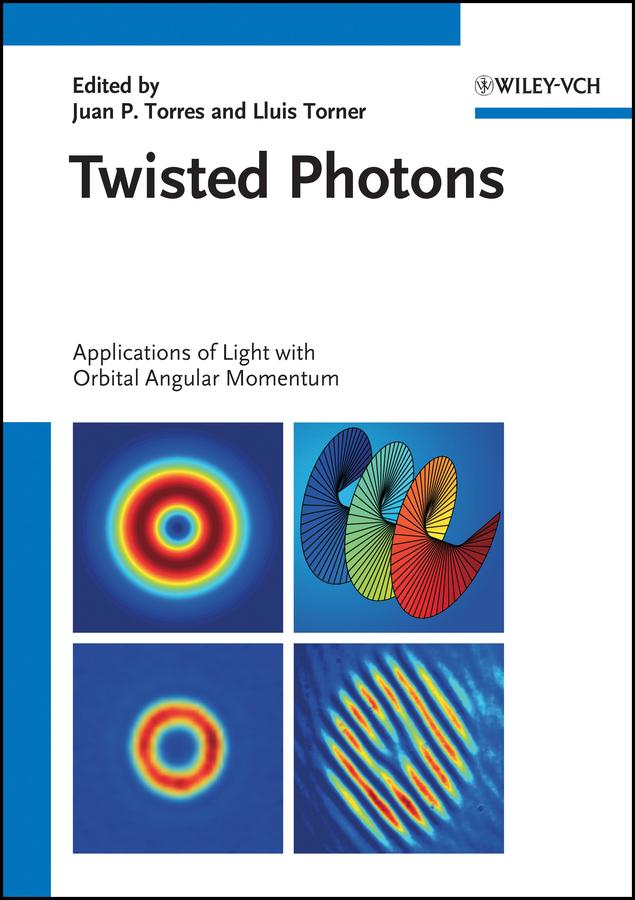
This book deals with applications in several areas of science and technology that make use of light which carries orbital angular momentum. In most practical scenarios, the angular momentum can be decomposed into two independent contributions: the spin angular momentum and the orbital angular momentum. The orbital contribution affords a fundamentally new degree of freedom, with fascinating and wide-spread applications. Unlike spin angular momentum, which is associated with the polarization of light, the orbital angular momentum arises as a consequence of the spatial distribution of the intensity and phase of an optical field, even down to the single photon limit. Researchers have begun to appreciate its implications for our understanding of the ways in which light and matter can interact, and its practical potential in different areas of science and technology.
Pay easily by card, Klarna, Apple Pay or Google Pay. Not happy? You always have a 14-day money-back guarantee. Read more in our terms. If you have any questions, email us at hello@memmo.org.
Memmo makes studying easier – wherever you are in the world. We bring your course books and smart study tools together in one place: summaries, quizzes, podcasts and flashcards. Plus Ted, your study buddy who answers anything you wonder. Over 50,000 students already study here – built to help you learn faster and stress less.