
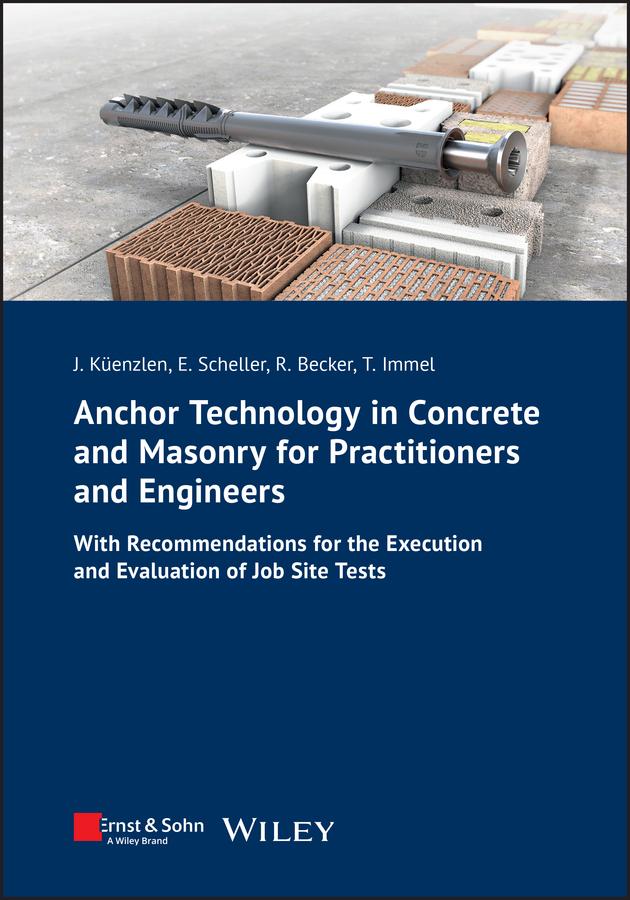
Anchors are everyday items in construction. However, the ever more complex world of building has led to anchor technology being investigated in more and more scientific detail during the course of product development. New anchor systems take into account the increasing diversity of base materials and the required economic efficiency. The scientific studies result in sometimes highly complex engineering design methods that are specified in numerous codes of practice, e.g. EN 1992-4 “Eurocode 2 – Design of concrete structures – Part 4: Design of fastenings for use in concrete”. As a result, it is no longer possible to design an anchor with a simple, quick and easily grasped manual calculation.
However, the experience of the authors over the past 20 years shows that in order to gain the acceptance of users, there is an urgent need to translate academic anchor theory into manageable anchor practice for real building sites.
It is exactly that gap that this book intends to fill. The focus is on the practical use of anchors and answering practical questions such as: “Which anchor do I need for my fastening task and what do I have to consider?” To answer this question, the authors guide the reader through the seemingly vast number of anchor systems and provide advice for everyday building situations. The theory regarding the structural behaviour is only explained, and then only briefly, when it helps to solve the fastening task and understand the solution to that task. For clarity, the reader is merely referred to the existing codes of practice and other specialist publications that provide summaries.
All authors have been working for many years with a focus on anchors and fastenings, some of them in anchor testing laboratory or as trainers. They are members of various working groups and committees in concrete and masonry structures.
Pay easily by card, Klarna, Apple Pay or Google Pay. Not happy? You always have a 14-day money-back guarantee. Read more in our terms. If you have any questions, email us at hello@memmo.org.
Memmo makes studying easier – wherever you are in the world. We bring your course books and smart study tools together in one place: summaries, quizzes, podcasts and flashcards. Plus Ted, your study buddy who answers anything you wonder. Over 50,000 students already study here – built to help you learn faster and stress less.