
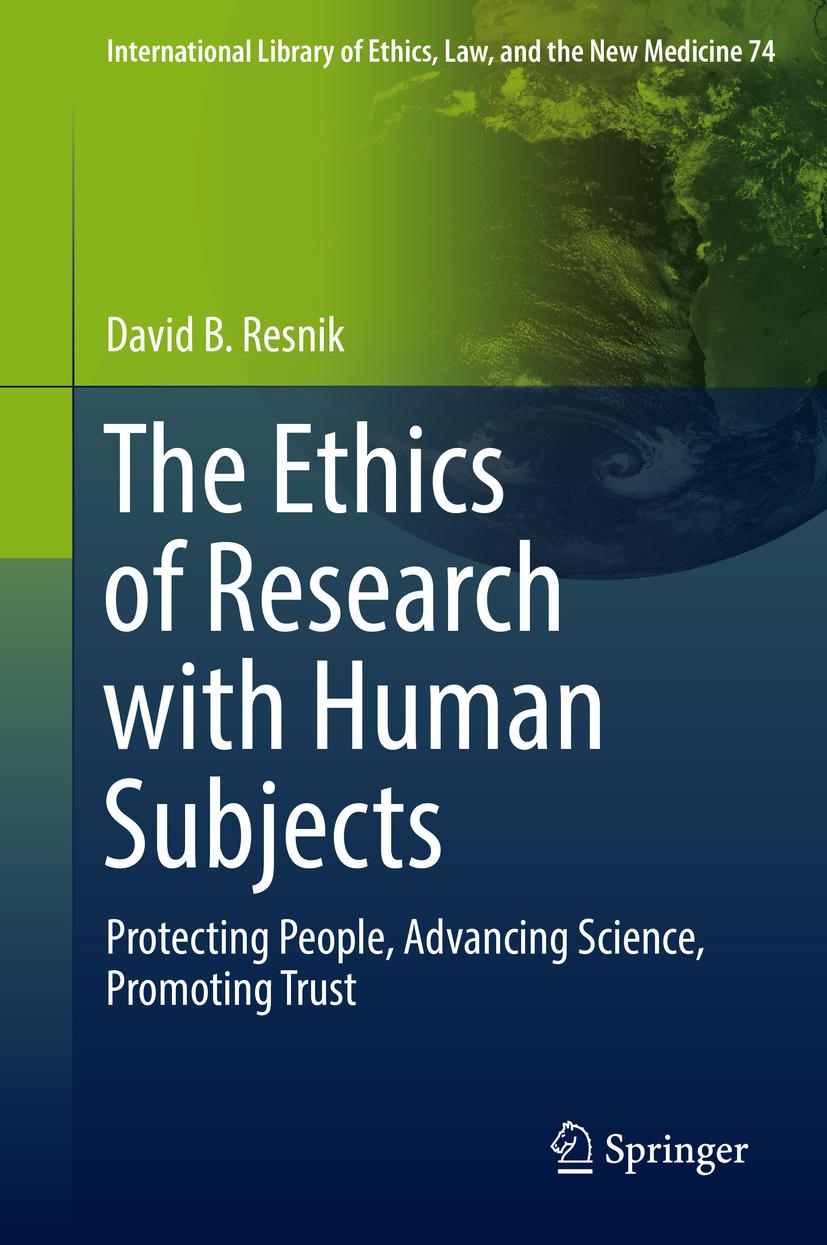
This book provides a framework for approaching ethical and policy dilemmas in research with human subjects from the perspective of trust. It explains how trust is important not only between investigators and subjects but also between and among other stakeholders involved in the research enterprise, including research staff, sponsors, institutions, communities, oversight committees, government agencies, and the general public. The book argues that trust should be viewed as a distinct ethical principle for research with human subjects that complements other principles, such as autonomy, beneficence, non-maleficence, and justice. The book applies the principle of trust to numerous issues, including informed consent, confidentiality, risk minimization, risks and benefits, protection of vulnerable subjects, experimental design, research integrity, and research oversight.This work also includes discussions of the history of research involving human subjects, moral theories and principles,contemporary cases, and proposed regulatory reforms. The book is useful for undergraduate and graduate students studying ethical policy issues related to research with human subjects, as well as for scientists and scholars who are interested in thinking about this topic from the perspective of trust.
Pay easily by card, Klarna, Apple Pay or Google Pay. Not happy? You always have a 14-day money-back guarantee. Read more in our terms. If you have any questions, email us at hello@memmo.org.
Memmo makes studying easier – wherever you are in the world. We bring your course books and smart study tools together in one place: summaries, quizzes, podcasts and flashcards. Plus Ted, your study buddy who answers anything you wonder. Over 50,000 students already study here – built to help you learn faster and stress less.