
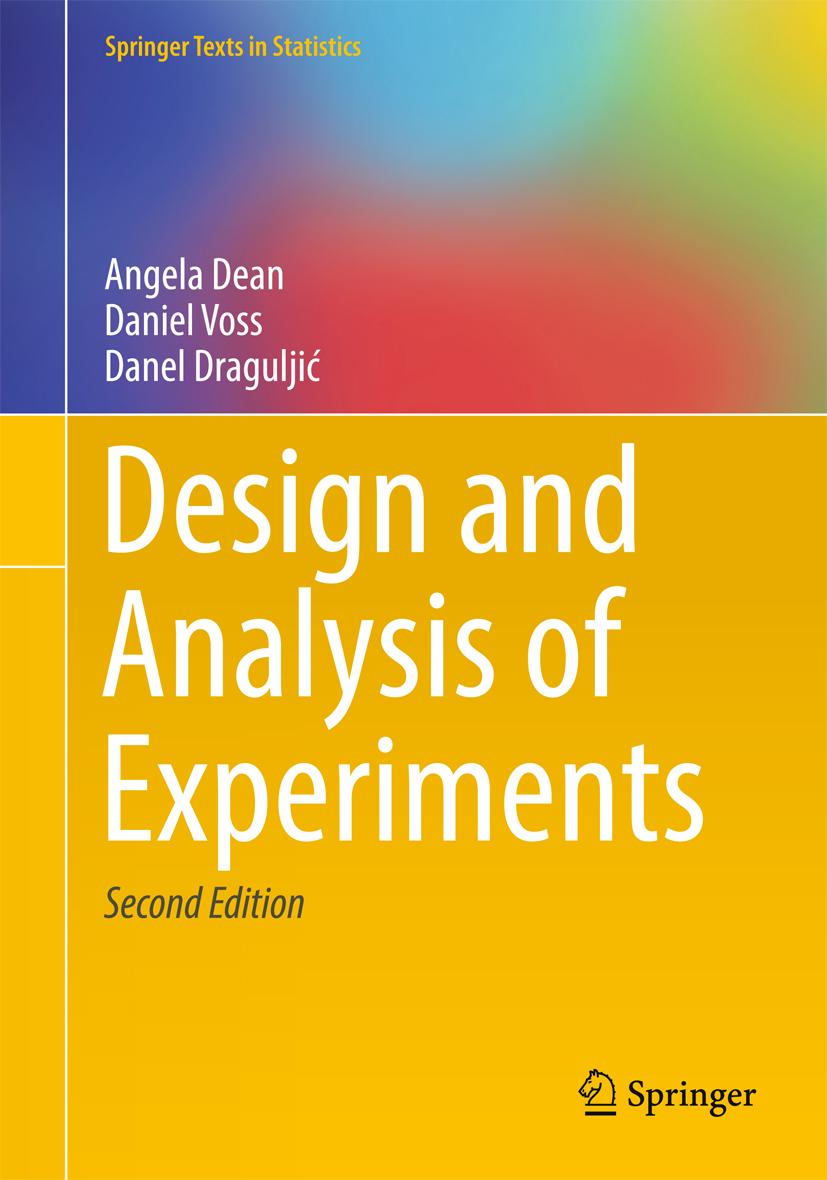
This textbook takes a strategic approach to the broad-reaching subject of experimental design by identifying the objectives behind an experiment and teaching practical considerations that govern design and implementation, concepts that serve as the basis for the analytical techniques covered. Rather than a collection of miscellaneous approaches, chapters build on the planning, running, and analyzing of simple experiments in an approach that results from decades of teaching the subject. In most experiments, the procedures can be reproduced by readers, thus giving them a broad exposure to experiments that are simple enough to be followed through their entire course. Outlines of student and published experiments appear throughout the text and as exercises at the end of the chapters. The authors develop the theory of estimable functions and analysis of variance with detail, but at a mathematical level that is simultaneously approachable. Throughout the book, statistical aspects of analysiscomplement practical aspects of design.
This new, second edition includes
- an additional chapter on computer experiments
- additional "Using R” sections at the end of each chapter to illustrate R code and output
- updated output for all SAS programs and use of SAS Proc Mixed
- new material on screening experiments and analysis of mixed models
Pay easily by card, Klarna, Apple Pay or Google Pay. Not happy? You always have a 14-day money-back guarantee. Read more in our terms. If you have any questions, email us at hello@memmo.org.
Memmo makes studying easier – wherever you are in the world. We bring your course books and smart study tools together in one place: summaries, quizzes, podcasts and flashcards. Plus Ted, your study buddy who answers anything you wonder. Over 75,000 students already study here – built to help you learn faster and stress less.