
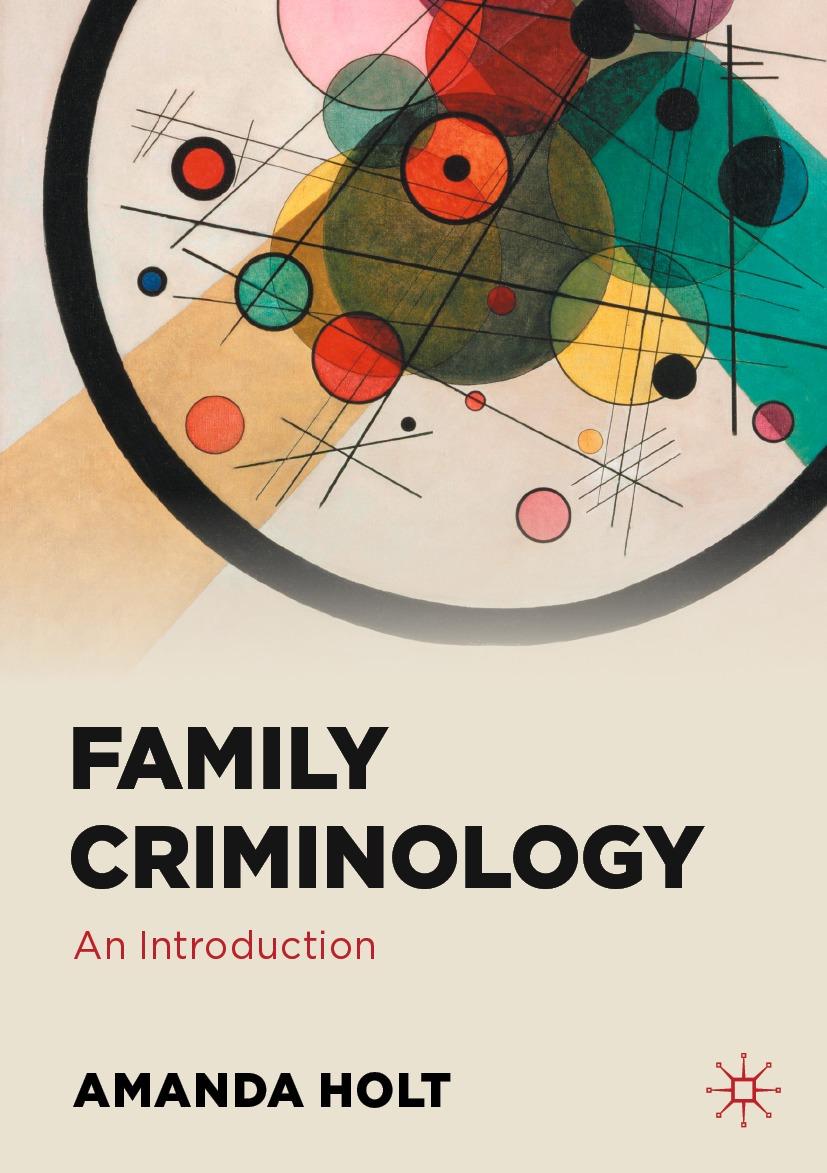
This full-colour textbook offers a fresh conceptual approach to understanding the intersections of crime, criminal justice and family life. In doing so, it proposes a brand new sub-discipline of Criminology that places the family at the heart of its analysis, offering a groundbreaking approach to the study of crime and deviance. Adopting an interdisciplinary perspective, this introductory text explores topics from across the spectrum of criminological scholarship, including youth justice, prisons, organized crime, family violence and homicide, and victimology.
By drawing together these distinct topics and identifying and discussing their familial connections, this book argues for the importance of family life in the theory and practice of crime and justice. Key questions discussed throughout the text include: How does the criminal justice system engage with families across different contexts? In what ways do crime and criminal justice processes impact on family life? Inwhat ways can families transform the criminal justice system for the betterment of all? This book challenges commonly-held and simplistic assumptions about what the family is in relation to crime and justice and, by doing so, engages in deeper debates about human rights, social justice and the role of the state in relation to families and crime. It includes pedagogic features including conceptual toolboxes, questions for reflection, textboxes, a glossary and interviews with practitioners.
Pay easily by card, Klarna, Apple Pay or Google Pay. Not happy? You always have a 14-day money-back guarantee. Read more in our terms. If you have any questions, email us at hello@memmo.org.
Memmo makes studying easier – wherever you are in the world. We bring your course books and smart study tools together in one place: summaries, quizzes, podcasts and flashcards. Plus Ted, your study buddy who answers anything you wonder. Over 50,000 students already study here – built to help you learn faster and stress less.