
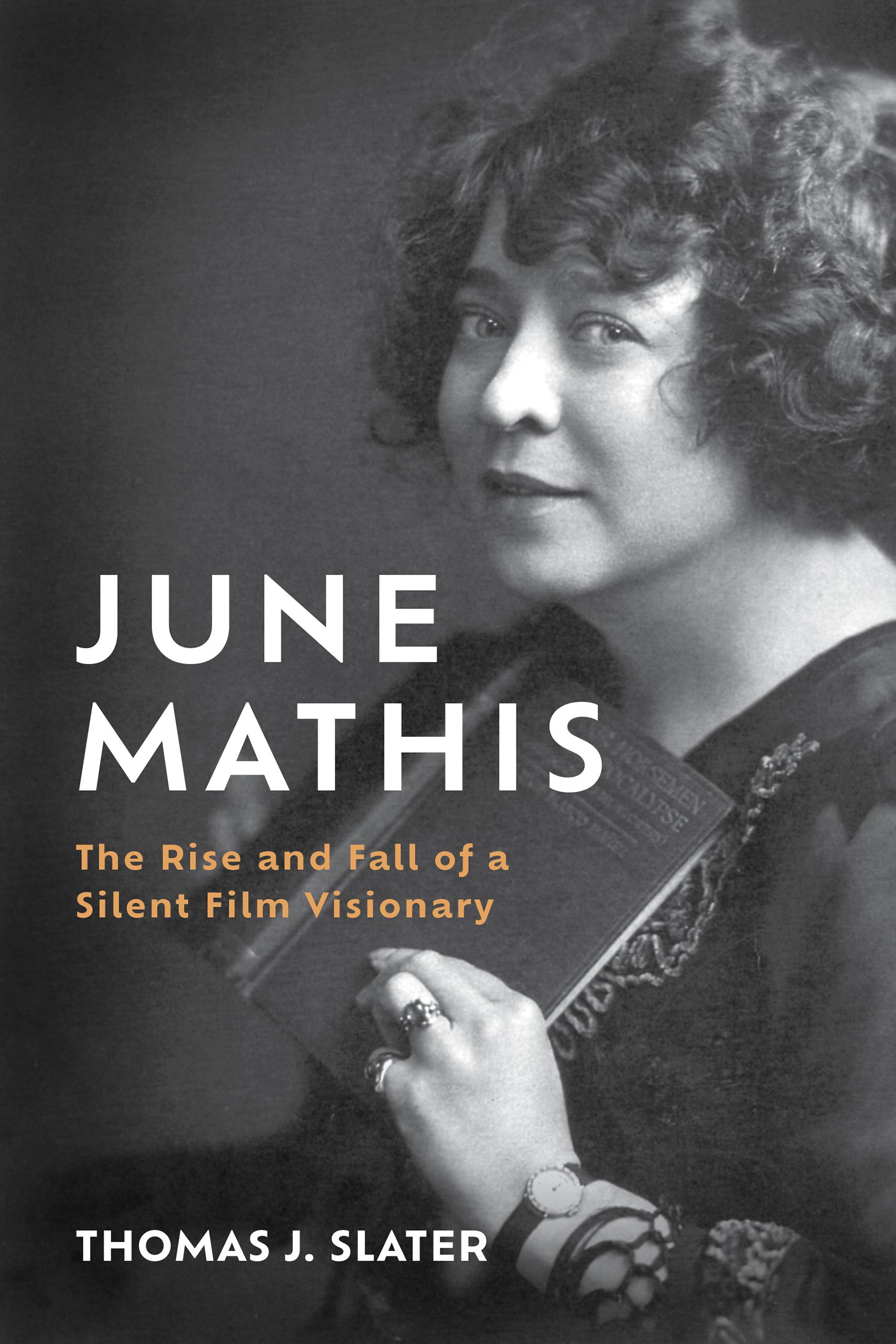
Along with thousands of other girls who hoped to escape tedious employment and domesticity, June Mathis (1887–1927) started acting as a young teen. After more than a decade of stepping onto stages across the US, she moved into the burgeoning film business and behind the camera to begin a prolific career as a screenwriter and producer for profound movies like The Four Horsemen of the Apocalypse (1921) and Blood and Sand (1922). With her expert use of melodrama and masterful technique, Mathis would eventually become the first female head writer at Metro Pictures.
In June Mathis: The Rise and Fall of a Silent Film Visionary, Thomas J. Slater illuminates Mathis's important and complicated life and work, not only detailing her discovery of the silent movie superstar Rudolph Valentino and her involvement on the original screenplay for Ben-Hur (1925) but also her prowess in all aspects of production. Slater pulls from historical records as well as letters, never-before-studied scripts, and Mathis's handwritten will to build a robust narrative for someone who always had to struggle for success, even though Photoplay acknowledged her as "the most powerful woman in the motion picture industry" in 1923. Slater discusses Mathis's artistic and moral failings, as well as how her efforts—such as overlooked collaborations with writer Katharine Kavanaugh and actress Alla Nazimova—consistently challenged male dominance, militarism, and greed.
Despite her talent and achievements, Mathis was pushed to the margins when the industry began removing women from spheres of influence. Following a few months of freelancing, she suffered a heart attack during a Broadway show and died at the age of forty. Very quickly, this woman whose ideas shaped American film for more than a decade was forgotten. June Mathis portrays the cinematic legacy of this "million-dollar girl" whose complex story ended too soon but remains relevant today.
Pay easily by card, Klarna, Apple Pay or Google Pay. Not happy? You always have a 14-day money-back guarantee. Read more in our terms. If you have any questions, email us at hello@memmo.org.
Memmo makes studying easier – wherever you are in the world. We bring your course books and smart study tools together in one place: summaries, quizzes, podcasts and flashcards. Plus Ted, your study buddy who answers anything you wonder. Over 50,000 students already study here – built to help you learn faster and stress less.