
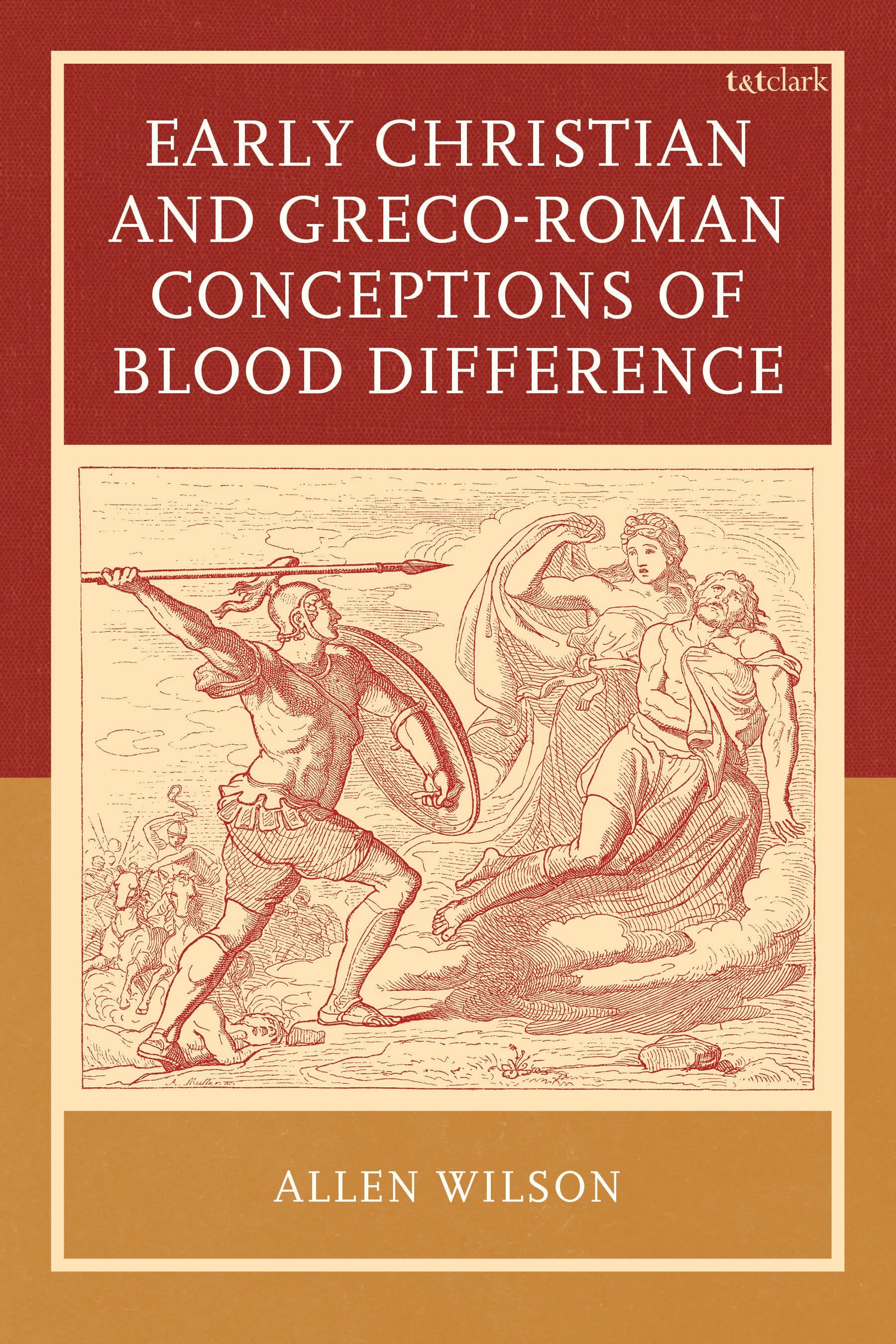
This book interrogates the historical contingency of the common idiom “blood is thicker than water,” asking what the role of Christianity is in the development of blood mythology lurking in everyday speech.
The author examines the concept of blood within Greco-Roman and early Christian contexts, investigating blood's significance beyond a mere biological substance. The analysis traces the evolution of blood's symbolic meaning in order to understand how it relates to conceptions of kinship, purity, and the divine. In the early chapters, the book surveys conceptions of blood and consanguinity in Greco-Roman thought, ranging from the mythologies of Homer and the histories of Livy to the medical descriptions of Galen and Soranus to the ritual descriptions of Jubilees and Ephrem the Syrian. By providing a general survey of Greco-Roman understandings of blood, the book shows, in the remaining chapters, the way specific early Christians drew upon Greco-Roman notions of blood. By outlining how the singularity of the blood of Christ produces different understandings of blood in the writings of Irenaeus, Tertullian, and Origen, the author argues that Christians did not invent blood differentiation but they do intensify the symbolic power of blood to make a difference.
The author examines the concept of blood within Greco-Roman and early Christian contexts, investigating blood's significance beyond a mere biological substance. The analysis traces the evolution of blood's symbolic meaning in order to understand how it relates to conceptions of kinship, purity, and the divine. In the early chapters, the book surveys conceptions of blood and consanguinity in Greco-Roman thought, ranging from the mythologies of Homer and the histories of Livy to the medical descriptions of Galen and Soranus to the ritual descriptions of Jubilees and Ephrem the Syrian. By providing a general survey of Greco-Roman understandings of blood, the book shows, in the remaining chapters, the way specific early Christians drew upon Greco-Roman notions of blood. By outlining how the singularity of the blood of Christ produces different understandings of blood in the writings of Irenaeus, Tertullian, and Origen, the author argues that Christians did not invent blood differentiation but they do intensify the symbolic power of blood to make a difference.
Pages: 176
Category: Religion & Teologi
e-ISBN: 9781978771901
Shipping weight: 1.2 kg
Ships in: 1-2 days
Pay easily by card, Klarna, Apple Pay or Google Pay. Not happy? You always have a 14-day money-back guarantee. Read more in our terms. If you have any questions, email us at hello@memmo.org.
Memmo makes studying easier – wherever you are in the world. We bring your course books and smart study tools together in one place: summaries, quizzes, podcasts and flashcards. Plus Ted, your study buddy who answers anything you wonder. Over 50,000 students already study here – built to help you learn faster and stress less.