
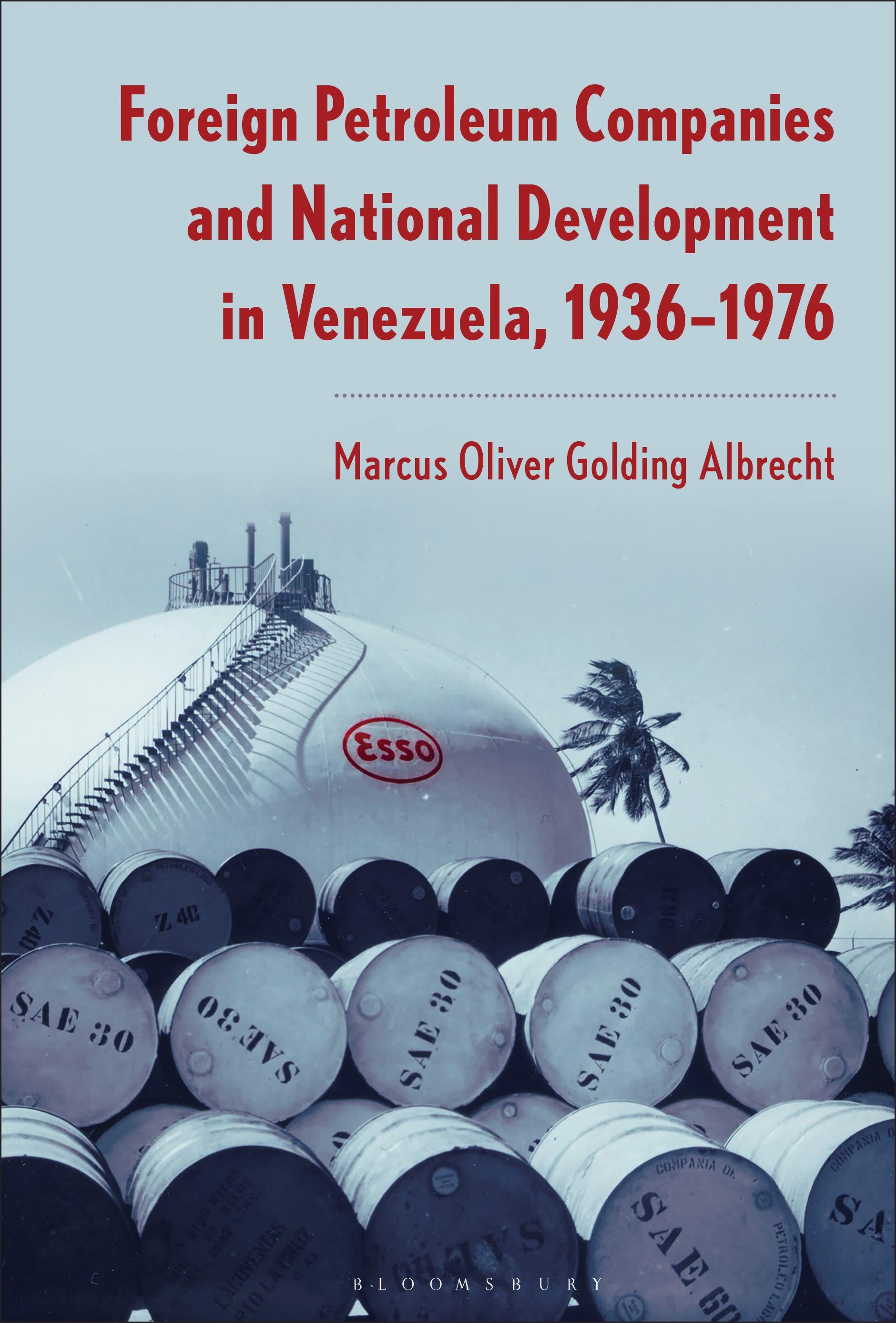
This book uncovers how foreign oil firms, particularly the Creole Petroleum Corporation, embedded themselves deeply in Venezuelan society between 1936 and 1976 by embracing an ambitious and unusually expansive model of corporate social responsibility. Drawing from archival research and five richly contextualized chapters, the book explains how multinational companies navigated labor unrest, rising economic nationalism, Cold War politics, and the turbulent path to nationalization by aligning foreign capital with national development priorities.
The book follows these efforts across multiple arenas: the company's adaptation to labor movements and legal reforms in the 1930s and 1940s; its role in public diplomacy and Cold War political coalitions; its construction of a national modernization narrative through mass communication; and its influence on the technocratic blueprint that shaped the 1976 nationalization. By tracing how multinational oil firms integrated themselves into Venezuela's social fabric and political landscape, Foreign Capital and the Venezuelan Oil Industry, 1936-76 offers a fresh interpretation of the relationship between foreign capital and host states, one in which corporate strategies, local partnerships, and social investments helped maintain stability, mitigate nationalism, and redefine what it meant to operate in the Global South.
The book follows these efforts across multiple arenas: the company's adaptation to labor movements and legal reforms in the 1930s and 1940s; its role in public diplomacy and Cold War political coalitions; its construction of a national modernization narrative through mass communication; and its influence on the technocratic blueprint that shaped the 1976 nationalization. By tracing how multinational oil firms integrated themselves into Venezuela's social fabric and political landscape, Foreign Capital and the Venezuelan Oil Industry, 1936-76 offers a fresh interpretation of the relationship between foreign capital and host states, one in which corporate strategies, local partnerships, and social investments helped maintain stability, mitigate nationalism, and redefine what it meant to operate in the Global South.
Pay easily by card, Klarna, Apple Pay or Google Pay. Not happy? You always have a 14-day money-back guarantee. Read more in our terms. If you have any questions, email us at hello@memmo.org.
Memmo makes studying easier – wherever you are in the world. We bring your course books and smart study tools together in one place: summaries, quizzes, podcasts and flashcards. Plus Ted, your study buddy who answers anything you wonder. Over 50,000 students already study here – built to help you learn faster and stress less.