
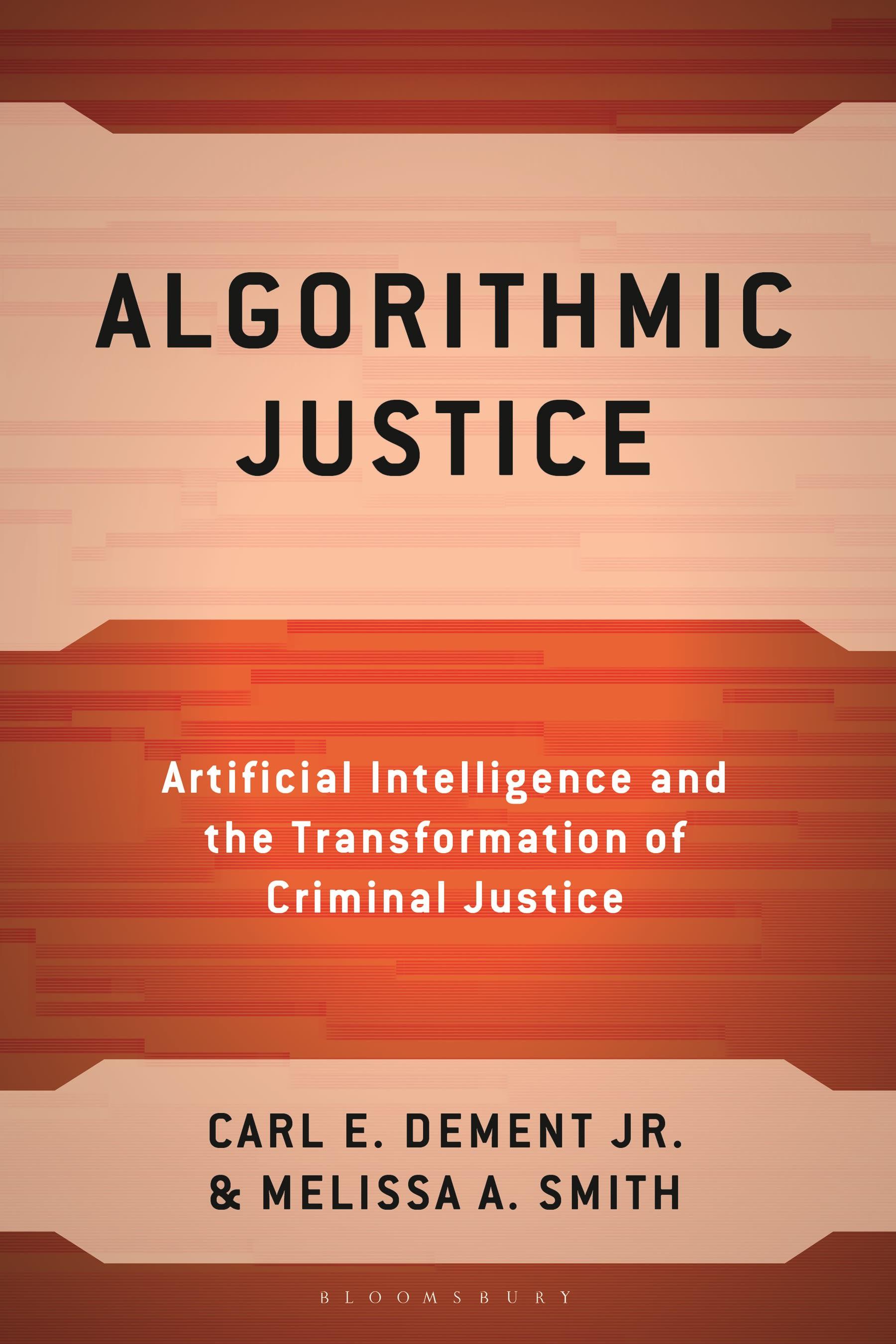
While AI-assisted tools promise greater efficiency, consistency, and accuracy in criminal justice, they also introduce ethical, procedural, and epistemological challenges demanding careful oversight.
Carl E. Dement Jr. and Melissa A. Smith investigate the rapidly evolving relationship between artificial intelligence and the written narratives that shape the criminal justice process. Drawing on original interviews with judges, prosecutors, defense attorneys, law enforcement officers, and forensic specialists, they examine how large language models are transforming the way case narratives are drafted, reviewed, and interpreted. Situating these shifts within wider debates about trust, human judgment, and the role of technology in public service, the book blends empirical insight with careful analysis, offering a balanced, accessible framework for understanding both the promise and the risks of AI-assisted writing in criminal justice settings. Dement and Smith ultimately show that the integrity of future justice narratives will depend not on AI alone, but on thoughtful human–AI collaboration grounded in expertise, ethics, and accountability-reminding readers that how and who writes justice shapes how we deliver it.
Carl E. Dement Jr. and Melissa A. Smith investigate the rapidly evolving relationship between artificial intelligence and the written narratives that shape the criminal justice process. Drawing on original interviews with judges, prosecutors, defense attorneys, law enforcement officers, and forensic specialists, they examine how large language models are transforming the way case narratives are drafted, reviewed, and interpreted. Situating these shifts within wider debates about trust, human judgment, and the role of technology in public service, the book blends empirical insight with careful analysis, offering a balanced, accessible framework for understanding both the promise and the risks of AI-assisted writing in criminal justice settings. Dement and Smith ultimately show that the integrity of future justice narratives will depend not on AI alone, but on thoughtful human–AI collaboration grounded in expertise, ethics, and accountability-reminding readers that how and who writes justice shapes how we deliver it.
Pay easily by card, Klarna, Apple Pay or Google Pay. Not happy? You always have a 14-day money-back guarantee. Read more in our terms. If you have any questions, email us at hello@memmo.org.
Memmo makes studying easier – wherever you are in the world. We bring your course books and smart study tools together in one place: summaries, quizzes, podcasts and flashcards. Plus Ted, your study buddy who answers anything you wonder. Over 50,000 students already study here – built to help you learn faster and stress less.