
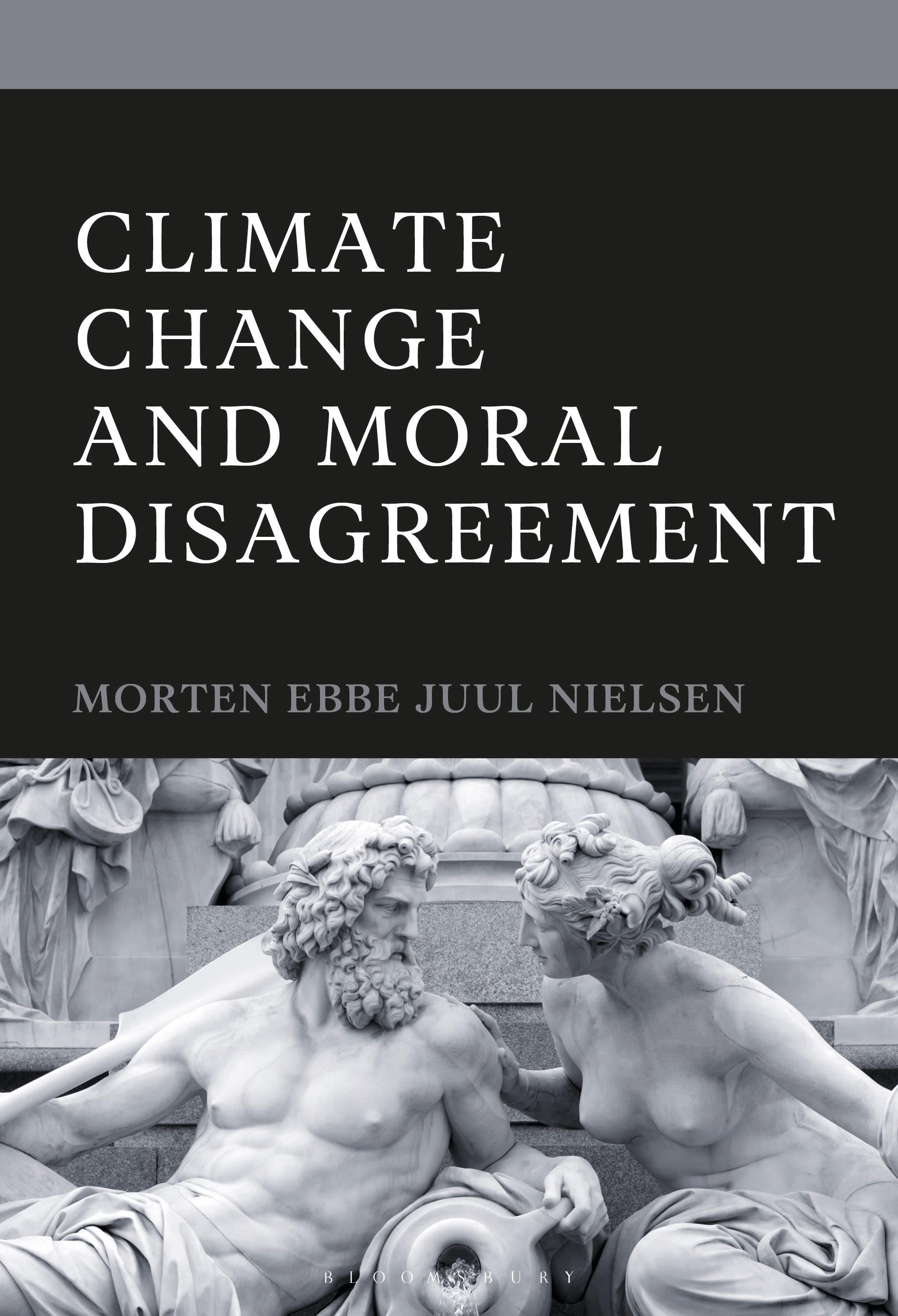
Moral Disagreement and Climate Change addresses the following problem: Assume, first, that our excessive production of Greenhouse Gases contributes significantly to what may be very serious detrimental effects on our climate and hence our welfare. Solving this issue will inevitably be costly. Assume, furthermore, that we disagree reasonably about how to distribute costs, and how to conceive of the moral problem of climate change to begin with. How can we make progress in the light of this reasonable disagreement? The author argues that we can learn from two related but distinct schools of thought in contemporary philosophy: the idea of conciliationism (when a peer that is equal to you in terms of knowledge about some domain disagrees, you have reason to find compromises) and the idea of public reason (only policies or rules that are, at some level of idealization, acceptable to all can be justified.) Via these two ideas, the author analyzes various important aspects of climate change and suggests that we can find ways to address the issue that are indeed justifiable to all. Disagreement does not mean paralysis.
Pay easily by card, Klarna, Apple Pay or Google Pay. Not happy? You always have a 14-day money-back guarantee. Read more in our terms. If you have any questions, email us at hello@memmo.org.
Memmo makes studying easier – wherever you are in the world. We bring your course books and smart study tools together in one place: summaries, quizzes, podcasts and flashcards. Plus Ted, your study buddy who answers anything you wonder. Over 50,000 students already study here – built to help you learn faster and stress less.