
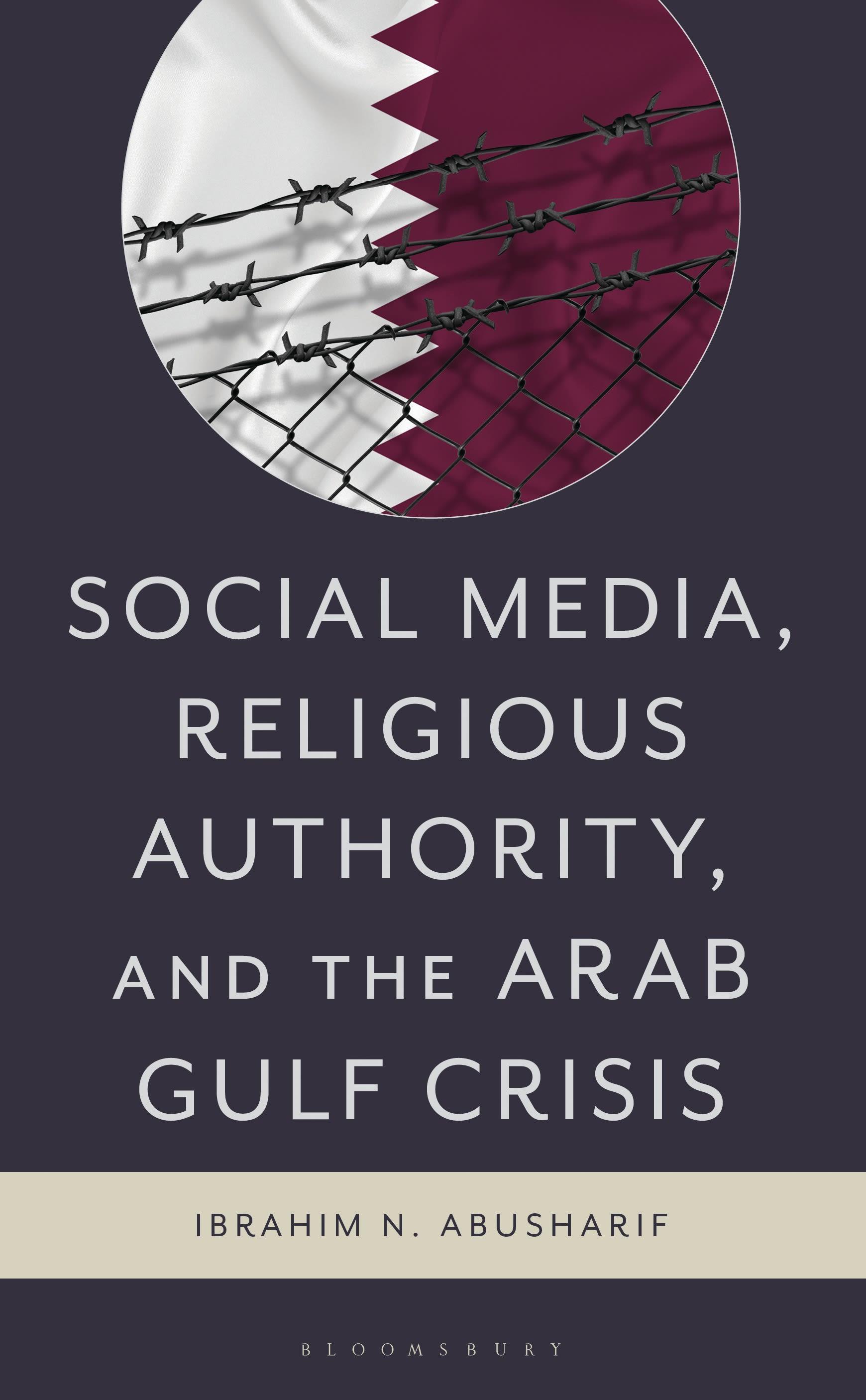
Social Media, Religious Authority, and the Arab Gulf Crisis examines how the Arab Gulf Crisis (2017–2021) led to a robust social media reaction that significantly-and perhaps perpetually-changed the ways in which religious authority manifests in the digital age.
Positioning the Arab Gulf Crisis as a key moment in the transformation of public religious expression in the Gulf, Ibrahim N. Abusharif traces how religious authority was mobilized through digital media, a venue in which the authority of traditional scholars increasingly contended with a networked public sphere. As discourse shifted prominently on social media, he contends that the significance of this “digital battlefield” became heightened as state actors, religious scholars, and influencers leveraged Islamic language and philosophy to justify their positionality and, more importantly, to compete for narrative control of the conflict.
Abusharif provides close analyses of a range of media texts to demonstrate how scriptural allusions, moral framing, and juridical language were strategically deployed to influence the crisis. Throughout these analyses, he challenges prevailing binary frameworks to propose an interdisciplinary methodology which combines media studies and Islamic studies approaches, arguing for its necessity in forming a fuller understanding of the complex digital discourses associated with this conflict. Ultimately, this work offers a deep examination of how religion, media, and politics intersect in the digital age more broadly, leading us to consider how future crises might continue to develop across both physical and digital terrains.
Positioning the Arab Gulf Crisis as a key moment in the transformation of public religious expression in the Gulf, Ibrahim N. Abusharif traces how religious authority was mobilized through digital media, a venue in which the authority of traditional scholars increasingly contended with a networked public sphere. As discourse shifted prominently on social media, he contends that the significance of this “digital battlefield” became heightened as state actors, religious scholars, and influencers leveraged Islamic language and philosophy to justify their positionality and, more importantly, to compete for narrative control of the conflict.
Abusharif provides close analyses of a range of media texts to demonstrate how scriptural allusions, moral framing, and juridical language were strategically deployed to influence the crisis. Throughout these analyses, he challenges prevailing binary frameworks to propose an interdisciplinary methodology which combines media studies and Islamic studies approaches, arguing for its necessity in forming a fuller understanding of the complex digital discourses associated with this conflict. Ultimately, this work offers a deep examination of how religion, media, and politics intersect in the digital age more broadly, leading us to consider how future crises might continue to develop across both physical and digital terrains.
Pay easily by card, Klarna, Apple Pay or Google Pay. Not happy? You always have a 14-day money-back guarantee. Read more in our terms. If you have any questions, email us at hello@memmo.org.
Memmo makes studying easier – wherever you are in the world. We bring your course books and smart study tools together in one place: summaries, quizzes, podcasts and flashcards. Plus Ted, your study buddy who answers anything you wonder. Over 75,000 students already study here – built to help you learn faster and stress less.