
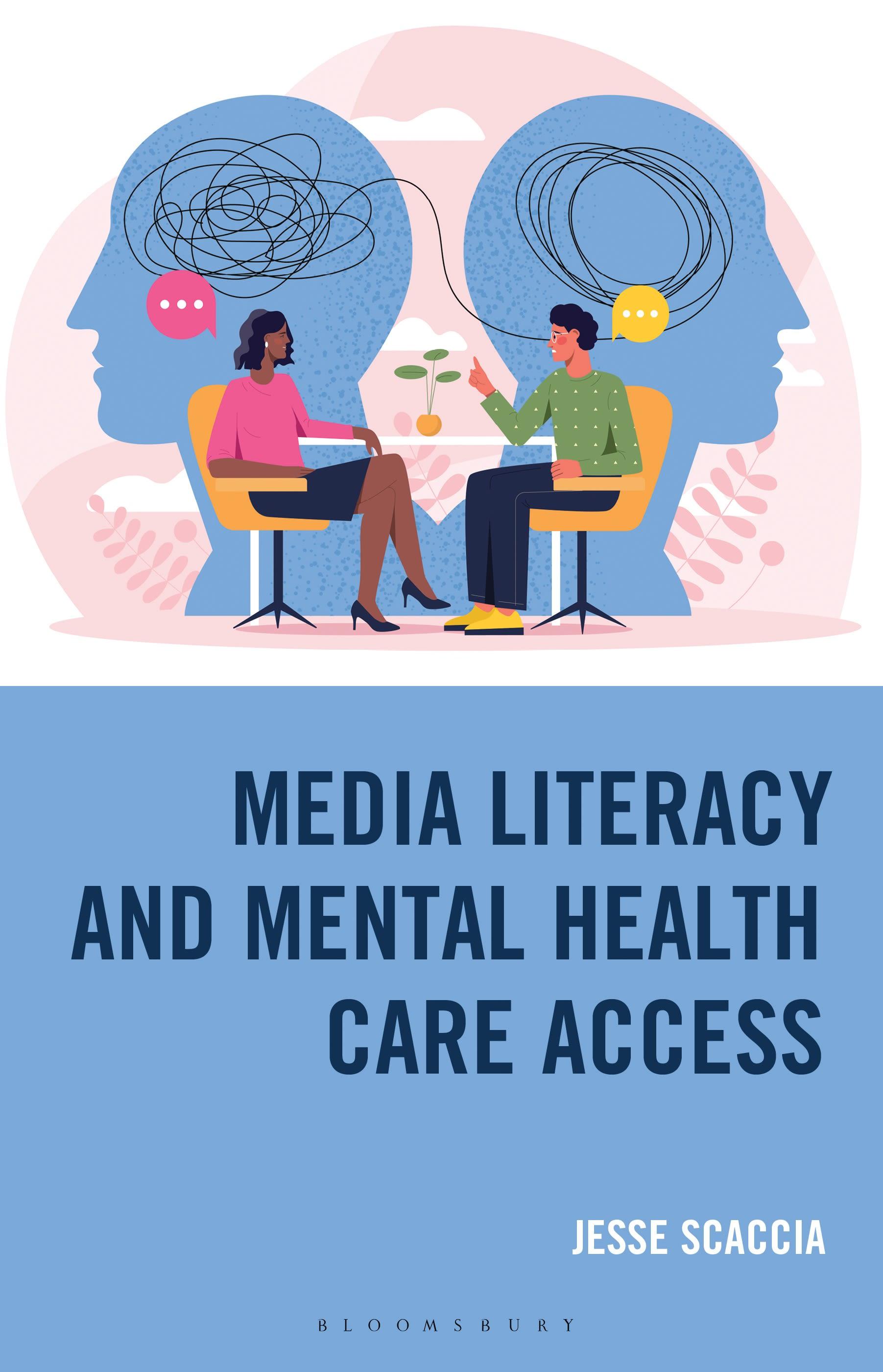
In this book, Jesse Scaccia argues that while courses that teach students how news, media, and social media might cause or worsen mental health issues are a promising start, media literacy education also needs to teach young adults how to reach mental health care when they need it.
Drawing from both scholarly research and personal experience, Scaccia explores the critical role of media literacy in helping young adults navigate the often-confusing path to mental health care, demonstrating that media is not just a potential cause of mental health challenges-it is also a crucial part of the solution. Through original interviews with young adults and mental health care providers in California's Central Valley, he examines how media messaging, platforms, and literacy levels affect whether and how young people access care. The book also incorporates empirical data and theoretical frameworks from health communication to reveal barriers to care like stigma, functional impairment, and misinformation.
Ultimately, this book calls on educators, legislators, and health professionals to treat media literacy as a public health imperative that must equip young adults with the skills to both understand the media around them and use it to reach the help they need.
Drawing from both scholarly research and personal experience, Scaccia explores the critical role of media literacy in helping young adults navigate the often-confusing path to mental health care, demonstrating that media is not just a potential cause of mental health challenges-it is also a crucial part of the solution. Through original interviews with young adults and mental health care providers in California's Central Valley, he examines how media messaging, platforms, and literacy levels affect whether and how young people access care. The book also incorporates empirical data and theoretical frameworks from health communication to reveal barriers to care like stigma, functional impairment, and misinformation.
Ultimately, this book calls on educators, legislators, and health professionals to treat media literacy as a public health imperative that must equip young adults with the skills to both understand the media around them and use it to reach the help they need.
Pay easily by card, Klarna, Apple Pay or Google Pay. Not happy? You always have a 14-day money-back guarantee. Read more in our terms. If you have any questions, email us at hello@memmo.org.
Memmo makes studying easier – wherever you are in the world. We bring your course books and smart study tools together in one place: summaries, quizzes, podcasts and flashcards. Plus Ted, your study buddy who answers anything you wonder. Over 50,000 students already study here – built to help you learn faster and stress less.