
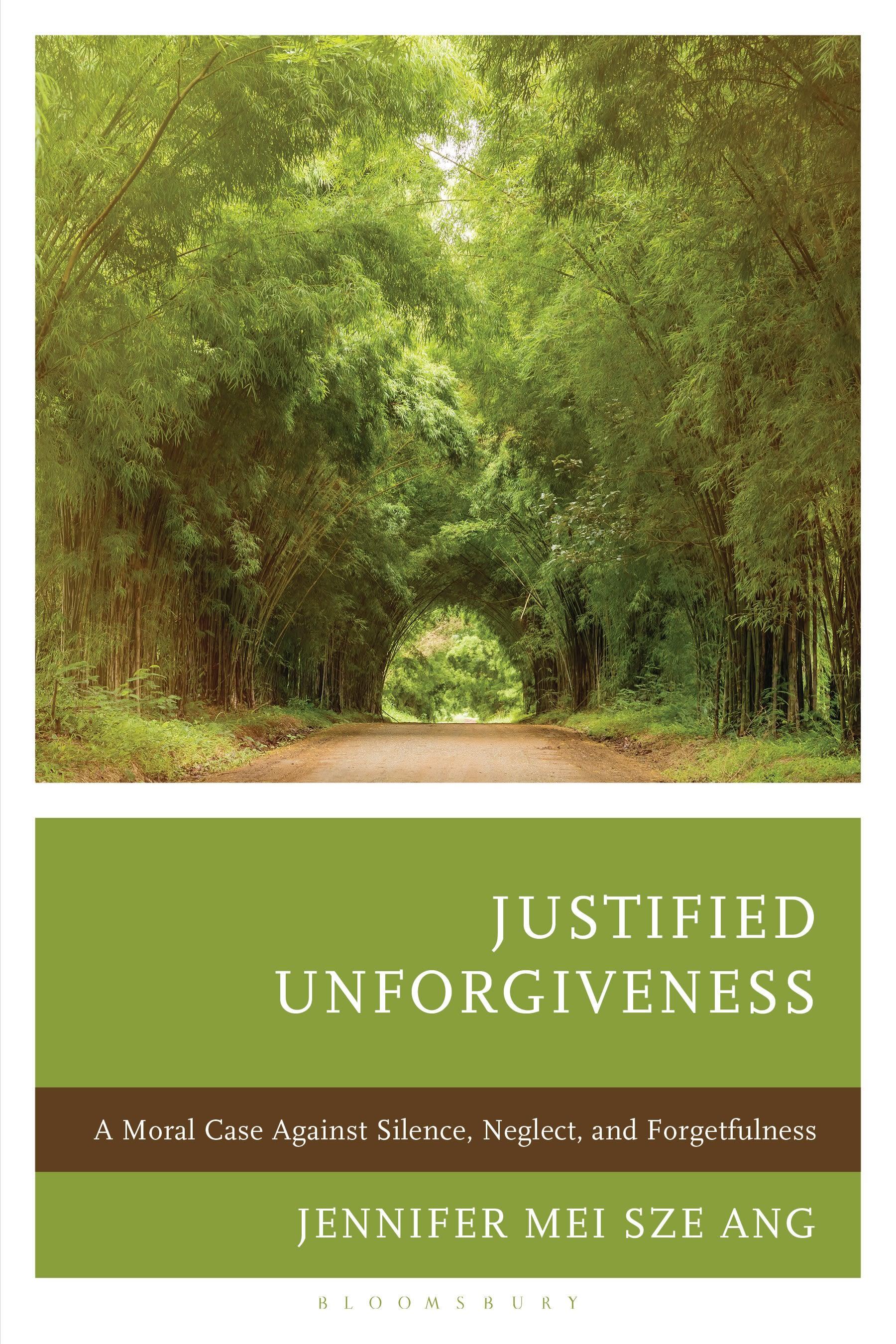
Justified Unforgiveness: A Moral Case Against Silence, Neglect, and Forgetfulness corrects the overemphasis on the benefits of forgiveness and shows how unforgiveness is a morally appropriate – and at times morally necessary – response towards unremorseful and unrepentant wrongdoers, grave wrongs brought about by absolute evil, and situations where justice is not served. In advancing an argument for unforgiveness, Jennifer M.S. Ang deals with three dimensions of forgiveness – forgiveness as the letting go of resentment, forgiveness as reparation of damaged moral relations with the community, and forgiveness as letting the past remain in the past. Ang examines these arguments using cases of mass atrocities that are not often discussed in the forgiveness literature, such as the Nanking massacre, the Japanese military comfort women system, and the Khmer Rouge genocide, to reflect on the paradigm example of the Holocaust as absolute evil. These discussions also clarify the relationship between time, forgiveness, and justice– how time can affect the willingness to forgive; how the carrying out of justice over time remains vulnerable to politicization; and how memory of mass atrocities enables victims to let go without forgiving.
Pay easily by card, Klarna, Apple Pay or Google Pay. Not happy? You always have a 14-day money-back guarantee. Read more in our terms. If you have any questions, email us at hello@memmo.org.
Memmo makes studying easier – wherever you are in the world. We bring your course books and smart study tools together in one place: summaries, quizzes, podcasts and flashcards. Plus Ted, your study buddy who answers anything you wonder. Over 50,000 students already study here – built to help you learn faster and stress less.