
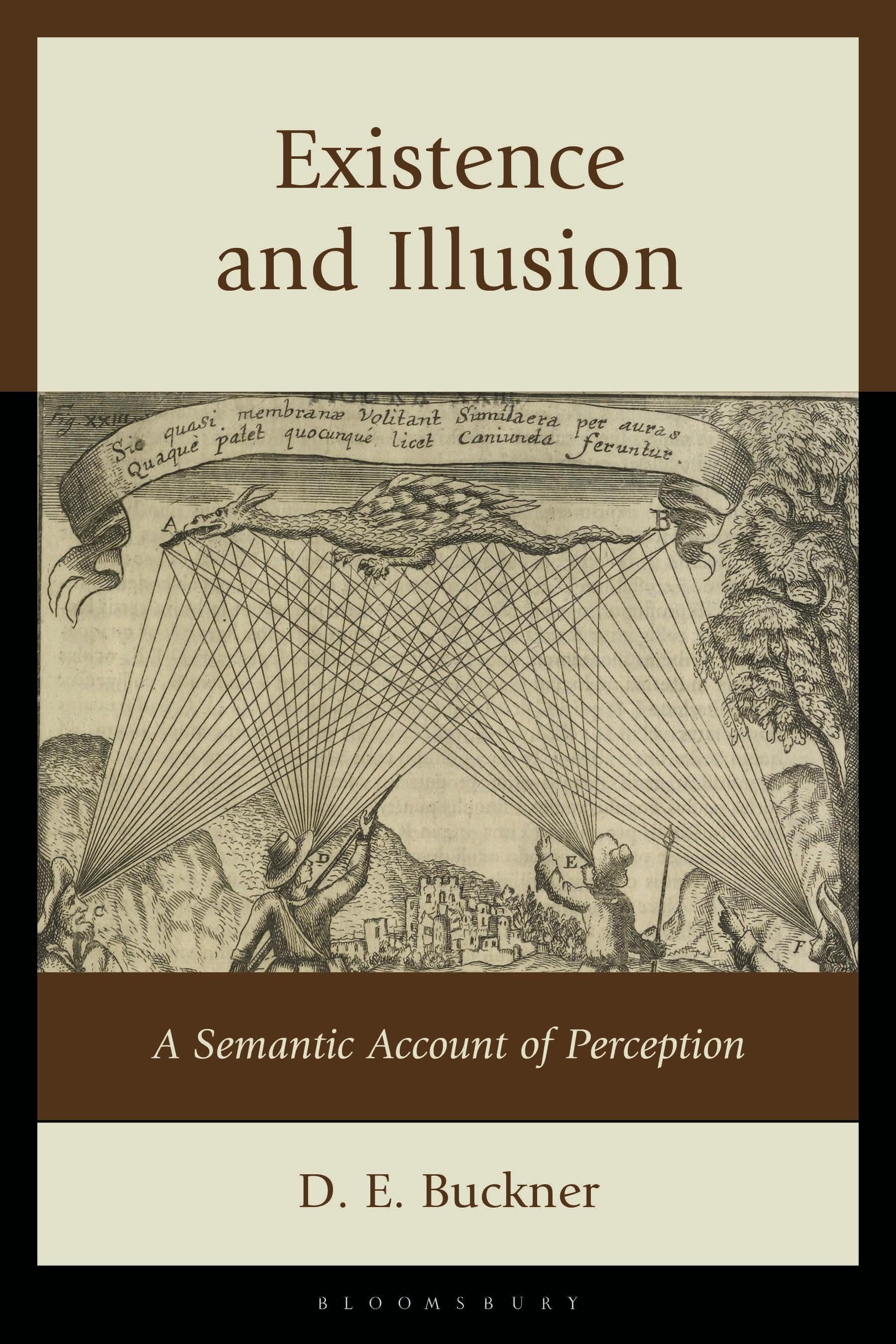
Illusion is a longstanding problem in the philosophy of perception: how can it perceptibly appear that something is the case, though nothing corresponds in reality?
A strong intuition – the Common Kind Assumption that the same account must apply to veridical perception as to illusion – seems to commit us to “weird” mental items like sense data, but an equally strong intuition is that weird items have no place in a parsimonious account of reality.
D.E. Buckner takes a novel approach to this problem, arguing that perceptual states are propositional. Just as the same proposition can be true or false, so the same perceptual state can be veridical or not. Sight tells us that the stick in water is bent, even when our understanding says it is not. This semantic account of perception satisfies the Common Kind Assumption without committing us to weird items.
The book is a fresh approach to the classic problem of illusion, informed by the core topics of philosophical logic: identity, existence, reference and predication. It brings together a number of disparate traditions, including twentieth-century sense datum theory and the subsequent reaction to it; Chastain's anaphoric theory of reference; the Aristotelian notion of a substance (the this of demonstrative reference) and its accidents.
A strong intuition – the Common Kind Assumption that the same account must apply to veridical perception as to illusion – seems to commit us to “weird” mental items like sense data, but an equally strong intuition is that weird items have no place in a parsimonious account of reality.
D.E. Buckner takes a novel approach to this problem, arguing that perceptual states are propositional. Just as the same proposition can be true or false, so the same perceptual state can be veridical or not. Sight tells us that the stick in water is bent, even when our understanding says it is not. This semantic account of perception satisfies the Common Kind Assumption without committing us to weird items.
The book is a fresh approach to the classic problem of illusion, informed by the core topics of philosophical logic: identity, existence, reference and predication. It brings together a number of disparate traditions, including twentieth-century sense datum theory and the subsequent reaction to it; Chastain's anaphoric theory of reference; the Aristotelian notion of a substance (the this of demonstrative reference) and its accidents.
Pay easily by card, Klarna, Apple Pay or Google Pay. Not happy? You always have a 14-day money-back guarantee. Read more in our terms. If you have any questions, email us at hello@memmo.org.
Memmo makes studying easier – wherever you are in the world. We bring your course books and smart study tools together in one place: summaries, quizzes, podcasts and flashcards. Plus Ted, your study buddy who answers anything you wonder. Over 50,000 students already study here – built to help you learn faster and stress less.