
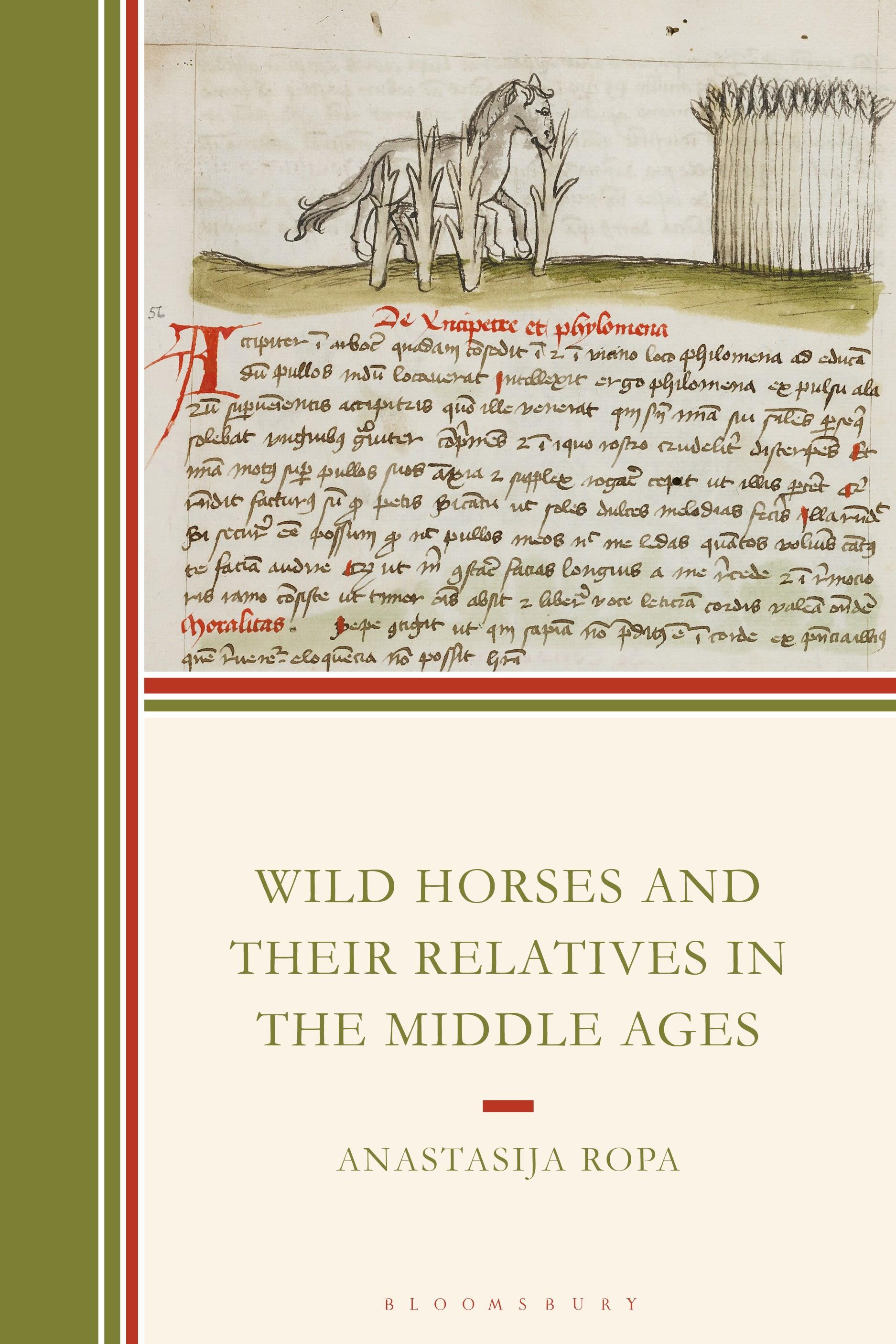
Wild Horses and Their Relatives in the Middle Ages offers a comprehensive and interdisciplinary exploration of the presence, perception, and treatment of wild and feral horses across medieval Europe and adjacent regions. Drawing on archaeological evidence, genetic studies, medieval legal codes, hippiatric treatises, chronicles, and visual culture, the book interrogates the ambiguous status of wild horses in the historical record and challenges modern assumptions about equine domestication.
Anastasija Ropa traces the biological and legal distinctions between wild and domestic horses, and examines how medieval authors and artists depicted equine life. From breeding advice in hippiatric treatises to frescoes showing horse hunts, these sources reveal how horses were embedded in medieval economies, landscapes, and imaginations-not only as laborers and companions but also as symbols of status, wilderness, and power.
Anastasija Ropa traces the biological and legal distinctions between wild and domestic horses, and examines how medieval authors and artists depicted equine life. From breeding advice in hippiatric treatises to frescoes showing horse hunts, these sources reveal how horses were embedded in medieval economies, landscapes, and imaginations-not only as laborers and companions but also as symbols of status, wilderness, and power.
Pay easily by card, Klarna, Apple Pay or Google Pay. Not happy? You always have a 14-day money-back guarantee. Read more in our terms. If you have any questions, email us at hello@memmo.org.
Memmo makes studying easier – wherever you are in the world. We bring your course books and smart study tools together in one place: summaries, quizzes, podcasts and flashcards. Plus Ted, your study buddy who answers anything you wonder. Over 50,000 students already study here – built to help you learn faster and stress less.