
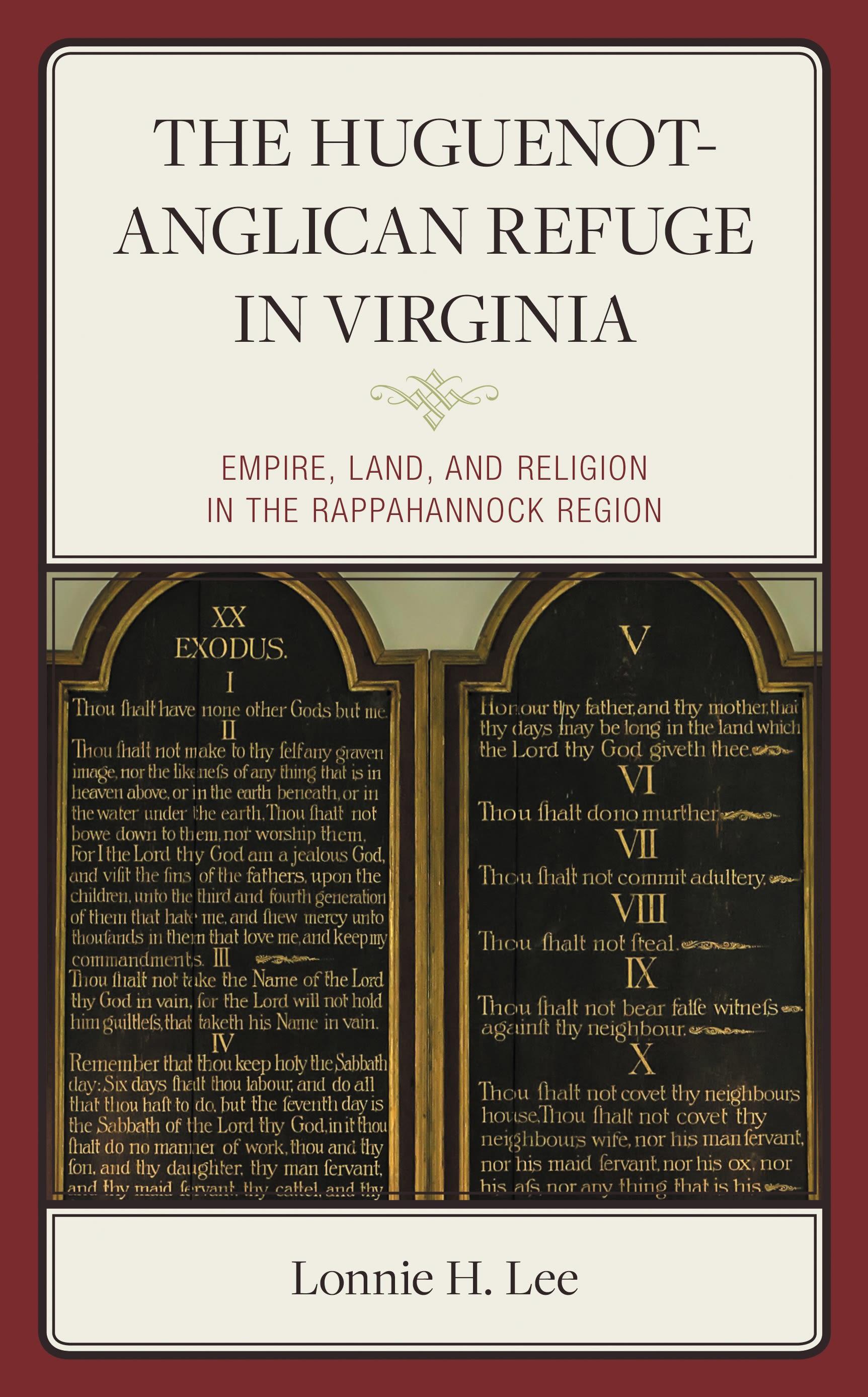
The Huguenot-Anglican Refuge in Virginia is the history of a Huguenot emigrant community established in eight counties along the Rappahannock River of Virginia in 1687, with the arrival of an Anglican-ordained Huguenot minister from Cozes, France named John Bertrand. This Huguenot community, effectively hidden to researchers for more than 300 years, comes to life through the examination of county court records cross-referenced with French Protestant records in England and France. The 261 households and fifty-three indentured servants documented in this study, including a significant group from Bertrand's hometown of Cozes, comprise a large Huguenot migration to English America and the only one to fully embrace Anglicanism from its inception. In July 1687 a French exile named Durand de Dauphiné published a tract at The Hague outlining the pattern and geography of this migration. The tract included a short list of inducements Virginia officials were offering to attract Huguenot settlers to Rappahannock County. These included access to French preaching by a Huguenot minister who would also serve an established Anglican parish, and the availability of inexpensive land. John Bertrand was the first of five French exile ministers performing this dual track ministry in the Rappahannock region between 1687 and 1767.
Pay easily by card, Klarna, Apple Pay or Google Pay. Not happy? You always have a 14-day money-back guarantee. Read more in our terms. If you have any questions, email us at hello@memmo.org.
Memmo makes studying easier – wherever you are in the world. We bring your course books and smart study tools together in one place: summaries, quizzes, podcasts and flashcards. Plus Ted, your study buddy who answers anything you wonder. Over 50,000 students already study here – built to help you learn faster and stress less.