
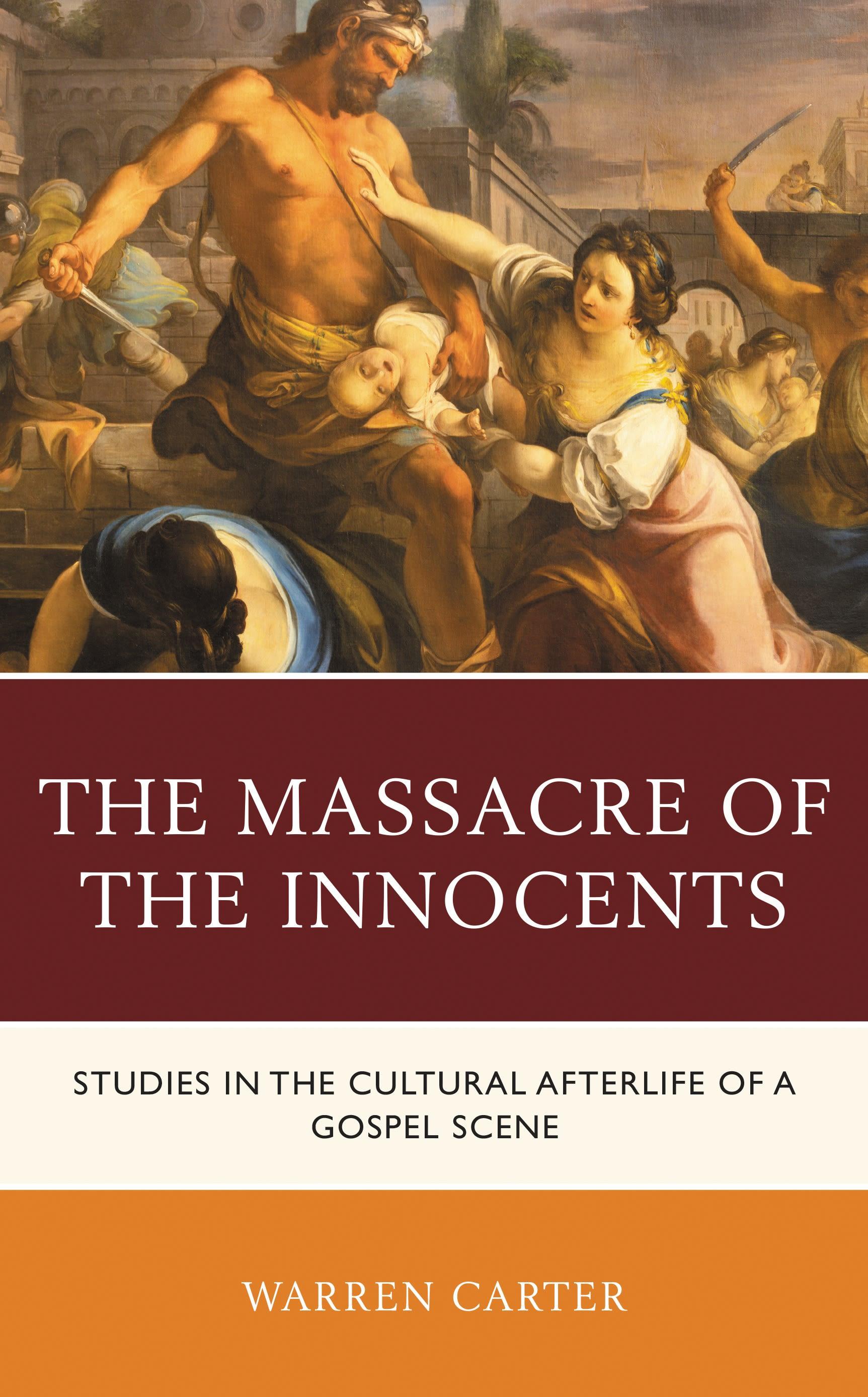
In The Massacre of the Innocents: Studies in the Cultural Afterlife of a Gospel Scene, Warren Carter examines some fifty instances of the interpretation of the Matthean “Massacre of the Innocents” (Matt 2:16-18). He emphasizes the agency of interpreters, who in their particular contexts and media, “think with” the shocking Matthean scene to address the often-tragic circumstances of their audiences. He argues throughout that the structure of the Gospel scene facilitates this “thinking with.” The scene is structured as a triad of power relations with a tyrant (Herod), victims (infants and parents), and violent means of tyranny (the massacre). Interpreters use this triad of power relations to identify tyrant/s, victims, and means of tyranny in their own situations. Carter illustrates the use of this triad of power relations across two millennia, in numerous socio-political contexts, and media as diverse as sermons, images, poems and hymns, dramas and festivals, films, novels, Christmas carols, and Children’s Bibles.
Pay easily by card, Klarna, Apple Pay or Google Pay. Not happy? You always have a 14-day money-back guarantee. Read more in our terms. If you have any questions, email us at hello@memmo.org.
Memmo makes studying easier – wherever you are in the world. We bring your course books and smart study tools together in one place: summaries, quizzes, podcasts and flashcards. Plus Ted, your study buddy who answers anything you wonder. Over 50,000 students already study here – built to help you learn faster and stress less.