
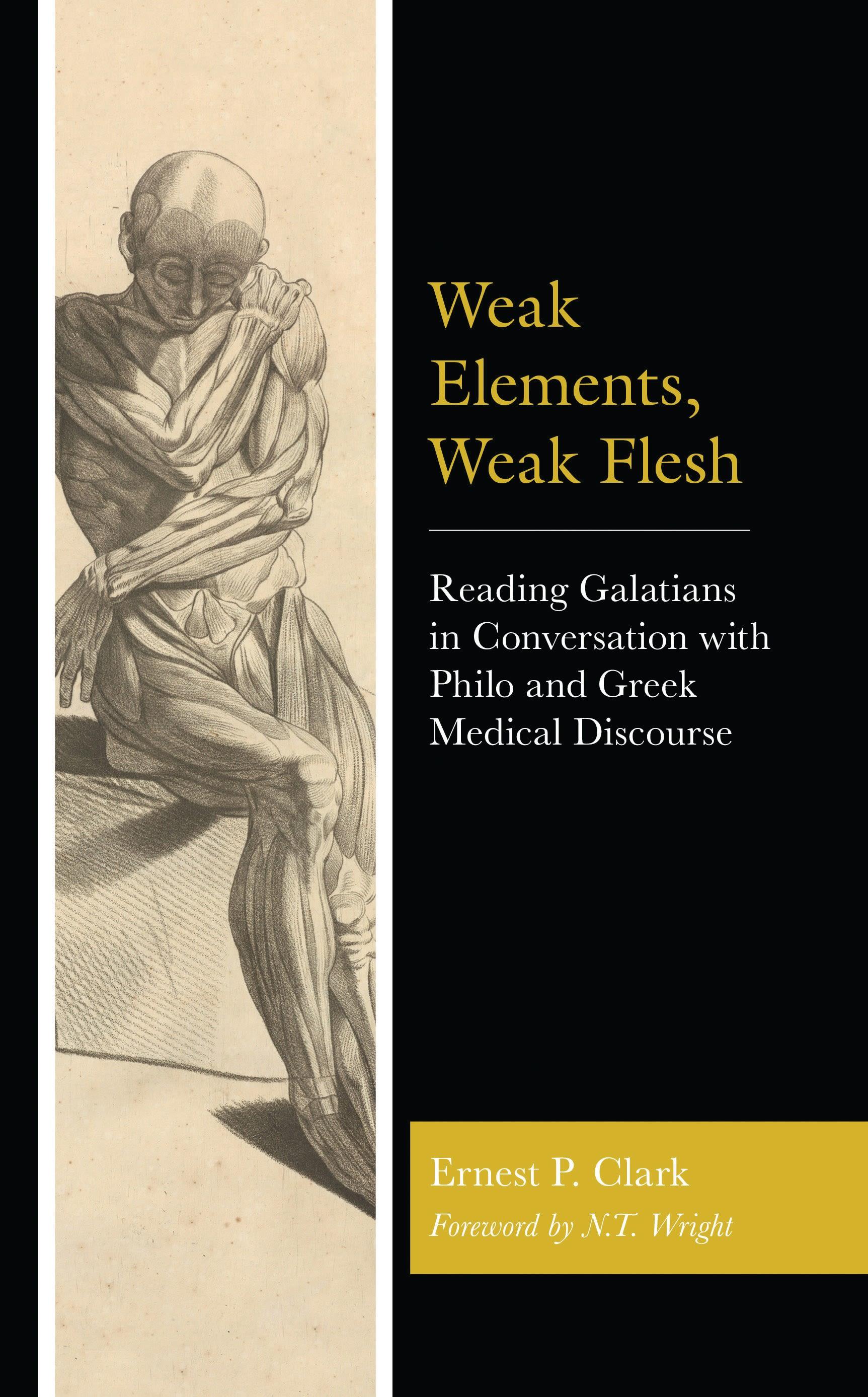
In Weak Elements, Weak Flesh, Ernest Clark reinvigorates an ancient interpretation overlooked since the fourth century. Clark argues that when Paul writes “we too were enslaved under the elements of the world,” he means that the elements that compose the cosmos also compose and compromise the flesh, allowing sin to enslave human persons through their bodies (Gal 4.3). This book demonstrates that early Jews introduced the phrase στοιχε?α το? κ?σμου to refer to the material elements: earth, water, air, and fire. Greek medicine understood these elements to mediate the bodily stimuli and desires which enslave the soul. In his philosophy according to the cosmic elements, Philo promotes the law of Moses as the effective way to be “redeemed from slavery” to the flesh and to attain righteousness. Paul’s epistle to the Galatians opposes this sort of “redemptive nomism.” Paul accepts that weak elements compose the weak flesh and that they mediate sinful stimuli and desires that lead to the actions of the flesh. However, he denies that the law can make people alive or righteous. Instead, Paul prescribes crucifixion with Christ and new life with the Spirit as the cure for sin’s infection of the flesh made of weak elements.
Pay easily by card, Klarna, Apple Pay or Google Pay. Not happy? You always have a 14-day money-back guarantee. Read more in our terms. If you have any questions, email us at hello@memmo.org.
Memmo makes studying easier – wherever you are in the world. We bring your course books and smart study tools together in one place: summaries, quizzes, podcasts and flashcards. Plus Ted, your study buddy who answers anything you wonder. Over 50,000 students already study here – built to help you learn faster and stress less.