
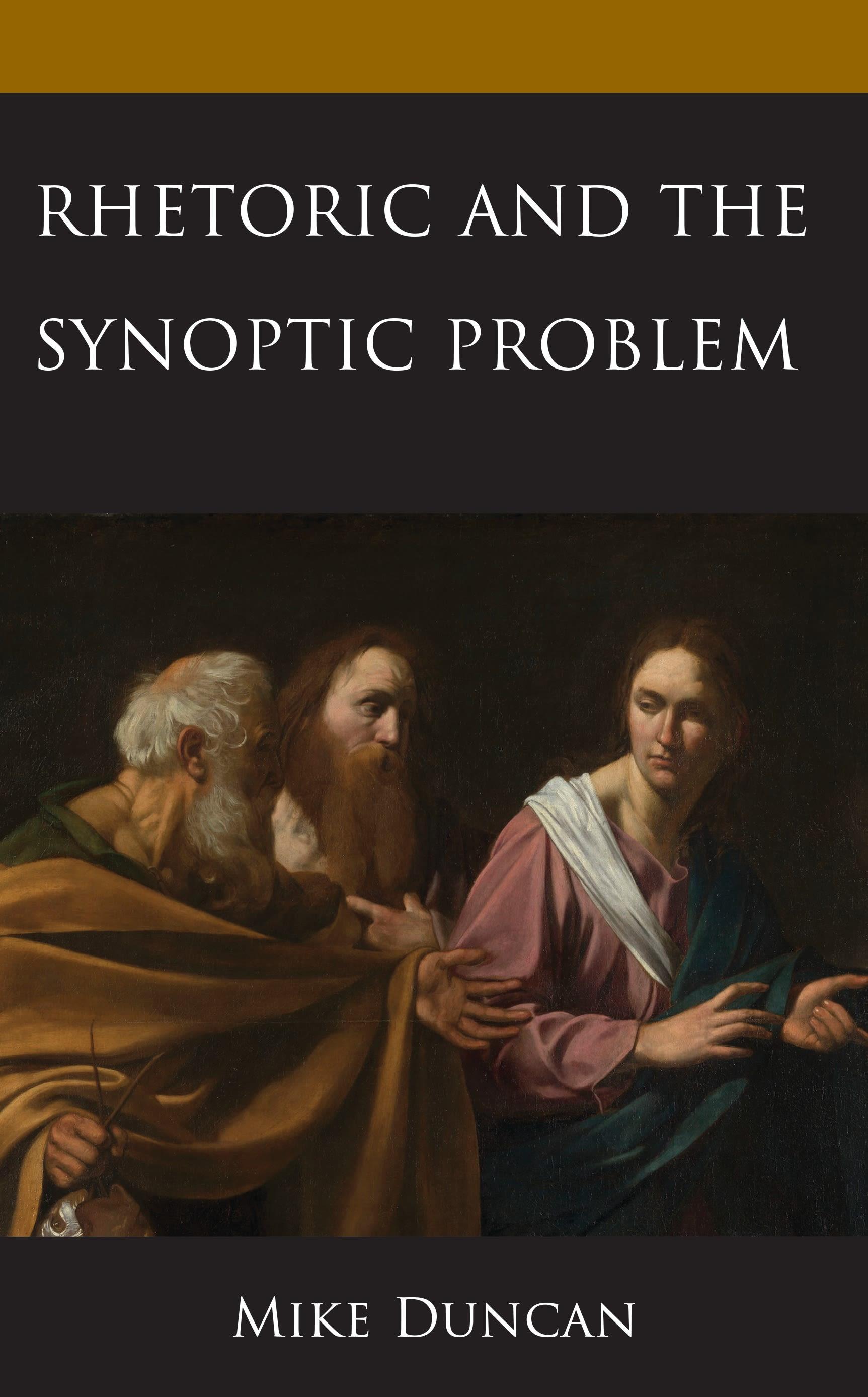
Mike Duncan argues that the Farrer Hypothesis is the best working solution to the Synoptic Problem in New Testament studies by way of rhetorical theory, as he sees the Synoptic Problem as less about source and textual criticism and more as a writing problem that concerns how and why they were composed The book’s six chapters feature case studies of different aspects of gospel rhetoric, such as how the different post-resurrection accounts interact with each other and how the apostles are portrayed from gospel to gospel. These chapters form a collective argument—that the synoptic gospels are competing rhetorical narratives about Jesus, with the authors of Luke and Matthew reacting to previous gospels with the goal of superseding the previously composed versions of Jesus’s life. However, Duncan acknowledges that the Farrer Hypothesis has special difficulties and cannot be pushed beyond an educated guess, that the Synoptic Problem remains an unsolvable problem due to a lack of evidence and lost original context, and that it is only a philosophical acceptance of the inaccessibility of a solution that paradoxically allows a frank and unsentimental view of the alternatives.
Pay easily by card, Klarna, Apple Pay or Google Pay. Not happy? You always have a 14-day money-back guarantee. Read more in our terms. If you have any questions, email us at hello@memmo.org.
Memmo makes studying easier – wherever you are in the world. We bring your course books and smart study tools together in one place: summaries, quizzes, podcasts and flashcards. Plus Ted, your study buddy who answers anything you wonder. Over 50,000 students already study here – built to help you learn faster and stress less.