
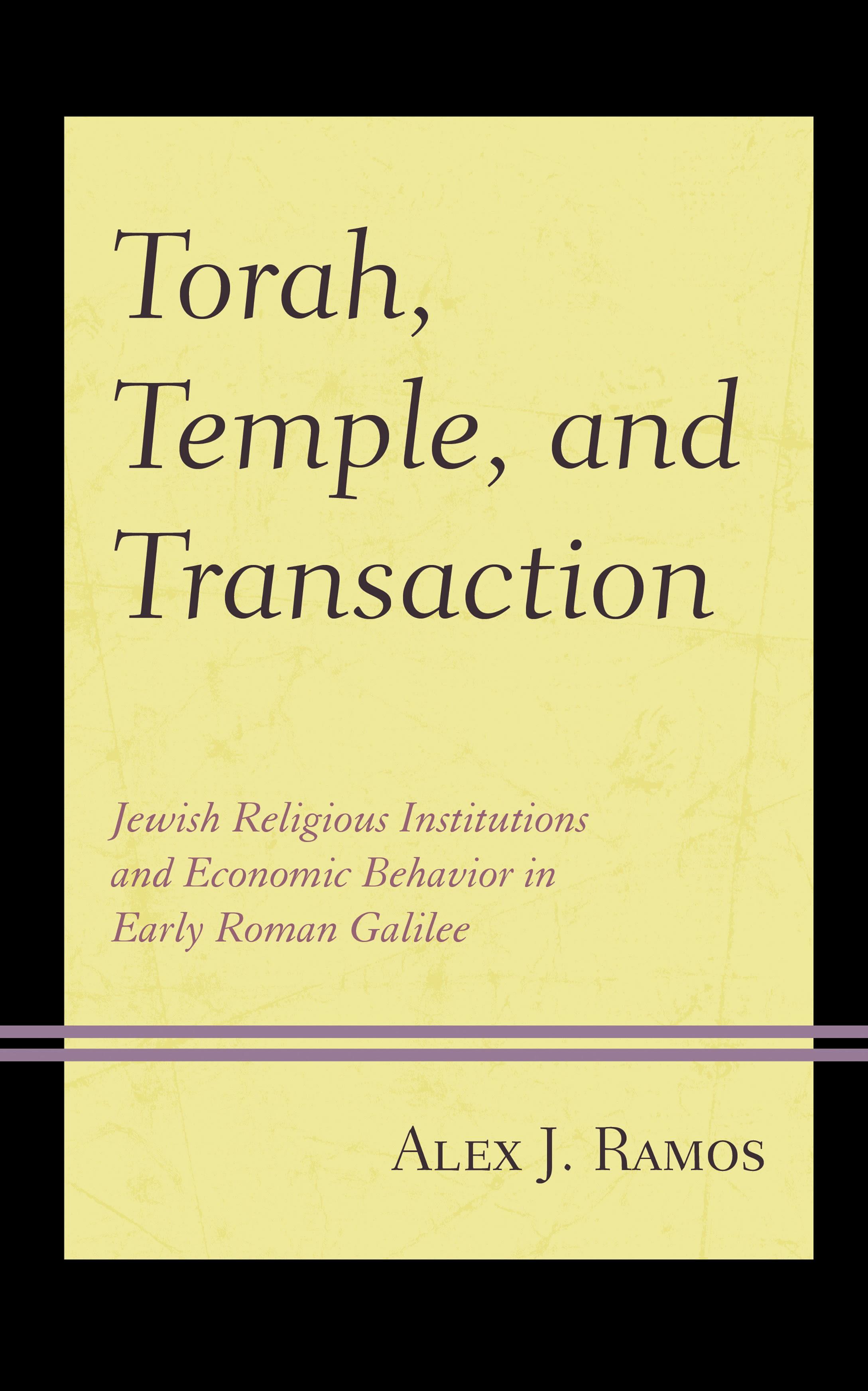
In this book, Alex J. Ramos examines production, consumption, and transaction in the regional economy of Galilee during the Early Roman period. Drawing on literary sources—including biblical texts, Josephus, and the Mishnah—and archaeological evidence, he assesses the ways that the Roman and Herodian states, settlement patterns, and Jewish religious obligations would have shaped household economic behavior. Approaching the topic through new institutional economics, Ramos considers the role of state institutions of administration and taxation and religious institutions derived from the Torah and the Temple in structuring for Galilean Jews the incentives, priorities, and costs of economic decision making. In contrast to classical economic assumptions of what is economically “rational” behavior, he considers the ways that the laws of the Torah defined the bounds of rational and socially permissible approaches to economic production, consumption, and transaction. Ultimately, Ramos argues that state institutions played a rather indirect and weak role in shaping the economy through much of the Early Roman Galilee; religious institutions, by comparison, played a more formative role in defining economic behavior.
Pay easily by card, Klarna, Apple Pay or Google Pay. Not happy? You always have a 14-day money-back guarantee. Read more in our terms. If you have any questions, email us at hello@memmo.org.
Memmo makes studying easier – wherever you are in the world. We bring your course books and smart study tools together in one place: summaries, quizzes, podcasts and flashcards. Plus Ted, your study buddy who answers anything you wonder. Over 50,000 students already study here – built to help you learn faster and stress less.