
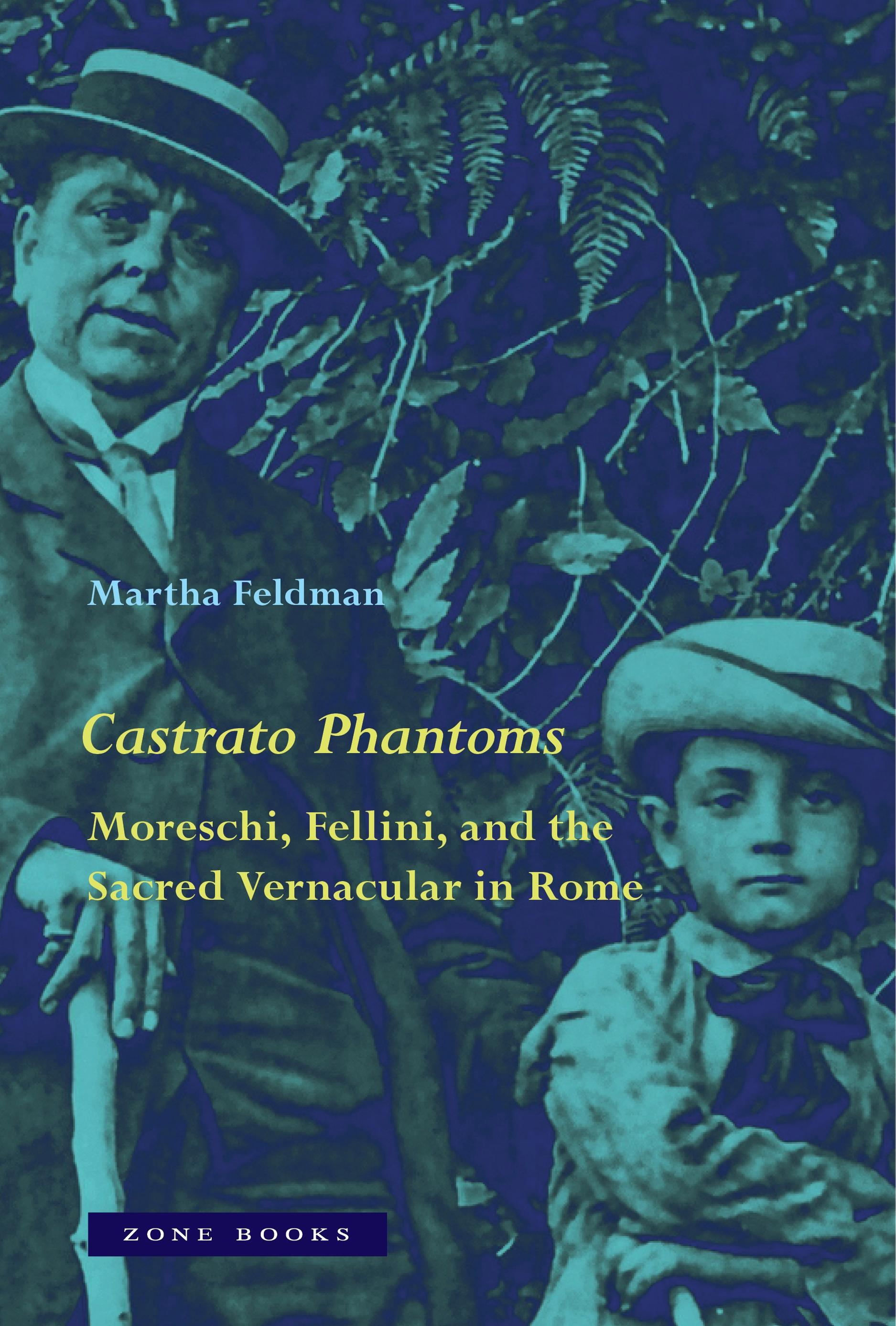
A new mapping of castrato afterlives in modern Rome
Around 1830, opera houses stopped using castrati, and Rome and the Vatican became home to their glorious singing, engineered by surgery and intensive vocal training. Castrati were long mired in secrecy, obfuscations, and lies about their origin and conditions, not least the last of them, Alessandro Moreschi. Musicologist Martha Feldman declines to accept these deep-seated mysteries and concealments. After a decade and more of digging through archives and family histories comes her exciting transdisciplinary and quasi-cinematic account of Moreschi, whose recordings preserve the only sonic trace of a solo castrato.
Yet Moreschi’s story extends far beyond him. It opens up intrigues, politics, and histories of the Vatican, everyday histories of nineteenth- and twentieth-century Rome, the world of Roman opera, the city’s unique mélange of sacred and vernacular tropes, and representations of Rome by iconic film director Federico Fellini. Moreschi and Fellini turn out to have been related by marriage, but also to share synergies grounded in Rome’s persistent inclination to vernacularize the sacred. Far from telling of one anomalous figure, Feldman’s gripping history convinces readers that Moreschi, like Fellini, can be read as an improbable index of Roman consciousness, both during his own life and well beyond.
Pay easily by card, Klarna, Apple Pay or Google Pay. Not happy? You always have a 14-day money-back guarantee. Read more in our terms. If you have any questions, email us at hello@memmo.org.
Memmo makes studying easier – wherever you are in the world. We bring your course books and smart study tools together in one place: summaries, quizzes, podcasts and flashcards. Plus Ted, your study buddy who answers anything you wonder. Over 50,000 students already study here – built to help you learn faster and stress less.