
The University of Florida has an ambitious goal: to harness the power of its faculty, staff, students, and alumni to solve some of society’s most pressing problems and to become a resource for the state of Florida, the nation, and the world.
Florida has 51,858 miles of rivers and streams, more than 2 million acres of lakes and ponds, 11.4 million acres of wetlands, 4,437 square miles of bays and estuaries, and 8,436 miles of coastline. But these water resources face myriad threats.
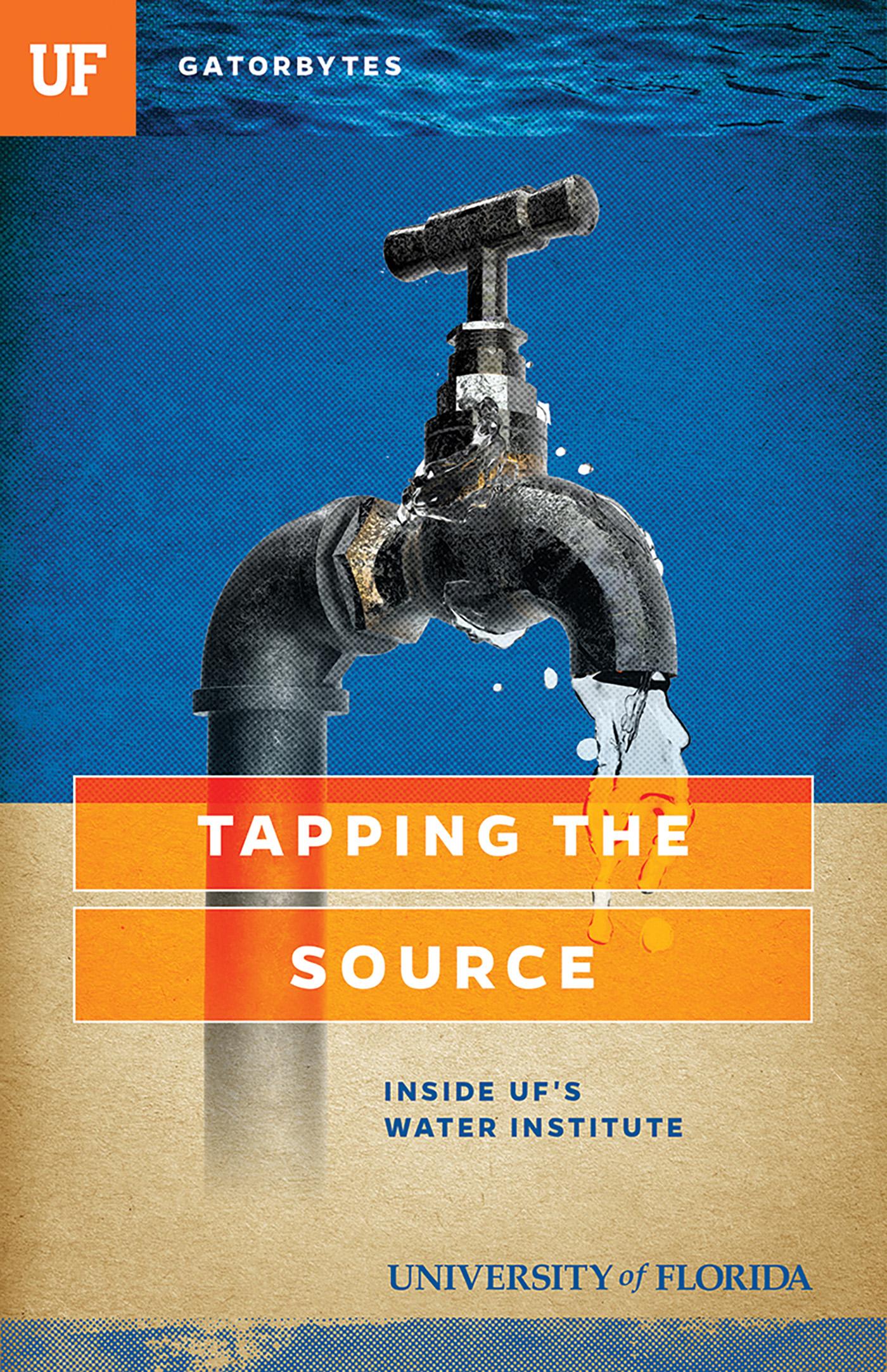
Tapping the Source takes us inside the UF Water Institute, where talent from throughout the university address complex water issues through innovative research, education, and public outreach programs. Interdisciplinary teams from the School of Natural Resources and Environment, the School of Forest Resources and Conservation, Environmental Engineering Sciences, Geological Sciences, Soil and Water Science, and other departments develop new scientific breakthroughs, creative engineering, policy and legal solutions, and pioneering educational programs that are renowned for addressing state, national, and global water-resource problems.
The teams work to manage nitrate flows into the north-central Florida springs, evaluating whether reduction of these nitrates alone will be enough to return the springs to their natural state. They assess the impact of pollutants and other stressors on the aquifer and look at historic rainfall averages and the abundance of algae and grazers, like freshwater snails, present in the ecosystem. Ultimately, they attempt to balance the demand for drinking water for a growing population and irrigation water for agriculture with the simultaneous pressures to prevent pollution and leave enough water for natural ecosystem functions.
The stories chronicled in Gatorbytes span all colleges and units across the UF campus. They detail the far-reaching impact of UF's research, technologies, and innovations—and the UF faculty members dedicated to them. Gatorbytes describe how UF is continuing to build on its strengths and extend the reach of its efforts so that it can help even more people in even more places.
Pay easily by card, Klarna, Apple Pay or Google Pay. Not happy? You always have a 14-day money-back guarantee. Read more in our terms. If you have any questions, email us at hello@memmo.org.
Memmo makes studying easier – wherever you are in the world. We bring your course books and smart study tools together in one place: summaries, quizzes, podcasts and flashcards. Plus Ted, your study buddy who answers anything you wonder. Over 50,000 students already study here – built to help you learn faster and stress less.