
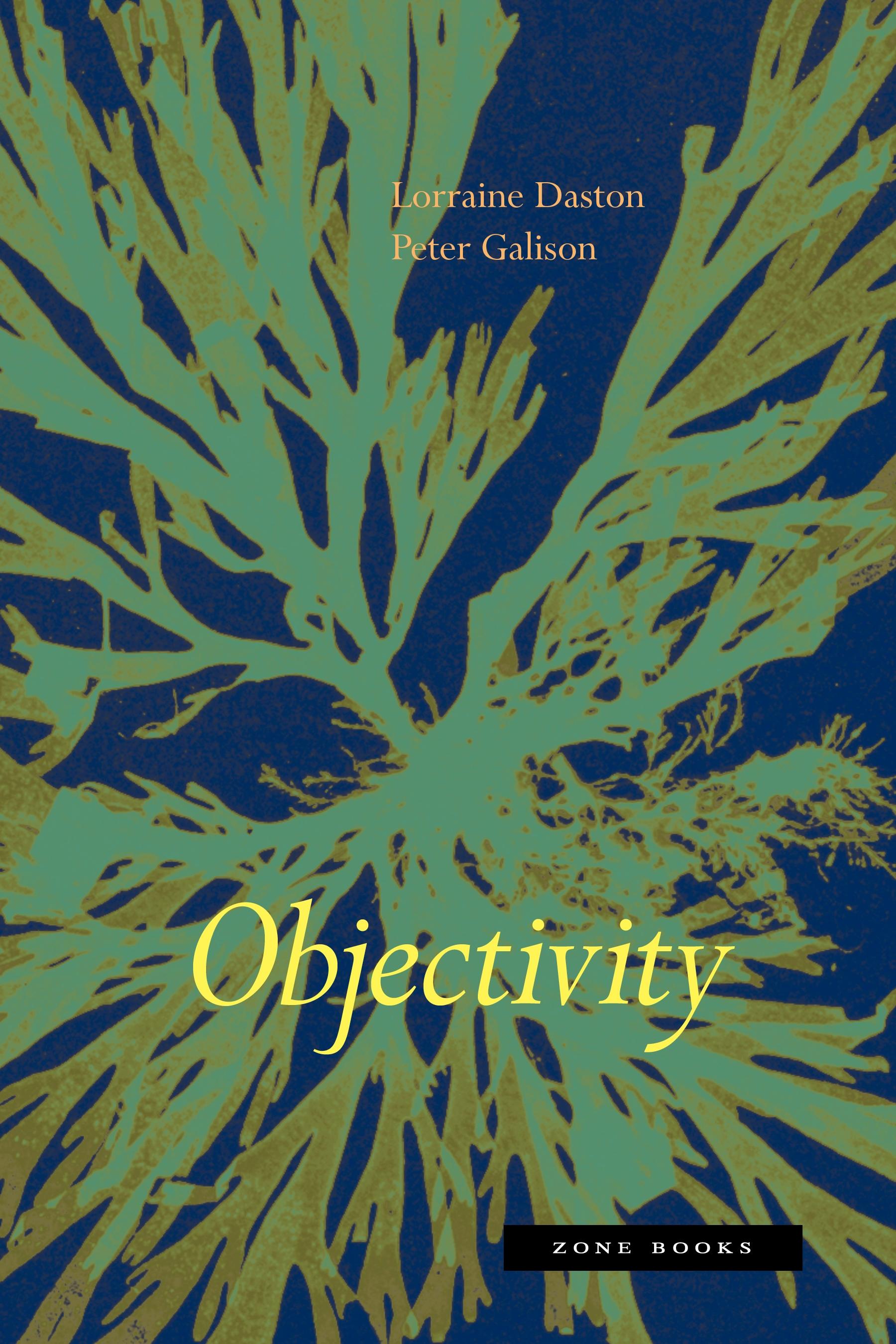
Objectivity has a history, and it is full of surprises. In Objectivity, Lorraine Daston and Peter Galison chart the emergence of objectivity in the mid-nineteenth-century sciences — and show how the concept differs from alternatives, truth-to-nature and trained judgment. This is a story of lofty epistemic ideals fused with workaday practices in the making of scientific images.
From the eighteenth through the early twenty-first centuries, the images that reveal the deepest commitments of the empirical sciences — from anatomy to crystallography — are those featured in scientific atlases: the compendia that teach practitioners of a discipline what is worth looking at and how to look at it. Atlas images define the working objects of the sciences of the eye: snowflakes, galaxies, skeletons, even elementary particles.
Galison and Daston use atlas images to uncover a hidden history of scientific objectivity and its rivals. Whether an atlas maker idealizes an image to capture the essentials in the name of truth-to-nature or refuses to erase even the most incidental detail in the name of objectivity or highlights patterns in the name of trained judgment is a decision enforced by an ethos as well as by an epistemology.
As Daston and Galison argue, atlases shape the subjects as well as the objects of science. To pursue objectivity — or truth-to-nature or trained judgment — is simultaneously to cultivate a distinctive scientific self wherein knowing and knower converge. Moreover, the very point at which they visibly converge is in the very act of seeing not as a separate individual but as a member of a particular scientific community. Embedded in the atlas image, therefore, are the traces of consequential choices about knowledge, persona, and collective sight. Objectivity is a book addressed to any one interested in the elusive and crucial notion of objectivity — and in what it means to peer into the world scientifically.
Pay easily by card, Klarna, Apple Pay or Google Pay. Not happy? You always have a 14-day money-back guarantee. Read more in our terms. If you have any questions, email us at hello@memmo.org.
Memmo makes studying easier – wherever you are in the world. We bring your course books and smart study tools together in one place: summaries, quizzes, podcasts and flashcards. Plus Ted, your study buddy who answers anything you wonder. Over 50,000 students already study here – built to help you learn faster and stress less.