
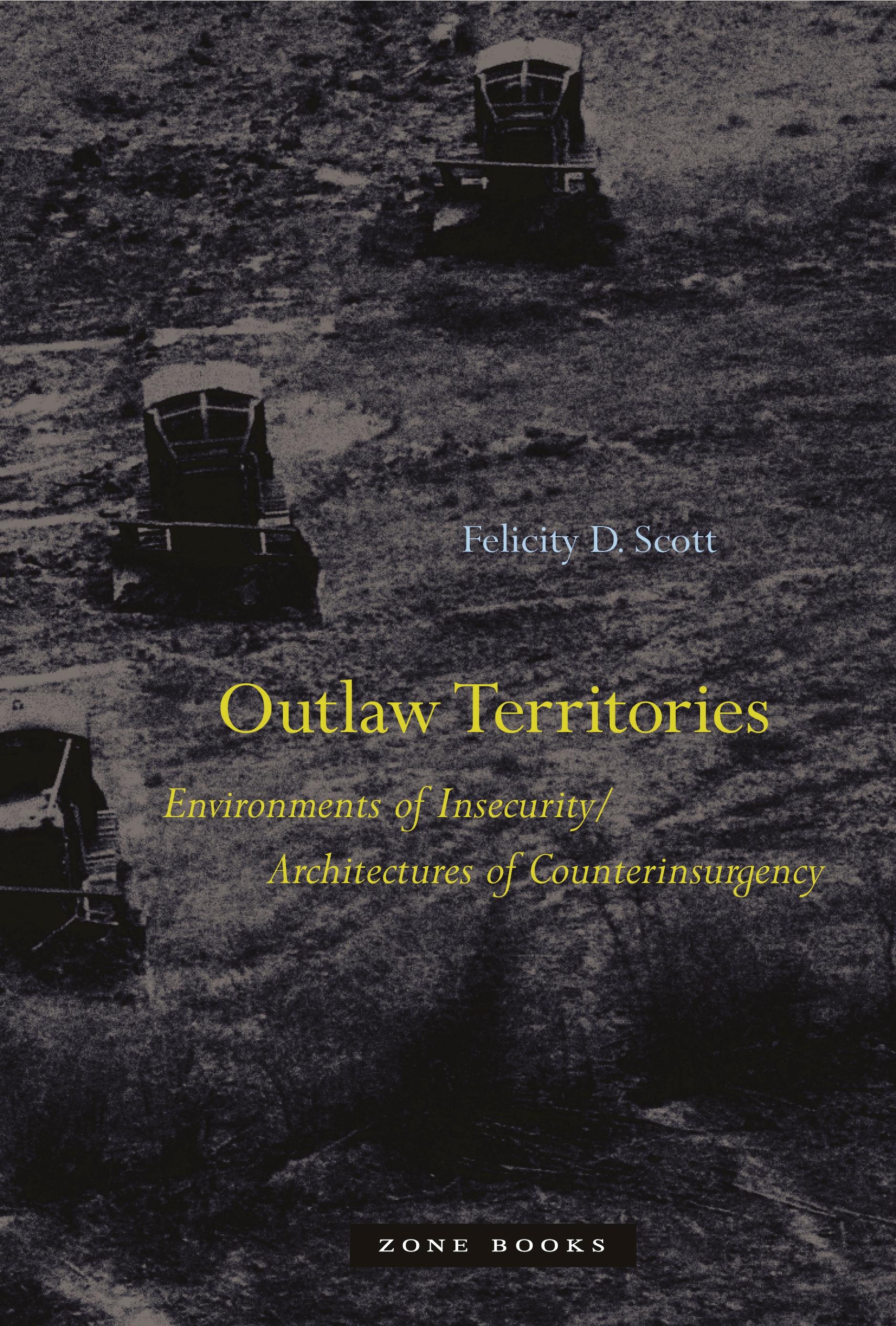
Outlaw Territories: Environments of Insecurity/Architectures of Counterinsurgency traces the relations of architecture and urbanism to forms of human unsettlement and territorial insecurity during the 1960s and ’70s. Investigating a set of responses to the growing urban unrest in the developed and developing worlds, Outlaw Territories revisits an era when the discipline of architecture staked out a role in global environmental governance and the biopolitical management of populations. Felicity D. Scott demonstrates how architecture engaged the displacement of persons brought on by migration, urbanization, environmental catastrophe, and warfare, and at the same time how it responded to the material, environmental, psychological, and geopolitical transformations brought on by postindustrial technologies and neoliberal capitalism after World War II.
At the height of the US–led war in Vietnam and Cambodia, and ongoing decolonization struggles in many parts of the world, architecture not only emerged as a target of political agitation on account of its inherent normativity but also became heavily imbricated within military, legal, and humanitarian apparatuses, and scientific and technological research dedicated to questions of international management and security.
Once architecture became aligned with a global matrix of forces concerned with the environment, economic development, migration, genocide, and war, its conventional role did not remain unchallenged but shifted at times toward providing strategic expertise for institutions responding to transformations born of neoliberal capitalism. Outlaw Territories interrogates this nexus, and questions how and to what ends architecture and the environment came to be intimately connected to the expanded exercise of power within shifting geopolitical frameworks of this time.
Pay easily by card, Klarna, Apple Pay or Google Pay. Not happy? You always have a 14-day money-back guarantee. Read more in our terms. If you have any questions, email us at hello@memmo.org.
Memmo makes studying easier – wherever you are in the world. We bring your course books and smart study tools together in one place: summaries, quizzes, podcasts and flashcards. Plus Ted, your study buddy who answers anything you wonder. Over 75,000 students already study here – built to help you learn faster and stress less.