
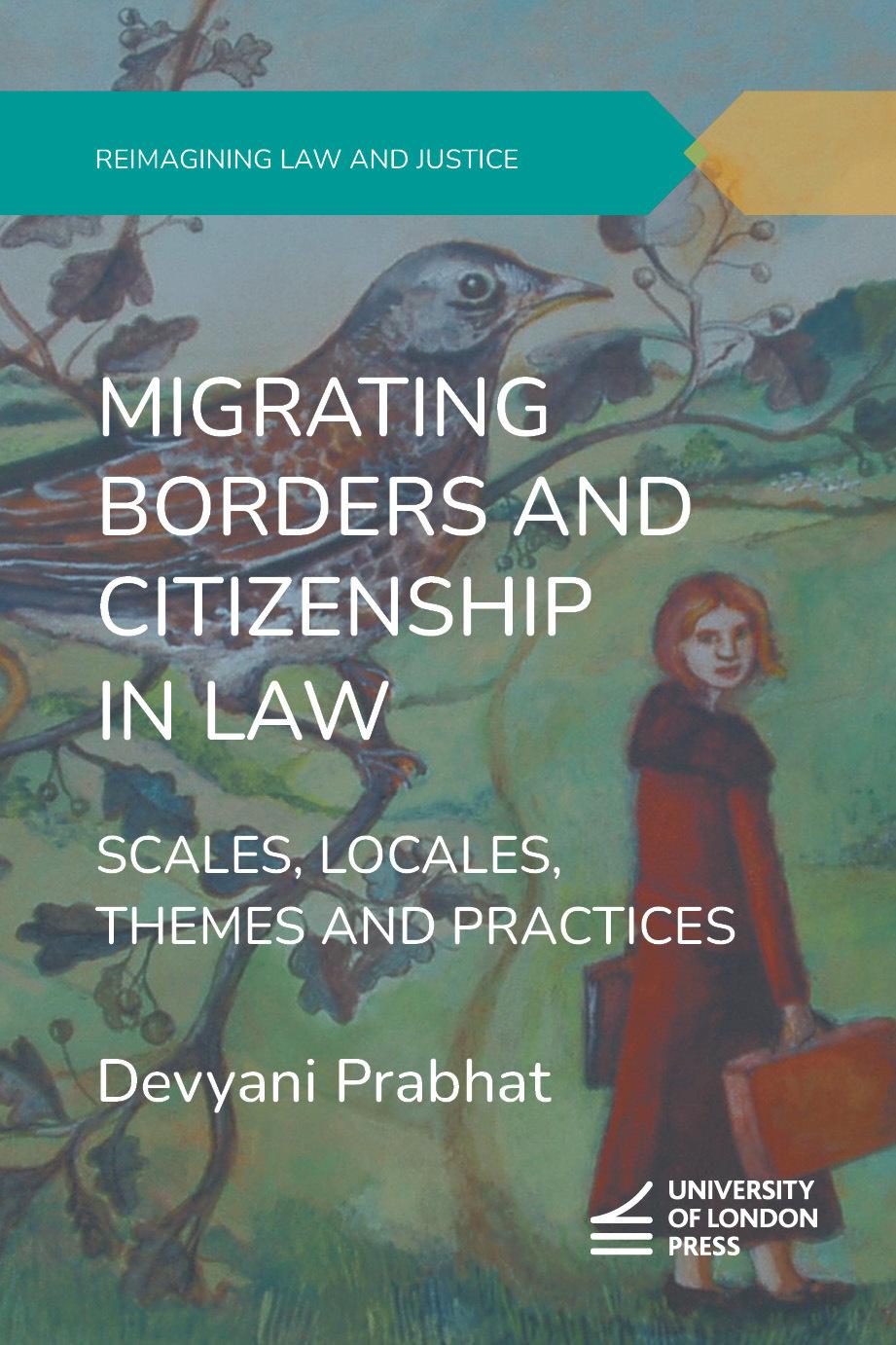
Borders not only demarcate nations and territories, but transform people into migrants. Hand-in-hand with law and law enforcement, borders create residents and foreigners. The law ascertains who crosses borders and who does not, and who remains foreign despite being within national borders.
Migrating Borders and Citizenship in Law argues that law has multiple roles and mechanisms for breathing life into borders, operating at different locales and scales (from worldwide to the nation; from the family to the workplace), and through different practices, for example, preventing entry or withholding access to resources. It examines case law, legislation and press accounts relating to several key events in recent times that have changed the legal landscape on migration control, such as the Immigration and Nationality Acts in the UK, the end of empire, the arrival of Empire Windrush, Brexit, Covid and the case of Shamima Begum. Focusing on race and ethnicity, gender and class, as well as crime and control, the book contextualises the legal debates around these historical and political developments, the question of who belongs, the consequences of behaviour for immigration status and citizenship, and the links with conduct and national security.
With its wide interdisciplinary framing of the law, drawing from sociology, politics, philosophy and history, this groundbreaking book will appeal to all readers with broad interests in migration studies.
Pay easily by card, Klarna, Apple Pay or Google Pay. Not happy? You always have a 14-day money-back guarantee. Read more in our terms. If you have any questions, email us at hello@memmo.org.
Memmo makes studying easier – wherever you are in the world. We bring your course books and smart study tools together in one place: summaries, quizzes, podcasts and flashcards. Plus Ted, your study buddy who answers anything you wonder. Over 50,000 students already study here – built to help you learn faster and stress less.