
'While identifying two types of activity, namely econ-art and econ-science, he demonstrates why economists should acknowledge their artistic impulses and develop a more scientific conduct.' ARTbibliographies Modern
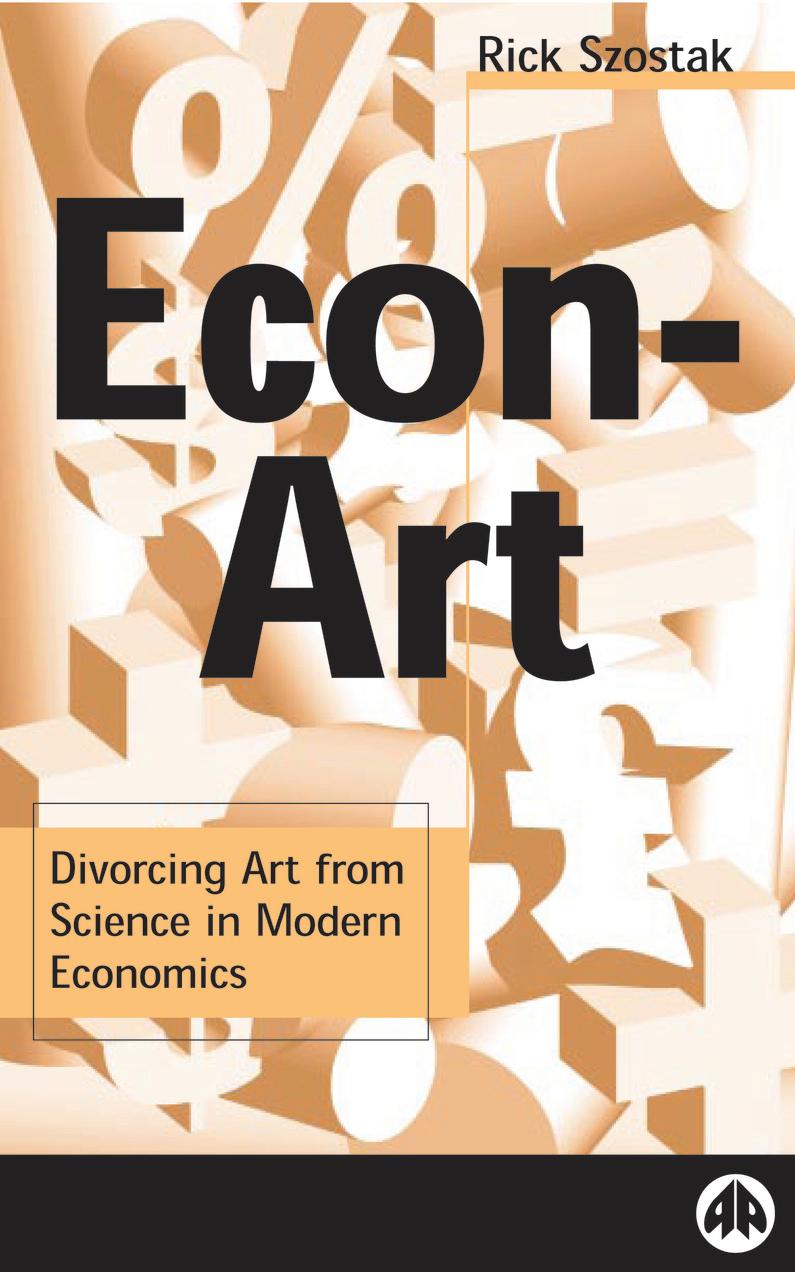
Historians of economic thought have long recognised the possibility that cultural influences might be important, but have never analysed them in any detail. In the first study of economics from the perspective of art history, Rick Szostak shows how the cultural influences identified by art historians have affected economic theory. He also reveals that not only has economic theory been informed by aesthetic considerations, but the very methods employed by economists are shown to serve primarily artistic goals.
Professor Szostak assesses the extent of these cultural and aesthetic effects through a wide-ranging study of the development of surrealism, cubism and abstract art, juxtaposed with examples drawn from virtually every field of economics. Two types of endeavour are identified, Econ-Art and Econ-Science. Szostak argues that the pursuit of econ-science would be much aided if economists first recognised their artistic impulses, and then developed more scientific standards of conduct. As the first economist to thoroughly address the question of whether Economics is Art, Professor Szostak raises some important philosophical issues with this volume. The result is a controversial and scholarly, yet accessible, examination of the influence of both culture and aesthetic considerations on economics.
Historians of economic thought have long recognised the possibility that cultural influences might be important, but have never analysed them in any detail. In the first study of economics from the perspective of art history, Rick Szostak shows how the cultural influences identified by art historians have affected economic theory. He also reveals that not only has economic theory been informed by aesthetic considerations, but the very methods employed by economists are shown to serve primarily artistic goals.
Professor Szostak assesses the extent of these cultural and aesthetic effects through a wide-ranging study of the development of surrealism, cubism and abstract art, juxtaposed with examples drawn from virtually every field of economics. Two types of endeavour are identified, Econ-Art and Econ-Science. Szostak argues that the pursuit of econ-science would be much aided if economists first recognised their artistic impulses, and then developed more scientific standards of conduct. As the first economist to thoroughly address the question of whether Economics is Art, Professor Szostak raises some important philosophical issues with this volume. The result is a controversial and scholarly, yet accessible, examination of the influence of both culture and aesthetic considerations on economics.
Pages: 320
Category: Vetenskapsteori och forskningsmetod
e-ISBN: 9781849645348
Shipping weight: 1.2 kg
Ships in: 1-2 days
Pay easily by card, Klarna, Apple Pay or Google Pay. Not happy? You always have a 14-day money-back guarantee. Read more in our terms. If you have any questions, email us at hello@memmo.org.
Memmo makes studying easier – wherever you are in the world. We bring your course books and smart study tools together in one place: summaries, quizzes, podcasts and flashcards. Plus Ted, your study buddy who answers anything you wonder. Over 50,000 students already study here – built to help you learn faster and stress less.
You might also like
Buy the book0