
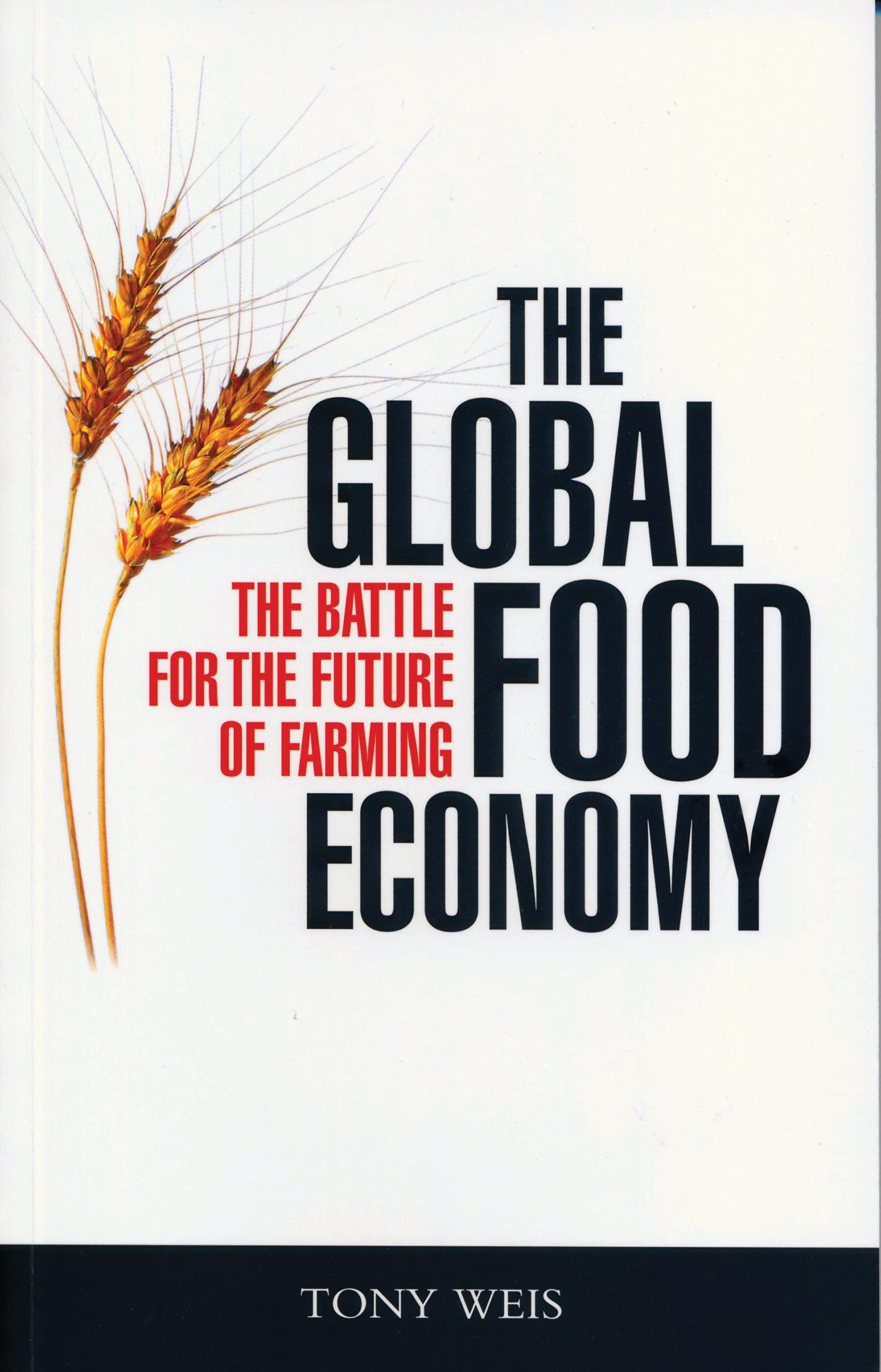
The Global Food Economy examines the human and ecological cost of what we eat.
The current food economy is characterized by immense contradictions. Surplus 'food mountains', bountiful supermarkets, and rising levels of obesity stand in stark contrast to widespread hunger and malnutrition. Transnational companies dominate the market in food and benefit from subsidies, whilst farmers in developing countries remain impoverished. Food miles, mounting toxicity and the 'ecological hoofprint' of livestock mean that the global food economy rests on increasingly shaky environmental foundations.
This book looks at how such a system came about, and how it is being enforced by the WTO. Ultimately, Weis considers how we can find a way of building socially just, ecologically rational and humane food economies.
The current food economy is characterized by immense contradictions. Surplus 'food mountains', bountiful supermarkets, and rising levels of obesity stand in stark contrast to widespread hunger and malnutrition. Transnational companies dominate the market in food and benefit from subsidies, whilst farmers in developing countries remain impoverished. Food miles, mounting toxicity and the 'ecological hoofprint' of livestock mean that the global food economy rests on increasingly shaky environmental foundations.
This book looks at how such a system came about, and how it is being enforced by the WTO. Ultimately, Weis considers how we can find a way of building socially just, ecologically rational and humane food economies.
Pay easily by card, Klarna, Apple Pay or Google Pay. Not happy? You always have a 14-day money-back guarantee. Read more in our terms. If you have any questions, email us at hello@memmo.org.
Memmo makes studying easier – wherever you are in the world. We bring your course books and smart study tools together in one place: summaries, quizzes, podcasts and flashcards. Plus Ted, your study buddy who answers anything you wonder. Over 50,000 students already study here – built to help you learn faster and stress less.