
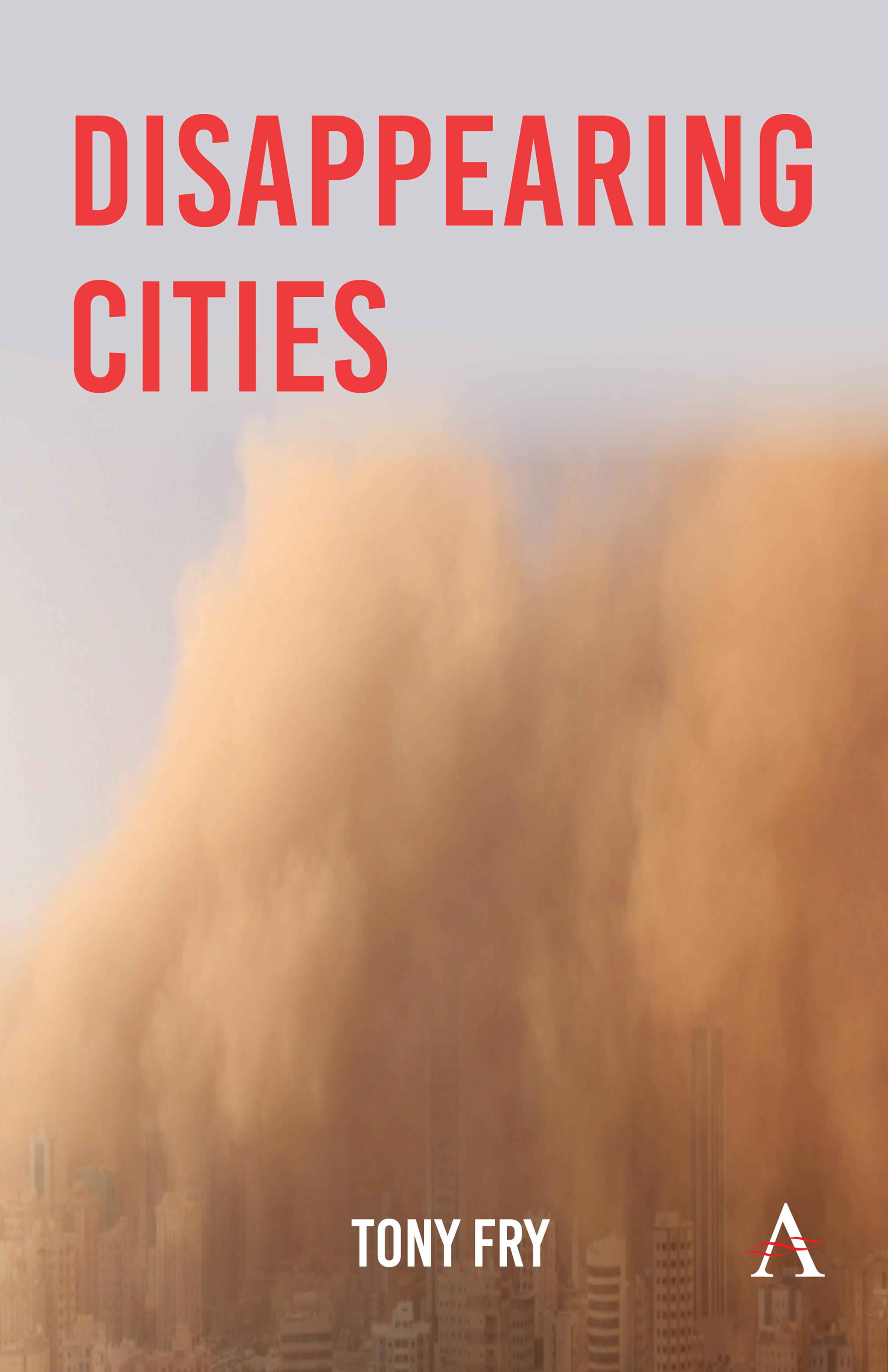
Disappearing Cities is a collection of over fifty short stories of invented cities, set in the not too distant future, destroyed by varied climate change impacts and linked natural disasters. The stories bring into question the relation between the natural and unnatural forces of change and expose responses to, and lessons learnt, from different disaster crises situations. Stories also focus on how means to adapt are sought. The projected fictions are created from projected current climate facts; trends; and the author’s experience of population displacement, relocation and design-based climate change responsive action. Central to the book is the recognition that to be able to respond and adapt to the scale of coming changes in the climate requires going beyond existing practical action and embracing a new way of imagining futures. Disappearing Cities aims to stimulate ways of meeting this need.
The book opens with a Prologue that establishes the contextual frame of empirical foundation out of which the fictions are created. It recognises that we all live in a world in which the conditions that will result in huge numbers of cities disappearing are underway. From the human perspective, the process appears to be very slow, whereas in historico-geological time, it is happening exceptionally quickly. The number of the loss of cities is going to be huge, yet the recognition that this will occur is not arriving, In part, this is because of a lack of knowledge, but equally, it reflects a lack of imagination. Transposing what is known about climate change by a significant percentage of the societies of many nations to actual environments in which they live is just not arriving. What appears so solid and established fails to be seen and imagined as a risk and vulnerable. From establishing this opening perspective, the first part of the book presents stories of cities already disappearing as a result of the forces of nature changed by anthropogenically created global warming. Part two discusses the impacts of natural disasters being made unnaturally. For example, by the way industrial societies are damaging and changing natural systems, including the climatic. The final part goes to cities destroyed by completely un-natural means, including war.
Disappearing Cities aims to contribute to meeting the need for a better understanding of, and ability to imagine, the risks to which vast numbers of cities are, and will be, exposed to forces of disappearance. To do this, the narratives are a hybrid of fact and fiction. The work was inspired by Italo Calvino’s book Invisible Cities and is intended to be a salient contemporary companion to this text. It mirrors its form but differs in style and content. Invisible Cities attained diverse readership, Disappearing Cities aspires to do likewise.
Pay easily by card, Klarna, Apple Pay or Google Pay. Not happy? You always have a 14-day money-back guarantee. Read more in our terms. If you have any questions, email us at hello@memmo.org.
Memmo makes studying easier – wherever you are in the world. We bring your course books and smart study tools together in one place: summaries, quizzes, podcasts and flashcards. Plus Ted, your study buddy who answers anything you wonder. Over 75,000 students already study here – built to help you learn faster and stress less.