
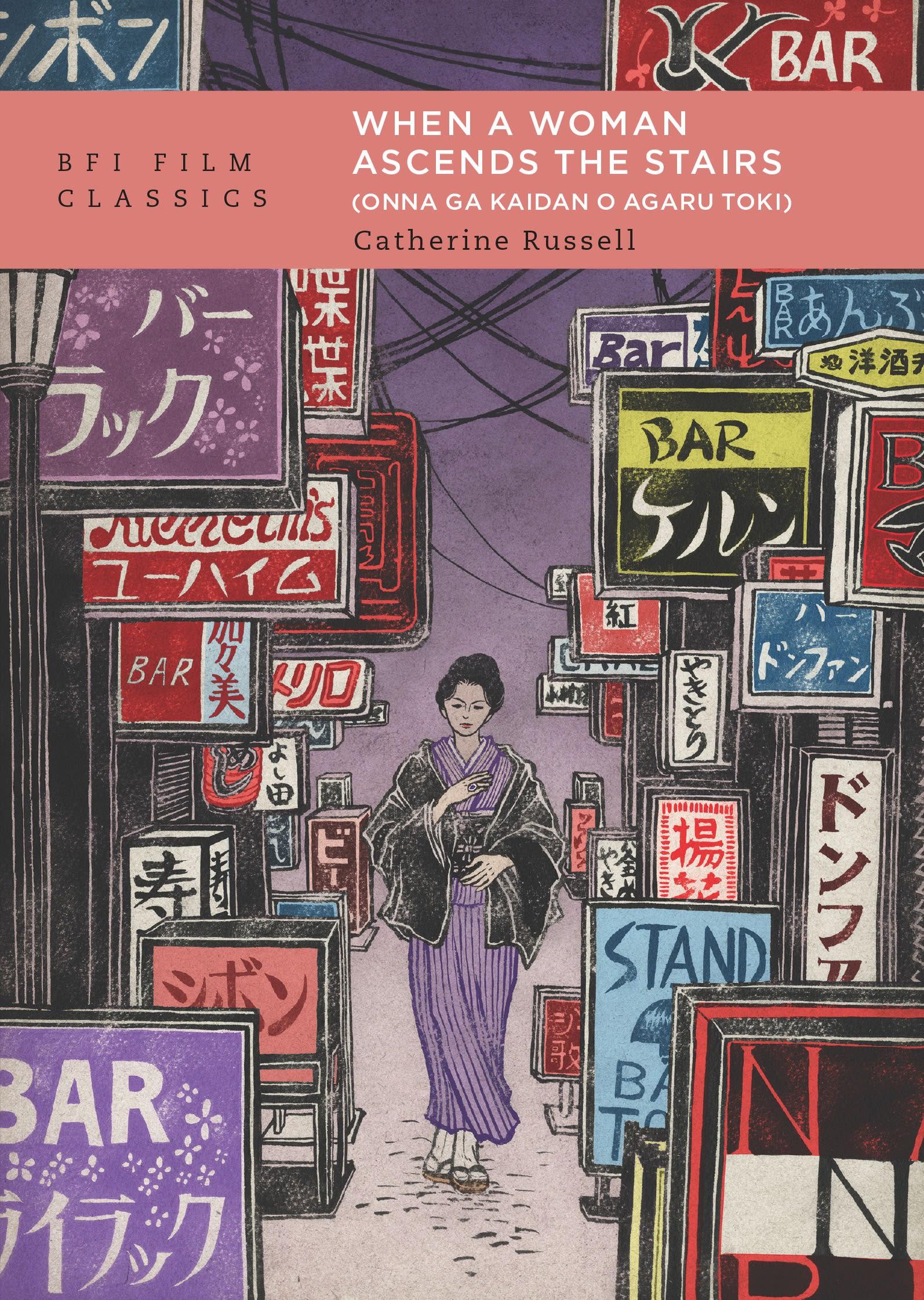
Mikio Naruse's When A Woman Ascends The Stairs (1960) combines high melodrama with modernist film language, telling the story of Keiko, a bar hostess struggling to succeed in Tokyo's Ginza district.
Catherine Russell's study of the film provides an in-depth analysis of Naruse's distinctive filmmaking, from his use of two-shots in confined spaces, unique lighting techniques, and his "invisible" and "rhythmic" editing style. She analyses the recurring motif of a woman's white-stockinged feet climbing stairs, considering how this symbolizes the social dynamics of the high-class Japanese sex industry that sustains hostess bar culture.
Russell goes on to argue that the film is a “late” woman's film which engages with the institutional barriers to woman's success in postwar Japan. She situates the film within the trajectory of Naruse's career and analyses how his social critique is balanced with an aestheticization of a harsh and brutally gendered world, creating an affective tension that is symptomatic of Naruse's own position as an industrial worker.
Catherine Russell's study of the film provides an in-depth analysis of Naruse's distinctive filmmaking, from his use of two-shots in confined spaces, unique lighting techniques, and his "invisible" and "rhythmic" editing style. She analyses the recurring motif of a woman's white-stockinged feet climbing stairs, considering how this symbolizes the social dynamics of the high-class Japanese sex industry that sustains hostess bar culture.
Russell goes on to argue that the film is a “late” woman's film which engages with the institutional barriers to woman's success in postwar Japan. She situates the film within the trajectory of Naruse's career and analyses how his social critique is balanced with an aestheticization of a harsh and brutally gendered world, creating an affective tension that is symptomatic of Naruse's own position as an industrial worker.
Pay easily by card, Klarna, Apple Pay or Google Pay. Not happy? You always have a 14-day money-back guarantee. Read more in our terms. If you have any questions, email us at hello@memmo.org.
Memmo makes studying easier – wherever you are in the world. We bring your course books and smart study tools together in one place: summaries, quizzes, podcasts and flashcards. Plus Ted, your study buddy who answers anything you wonder. Over 50,000 students already study here – built to help you learn faster and stress less.