
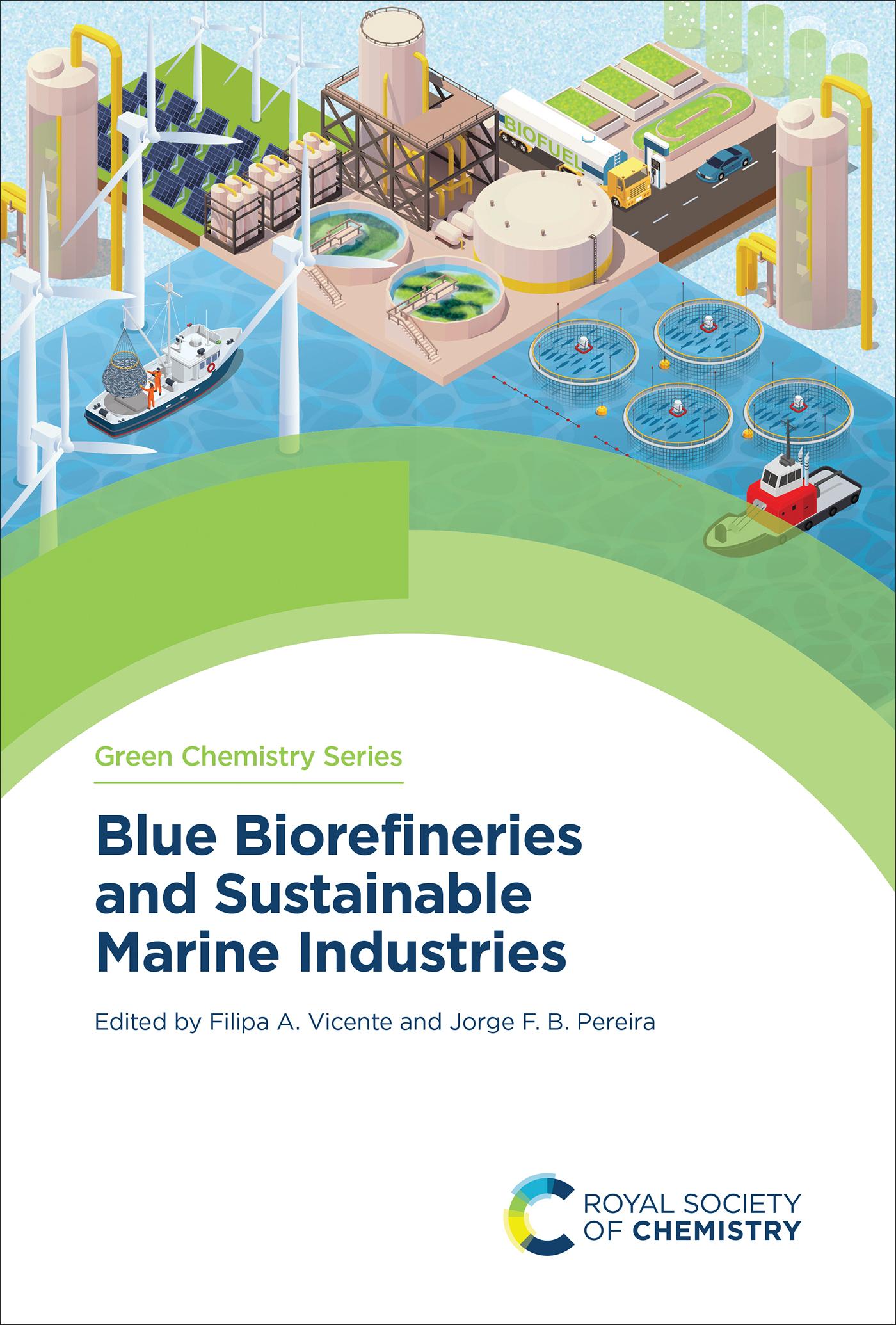
The integration of biorefinery concepts into traditional industries is key to enabling the transition to a bio-based economy model (bioeconomy), where renewable sources and the circular economy are the foundation. The development of cost-effective, environmentally friendly, and circular technologies for processing biomass and waste, and converting it into value-added compounds are key factors in successfully implementing sustainable marine biorefineries. The marine environment offers a source of chemically interesting compounds, many of which are regularly discarded as waste from fish and shellfish industries. By incorporating these biorefinery technologies into marine industries we can simultaneously reduce waste production, use of non-renewable feedstocks and energy requirements for these industries.
Highlighting the importance and urgency of developing efficient and sustainable blue biorefineries, this book provides an overview on the different types of marine biomasses (micro- and macroalgae, crustacean and fish waste) and their high added value compounds as well as the latest advances in their extraction, purification and applications. Industrial case-studies and techno-economic and environmental analysis for the different blue biorefineries all add to a valuable vision for the future sustainability of marine industries.
Pay easily by card, Klarna, Apple Pay or Google Pay. Not happy? You always have a 14-day money-back guarantee. Read more in our terms. If you have any questions, email us at hello@memmo.org.
Memmo makes studying easier – wherever you are in the world. We bring your course books and smart study tools together in one place: summaries, quizzes, podcasts and flashcards. Plus Ted, your study buddy who answers anything you wonder. Over 50,000 students already study here – built to help you learn faster and stress less.