
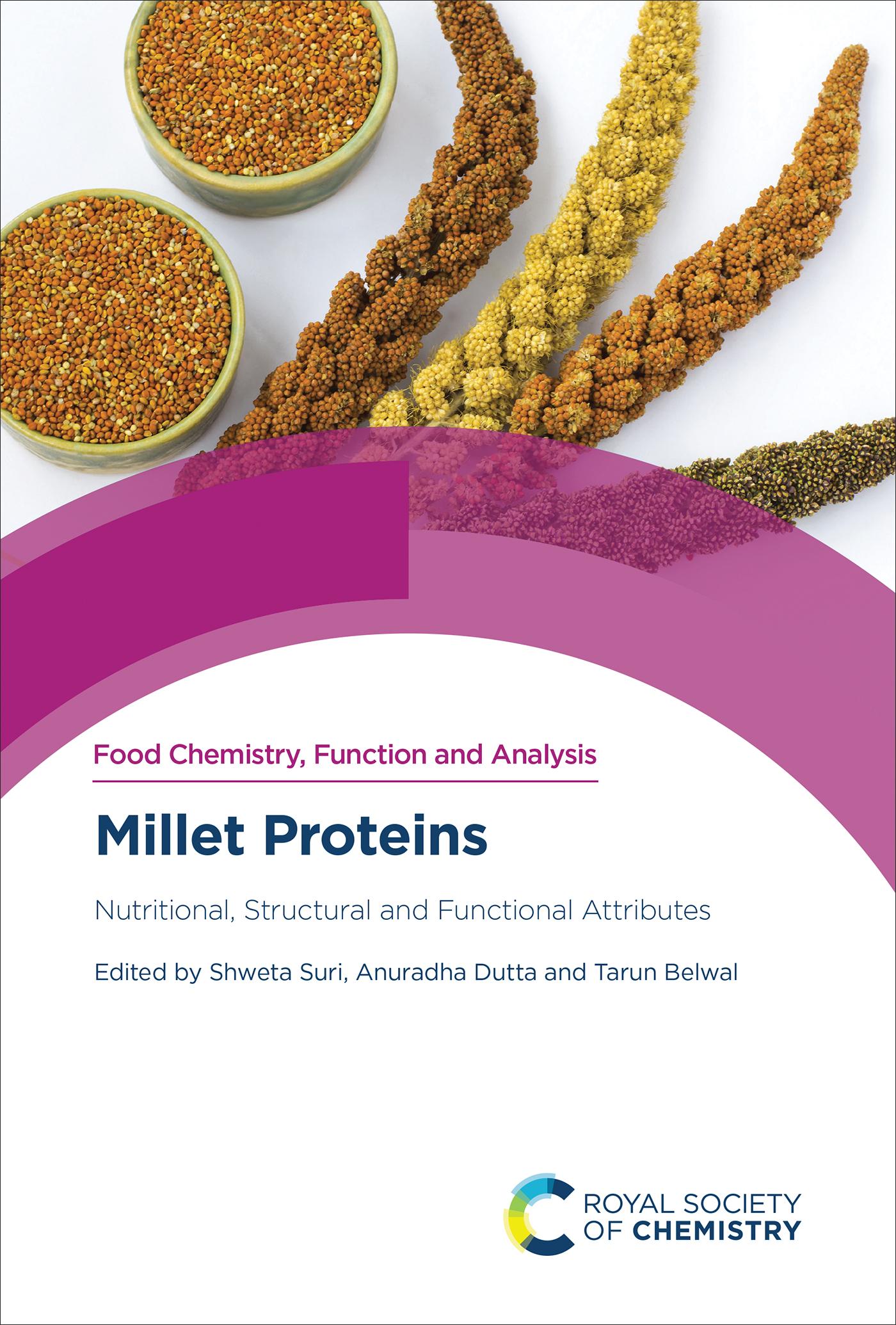
In a world increasingly turning to plant-based proteins for health, sustainability, and ethical reasons, millet stands out as a versatile and ancient grain with remarkable benefits. Grown primarily in Asia and Africa, these small, round whole grains are celebrated for their resilience to drought and pests, making them a sustainable choice for both human consumption and livestock feed. Millet boasts a high protein content (7–13%), positioning it as a strong contender against animal proteins, and is gluten-free, making it a popular choice in Western diets.
This comprehensive book investigates the unique characteristics of millet protein, exploring its bioactive properties, nutritional value and therapeutic benefits. It provides an in-depth look at the extraction and utilization processes, covering both thermal and non-thermal methods such as ultrasound, pulsed electric field, and high-pressure processing.
Concluding with a forward-looking perspective, this book examines the prospects of millet protein in the food industry. Essential reading for food scientists and product developers, it offers valuable insights into the potential of millet protein as a sustainable and nutritious food source.
Pay easily by card, Klarna, Apple Pay or Google Pay. Not happy? You always have a 14-day money-back guarantee. Read more in our terms. If you have any questions, email us at hello@memmo.org.
Memmo makes studying easier – wherever you are in the world. We bring your course books and smart study tools together in one place: summaries, quizzes, podcasts and flashcards. Plus Ted, your study buddy who answers anything you wonder. Over 50,000 students already study here – built to help you learn faster and stress less.