
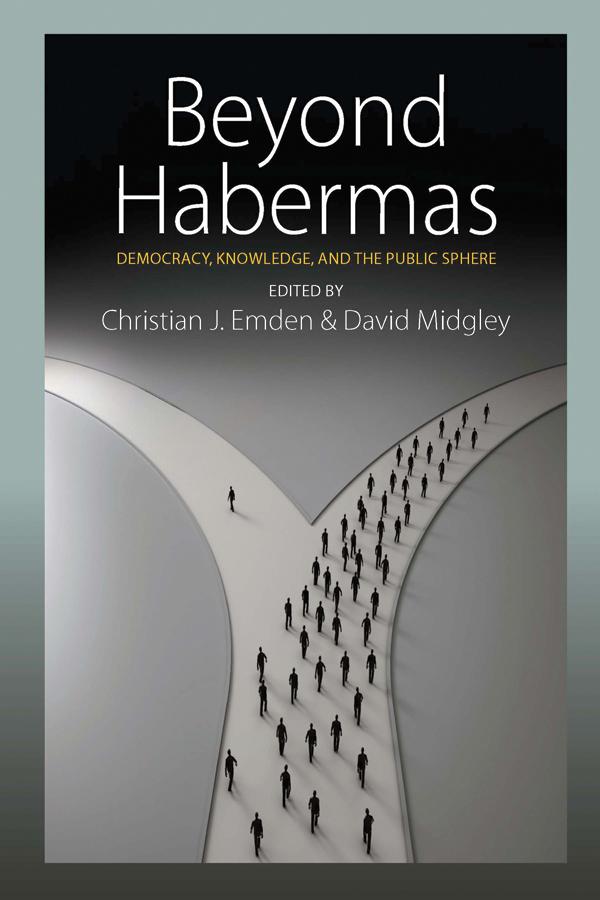
During the 1960s the German philosopher Jürgen Habermas introduced the notion of a “bourgeois public sphere” in order to describe the symbolic arena of political life and conversation that originated with the cultural institutions of the early eighteenth-century; since then the “public sphere” itself has become perhaps one of the most debated concepts at the very heart of modernity. For Habermas, the tension between the administrative power of the state, with its understanding of sovereignty, and the emerging institutions of the bourgeoisie—coffee houses, periodicals, encyclopedias, literary culture, etc.—was seen as being mediated by the public sphere, making it a symbolic site of public reasoning. This volume examines whether the “public sphere” remains a central explanatory model in the social sciences, political theory, and the humanities.
Pay easily by card, Klarna, Apple Pay or Google Pay. Not happy? You always have a 14-day money-back guarantee. Read more in our terms. If you have any questions, email us at hello@memmo.org.
Memmo makes studying easier – wherever you are in the world. We bring your course books and smart study tools together in one place: summaries, quizzes, podcasts and flashcards. Plus Ted, your study buddy who answers anything you wonder. Over 50,000 students already study here – built to help you learn faster and stress less.