
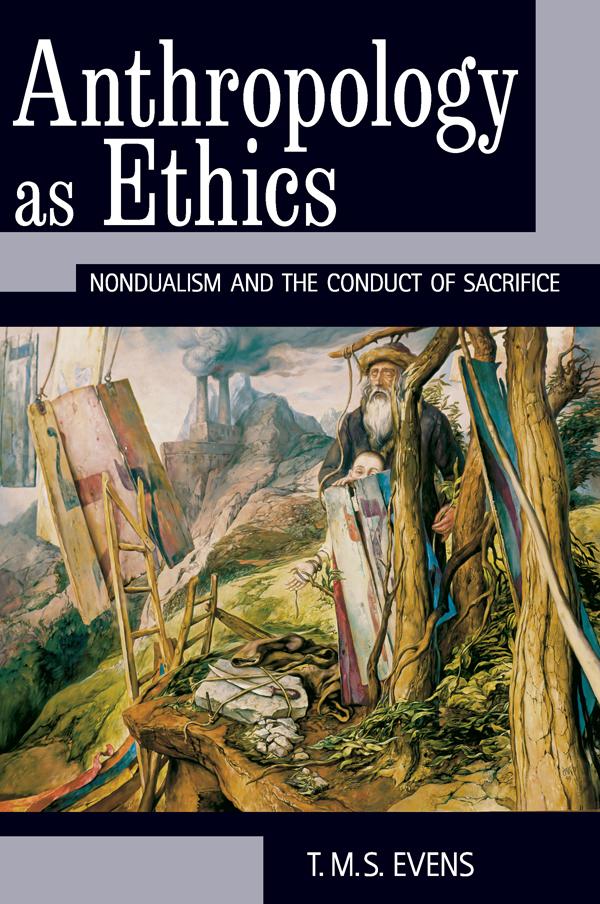
Anthropology as Ethics is concerned with rethinking anthropology by rethinking the nature of reality. It develops the ontological implications of a defining thesis of the Manchester School: that all social orders exhibit basically conflicting underlying principles. Drawing especially on Continental social thought, including Wittgenstein, Merleau-Ponty, Levinas, Dumont, Bourdieu and others, and on pre-modern sources such as the Hebrew bible, the Nuer, the Dinka, and the Azande, the book mounts a radical study of the ontology of self and other in relation to dualism and nondualism. It demonstrates how the self-other dichotomy disguises fundamental ambiguity or nondualism, thus obscuring the essentially ethical, dilemmatic, and sacrificial nature of all social life. It also proposes a reason other than dualist, nihilist, and instrumental, one in which logic is seen as both inimical to and continuous with value. Without embracing absolutism, the book makes ambiguity and paradox the foundation of an ethical response to the pervasive anti-foundationalism of much postmodern thought.
Pay easily by card, Klarna, Apple Pay or Google Pay. Not happy? You always have a 14-day money-back guarantee. Read more in our terms. If you have any questions, email us at hello@memmo.org.
Memmo makes studying easier – wherever you are in the world. We bring your course books and smart study tools together in one place: summaries, quizzes, podcasts and flashcards. Plus Ted, your study buddy who answers anything you wonder. Over 50,000 students already study here – built to help you learn faster and stress less.