
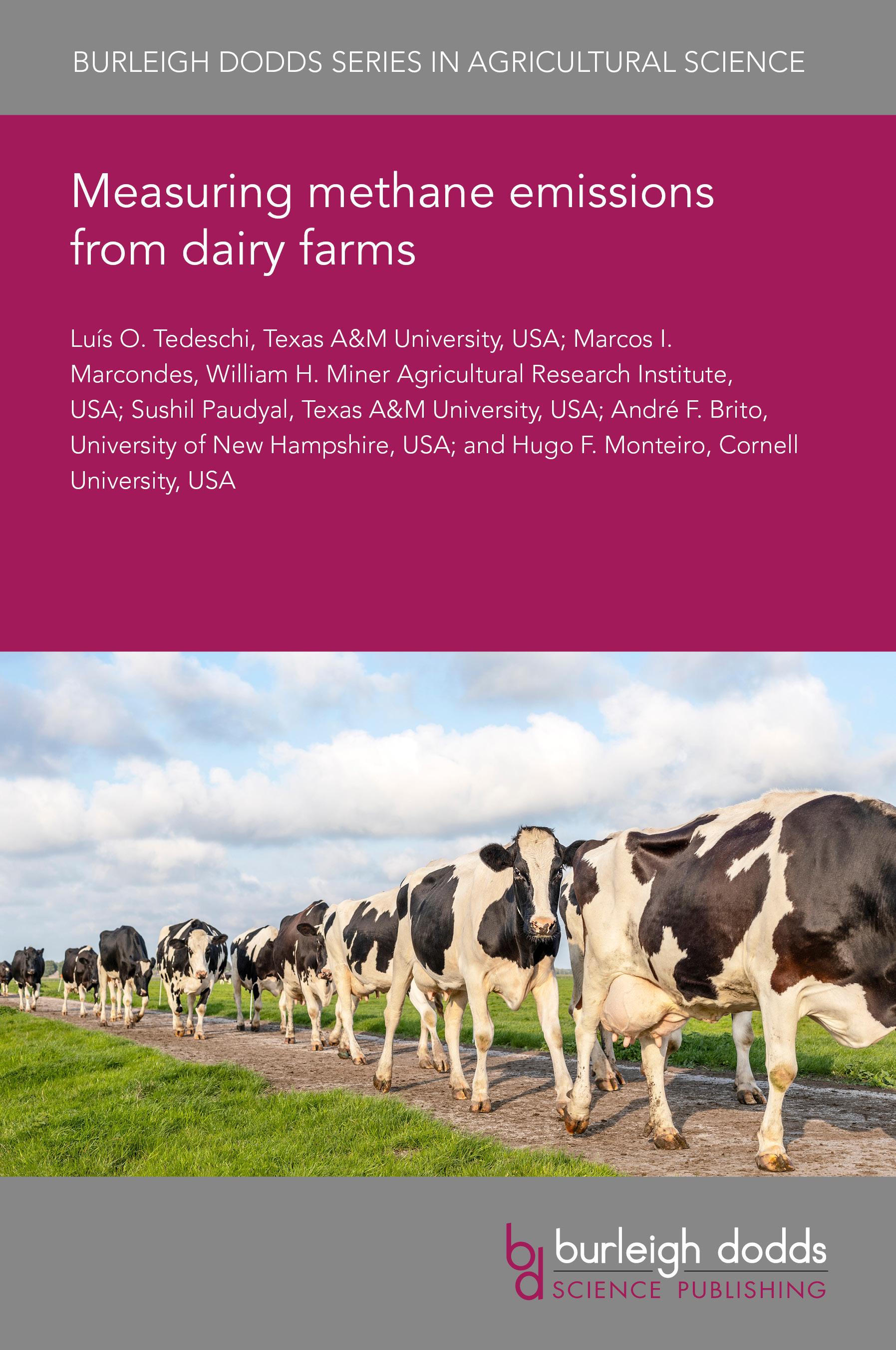
Methane (CH₄) emissions from dairy farms significantly contribute to greenhouse gas emissions, with enteric fermentation responsible for 90% of livestock-derived CH₄ emissions, while manure management accounts for about 41% of the CH₄ emissions. This paper explores various methods for measuring CH₄ emissions at both the animal and farm levels, highlighting the need for accurate, cost-effective, and practical approaches. Traditional methods, such as respiration chambers and the sulfur hexafluoride (SF₆) tracer technique, offer precise measurements but can be costly and labor-intensive. Emerging technologies provide promising alternatives, including portable detectors, laser sensors, and microbial profiling. Strategies for mitigating CH₄ emissions, such as dietary manipulation and manure management, are discussed. Integrating these technologies with precision agriculture offers new opportunities for reducing the environmental impact of dairy farming while maintaining productivity. This paper highlights the importance of developing reliable methodologies to quantify CH₄ emissions, which is crucial for the sustainability of dairy operations.
Pay easily by card, Klarna, Apple Pay or Google Pay. Not happy? You always have a 14-day money-back guarantee. Read more in our terms. If you have any questions, email us at hello@memmo.org.
Memmo makes studying easier – wherever you are in the world. We bring your course books and smart study tools together in one place: summaries, quizzes, podcasts and flashcards. Plus Ted, your study buddy who answers anything you wonder. Over 50,000 students already study here – built to help you learn faster and stress less.