
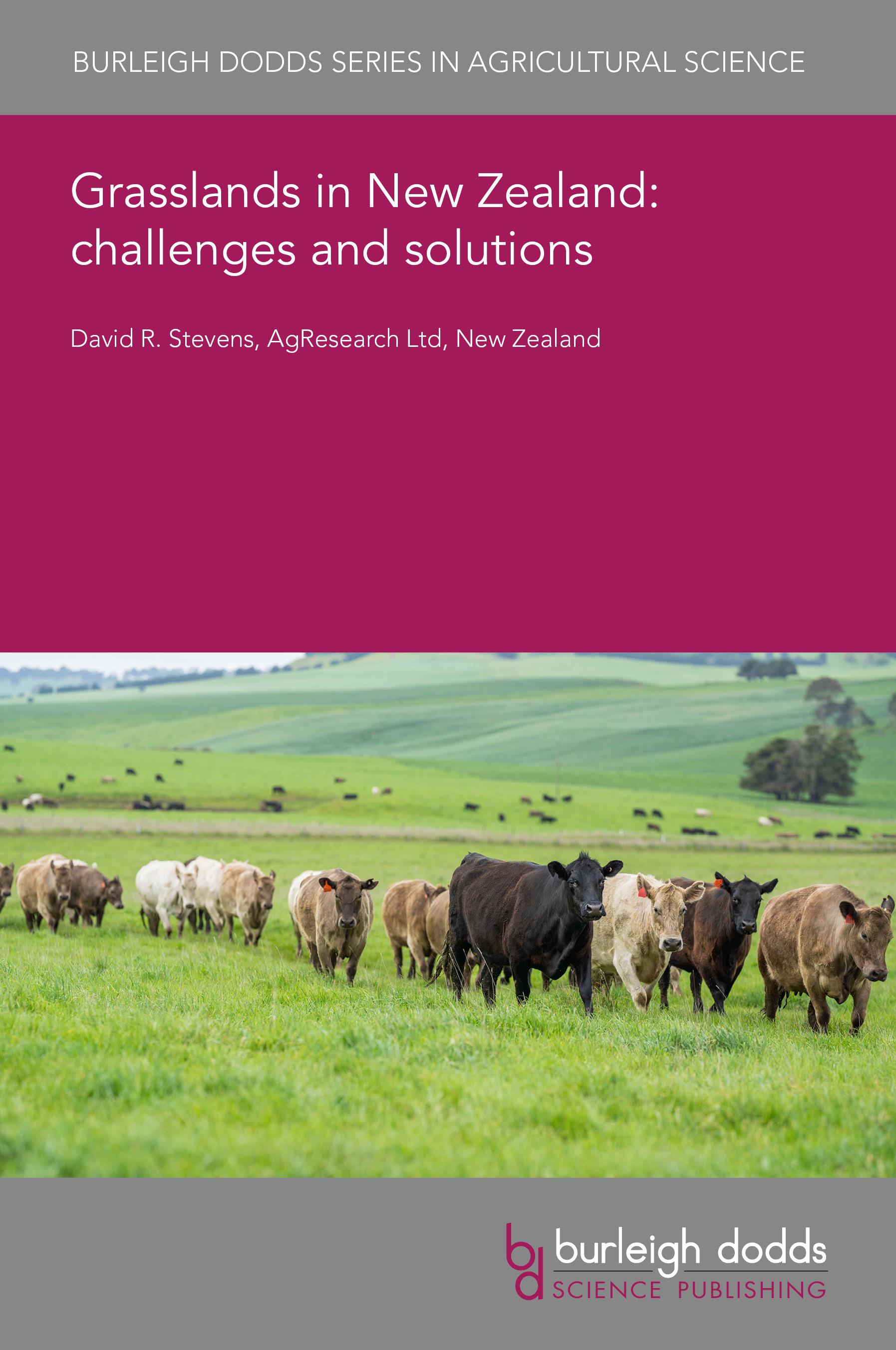
Grassland farming has continued to support the lifestyle and growth of New Zealand since the first shipments of frozen products to Britain in 1882. Its importance remains relevant to the wealth of New Zealand, as a major trading nation in high quality dairy, sheep meat and deer products, with a relatively low environmental footprint, from a unique year-round use of grasslands. Research has increased efficiency, reduced emissions to water and air and improved animal health and wellbeing. Developments in animal and plant genetics have supported improvements in efficiency, reduced use of artificial chemicals such as fertiliser, anthelmintics, and pesticides, and increased productivity. Grassland production is in decline threatening the ability of pastures and forages to support future potential productivity gains in animal breeding. Developing solutions for both mitigation of grassland farming impacts and adaptation to future climate change needs to continue to ensure progress.
Pay easily by card, Klarna, Apple Pay or Google Pay. Not happy? You always have a 14-day money-back guarantee. Read more in our terms. If you have any questions, email us at hello@memmo.org.
Memmo makes studying easier – wherever you are in the world. We bring your course books and smart study tools together in one place: summaries, quizzes, podcasts and flashcards. Plus Ted, your study buddy who answers anything you wonder. Over 50,000 students already study here – built to help you learn faster and stress less.