
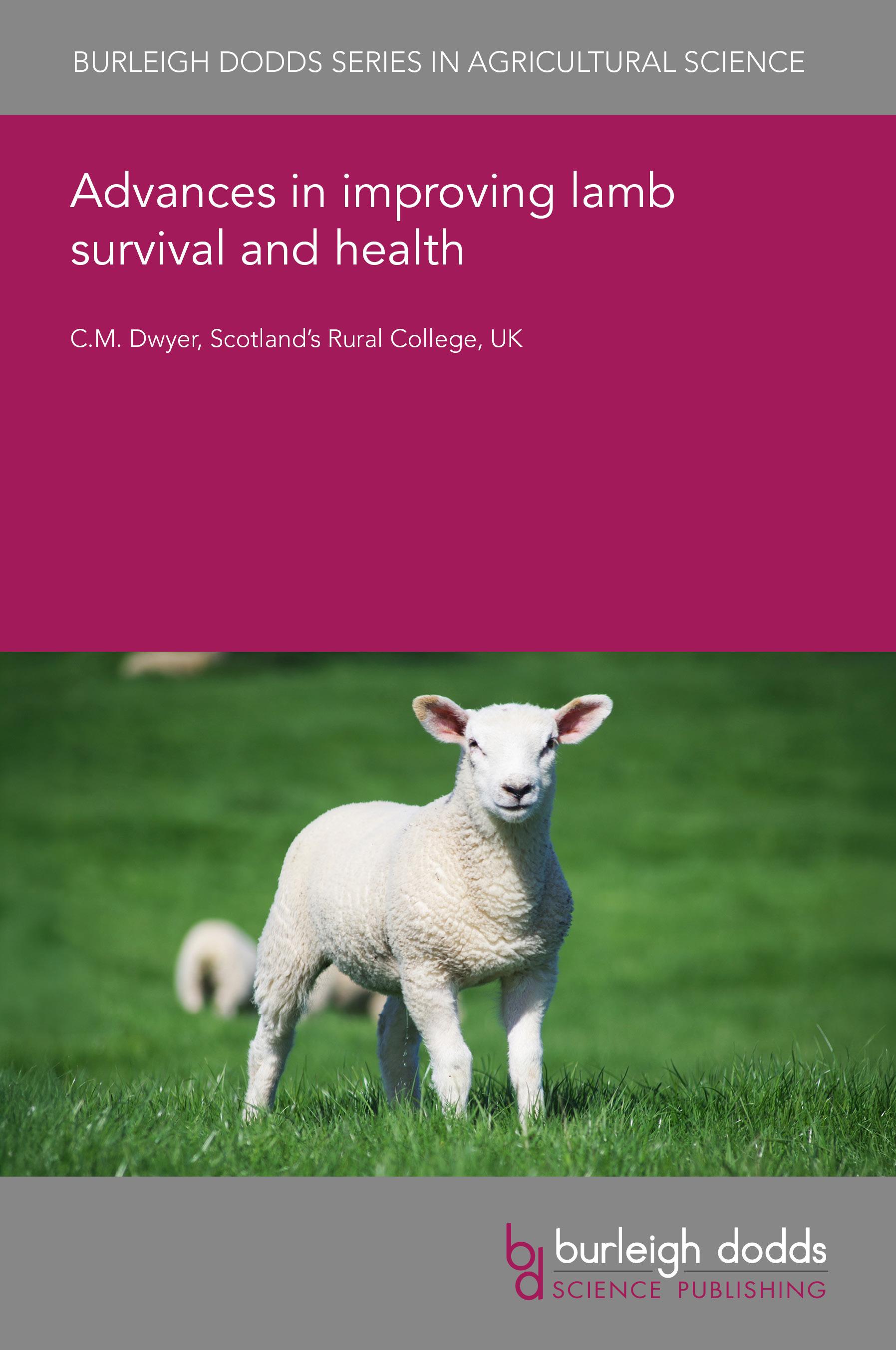
The survival of the newborn lamb is a crucial component of successful sheep farming. Lambs are more likely to die on the first few days after birth than at any other time and much research has been directed to addressing why this occurs and how it can be prevented. Lamb deaths can be attributed to due to a failure to transition successfully from in utero to independent life, congenital malformation, infection, predation or accident. Factors influencing the risks of the different causes of mortality include: the nutrition of the ewe during pregnancy, the number of lambs she is carrying, her genetics (and those of her lamb), her age and the number of previous pregnancies, and how the lambing and postnatal environment is managed. In this Chapter these different risks are reviewed and how they impact on the developing ewe and lamb relationship and ensure adequate colostrum intake in the lamb.
Pay easily by card, Klarna, Apple Pay or Google Pay. Not happy? You always have a 14-day money-back guarantee. Read more in our terms. If you have any questions, email us at hello@memmo.org.
Memmo makes studying easier – wherever you are in the world. We bring your course books and smart study tools together in one place: summaries, quizzes, podcasts and flashcards. Plus Ted, your study buddy who answers anything you wonder. Over 75,000 students already study here – built to help you learn faster and stress less.